
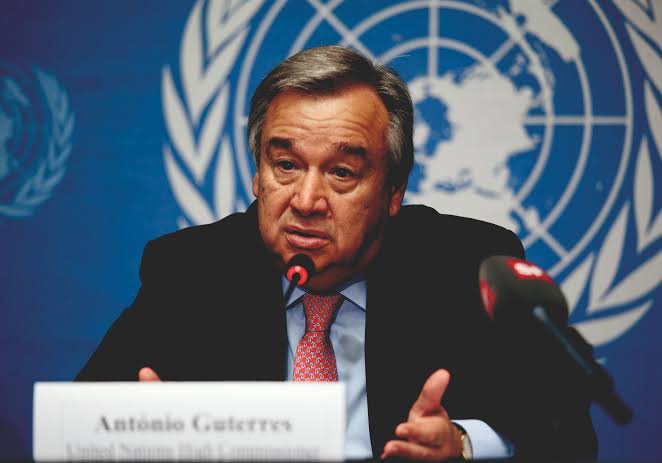
United Nations Secretary-General António Guterres has called for a fundamental shift in how Africa’s natural resources are managed and monetised, warning against continued patterns of extraction that leave the continent with environmental damage while economic value is captured elsewhere.
In remarks that have gained significant attention across policy and development circles, Guterres argued that Africa must benefit more directly from its vast resource wealth.
“For too long, Africa’s resources have been extracted, the value captured elsewhere, the environmental damage left behind,” he said. “No more exploitation. No more plundering. The people of Africa must benefit — first and most — from the resources of Africa.”
The comments come at a time of intensifying global competition for strategic minerals critical to electric vehicles, renewable energy infrastructure, semiconductor production, and advanced industrial technologies.
Africa possesses some of the world’s largest reserves of cobalt, lithium, copper, gold, rare earth minerals, oil, and natural gas. However, analysts say the continent has historically remained largely positioned as an exporter of raw materials, while higher-value refining, manufacturing, and industrial processing have taken place abroad.
The debate over resource sovereignty has become increasingly central to economic discussions across Africa, particularly as governments seek to expand local refining, industrialisation, and value addition policies tied to mineral extraction.
Countries including the Democratic Republic of the Congo, Nigeria, South Africa, and Zambia have all explored measures aimed at retaining more domestic economic value from natural resources.
Environmental concerns also remain central to the discussion. Advocacy groups and analysts have repeatedly raised alarms over pollution, land degradation, displacement of communities, and weak regulatory oversight linked to extractive industries in several African states.
Observers say the global transition toward cleaner energy systems has significantly increased the geopolitical importance of African minerals, placing renewed pressure on governments to negotiate more favourable economic arrangements and prevent another cycle in which external powers capture disproportionate benefits from African resources.
Analysts argue that the broader challenge facing the continent is whether resource wealth can finally be translated into sustainable industrial growth, employment creation, infrastructure development, and improved living standards for African populations.