
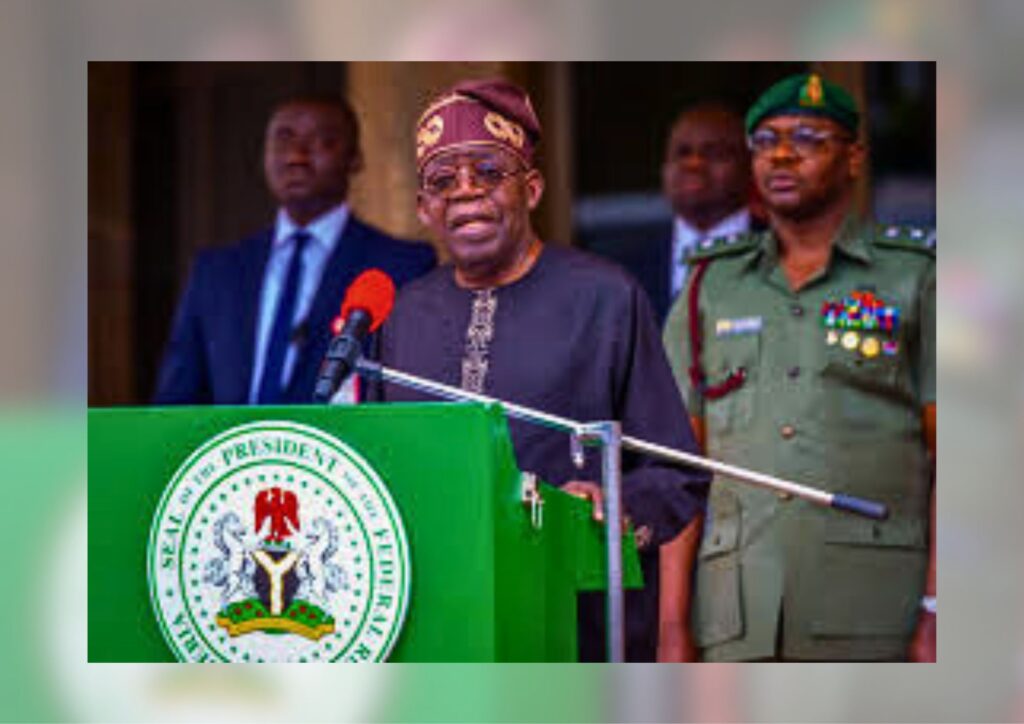
Abuja — President Bola Ahmed Tinubu has defended the sweeping economic reforms introduced since he took office in 2023, insisting that Nigeria is now on a path to stability and long-term growth despite the hardships many citizens continue to face.
In a nationwide statement marking the third anniversary of his administration on May 29, Tinubu said the difficult decisions taken over the past three years were beginning to produce visible results across the economy, infrastructure, energy, and investment sectors.
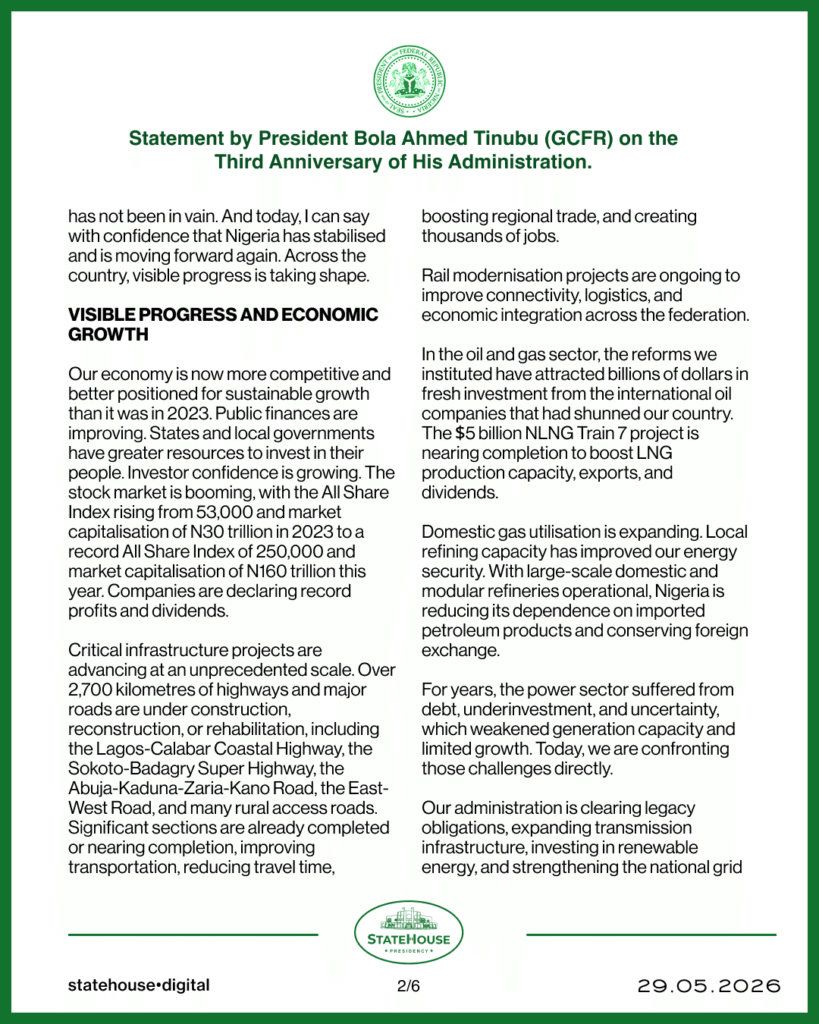
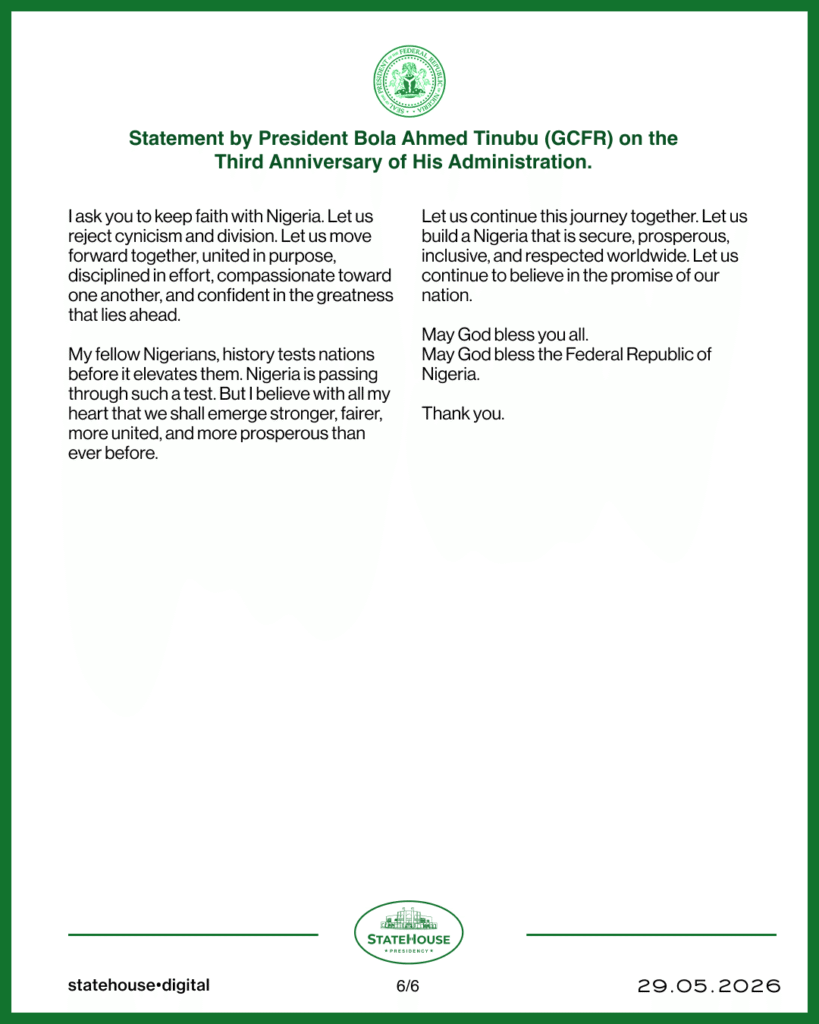
“The sacrifices of Nigerians have not been in vain,” the President declared, adding that the country is “moving forward again” after years of economic distortions and fiscal challenges.
Economic Recovery Claims
Tinubu pointed to improvements in public finances, investor confidence, and capital market performance as evidence that his reform programme is working.
According to the President, Nigeria’s stock market has witnessed remarkable growth since 2023, with market capitalisation rising significantly and companies reporting stronger profits and dividends.
“Our economy is now more competitive and better positioned for sustainable growth than it was in 2023,” he said.
The President also noted that state and local governments now have greater resources available for development following reforms that boosted public revenue and fiscal allocations.
Major Infrastructure Projects
Highlighting infrastructure as a cornerstone of his administration’s agenda, Tinubu said more than 2,700 kilometres of roads and highways are currently under construction, reconstruction, or rehabilitation nationwide.
He listed key projects including the Lagos-Calabar Coastal Highway, the Sokoto-Badagry Super Highway, the Abuja-Kaduna-Zaria-Kano Road, and the East-West Road.
According to him, the projects are expected to improve connectivity, reduce travel time, stimulate regional trade, and create employment opportunities.
Energy and Oil Sector Reforms
The President also cited increased investment in the oil and gas sector, saying reforms have attracted billions of dollars in fresh commitments from international energy companies.
He disclosed that the multi-billion-dollar NLNG Train 7 project is nearing completion and said expanding domestic refining capacity is helping to strengthen energy security while reducing reliance on imported petroleum products.
On electricity, Tinubu acknowledged the sector’s longstanding problems but maintained that his administration is tackling issues of debt, underinvestment, and transmission constraints through targeted reforms and infrastructure investments.
Call for National Unity
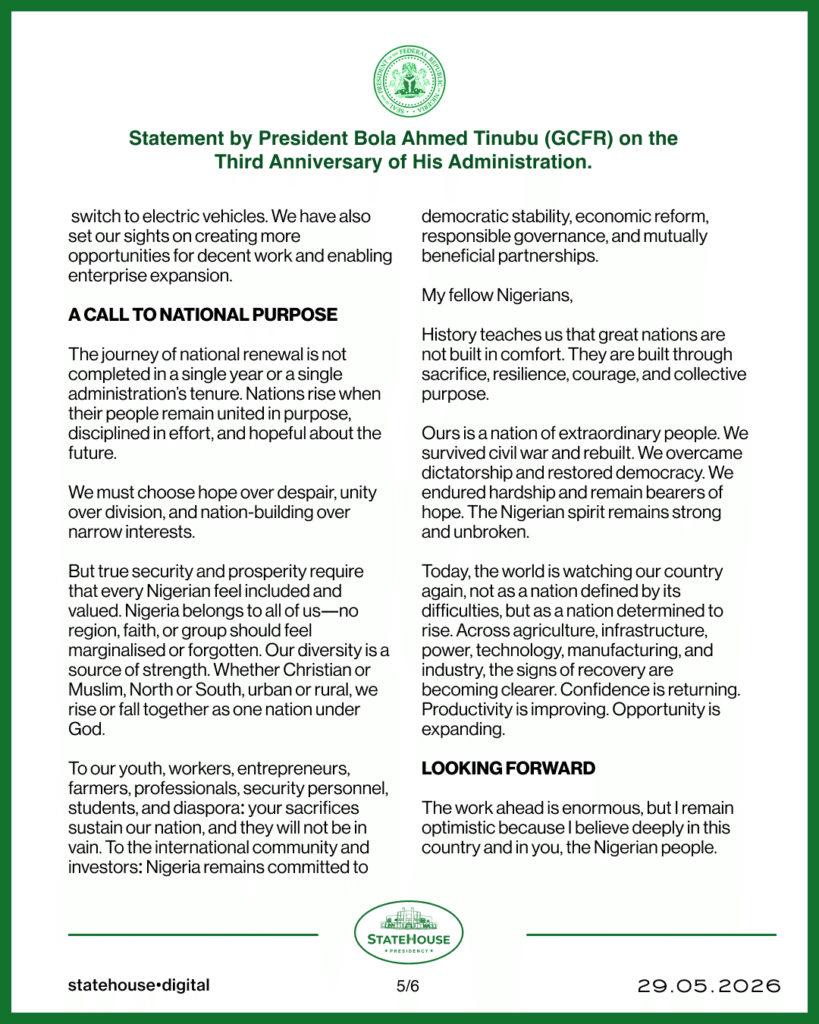
Beyond economic issues, the President used the anniversary message to appeal for national unity and patience.
“The journey of national renewal is not completed in a single year or a single administration,” he said.
He urged Nigerians to reject cynicism and division, stressing that the country’s diversity remains a source of strength rather than weakness.
“Whether Christian or Muslim, North or South, urban or rural, we rise or fall together as one nation under God,” he stated.
Acknowledging Hardship
While projecting optimism about Nigeria’s future, Tinubu implicitly recognised the sacrifices citizens have made under his administration’s reform programme, particularly following the removal of fuel subsidies and foreign exchange reforms.
He thanked workers, entrepreneurs, farmers, students, security personnel, and members of the diaspora for their resilience, assuring them that their sacrifices would ultimately yield positive outcomes.
Looking Ahead
As his administration enters its fourth year, Tinubu said he remains confident that Nigeria will emerge stronger, more prosperous, and more competitive.
“History tests nations before it elevates them,” he said. “Nigeria is passing through such a test. But I believe with all my heart that we shall emerge stronger, fairer, more united, and more prosperous than ever before.”
The anniversary address comes amid continuing debate over the impact of the government’s economic reforms. While supporters point to improving macroeconomic indicators and renewed investor confidence, critics argue that rising living costs, inflation, and widespread poverty continue to overshadow the reported gains.