
Abuja, Nigeria
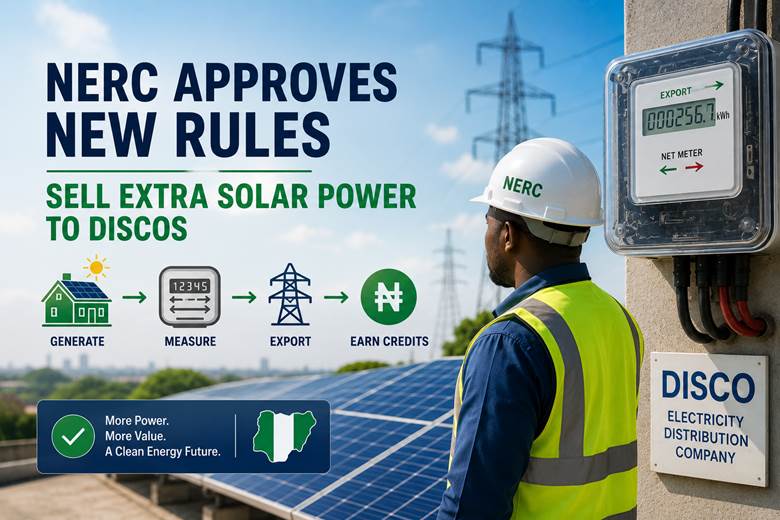
The Nigerian Electricity Regulatory Commission (NERC) has introduced new rules that will allow some Nigerians and organisations using solar power to sell their excess electricity to electricity distribution companies (DisCos).
The new policy, known as the Net Billing Regulations 2026, is aimed at encouraging more investment in solar energy while helping to improve electricity supply across the country.
Under the arrangement, people and organisations that generate their own electricity from solar energy can now send any unused power back into the electricity network and receive credits in return.
The move is seen as a major step towards increasing the use of renewable energy in Nigeria and reducing pressure on the country’s struggling power sector.
How the New System Will Work
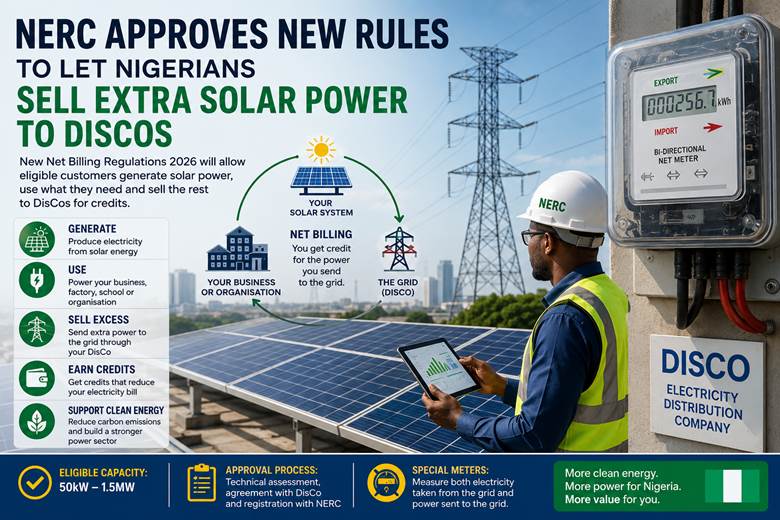
According to NERC, customers who both use electricity and generate their own power—mostly through solar installations—will be allowed to supply excess electricity to their local DisCos.
Instead of allowing unused solar power to go to waste, it can now be fed into the electricity grid and used by others.
The amount of electricity supplied to the grid will be recorded, and customers will receive credits that can help reduce their electricity bills.
Who Can Benefit?
Not everyone with a solar panel will qualify immediately.
NERC said only customers connected to a DisCo network and operating approved renewable energy systems will be eligible.
To qualify, a solar installation must have a minimum capacity of 50 kilowatts (kW) and a maximum of 1.5 megawatts (MW).
This means the programme is mainly designed for:
- Large businesses
- Factories
- Schools and universities
- Residential estates
- Commercial organisations
- Other institutions with sizeable solar power systems
Most homes with small rooftop solar panels may not meet the current requirements.
What Applicants Must Do
Anyone interested in joining the programme must first apply to their DisCo for a technical assessment.
The DisCo will examine whether its network can safely receive electricity from the applicant’s solar system.
If approved, the applicant must:
- Sign a Net Billing Agreement with the DisCo.
- Register with NERC.
- Meet all required safety and technical standards.
How Payments and Credits Will Be Calculated
Participants will be given special meters capable of measuring electricity moving in both directions.
The meters will record:
- Electricity taken from the national grid.
- Electricity supplied back into the grid.
Based on these records, NERC-approved credits will be calculated and applied to the customer’s account.
This means businesses and organisations that generate more electricity than they use could reduce their energy costs and get better value from their solar investments.
Why the Policy Is Important
The regulation comes at a time when many Nigerian businesses are spending huge amounts on diesel and petrol generators because of unreliable electricity supply.
Despite years of reforms, Nigeria still struggles to meet electricity demand due to challenges such as poor infrastructure, gas supply problems, transmission limitations and distribution issues.
Energy experts believe that allowing solar power producers to contribute electricity directly to the grid could help improve power availability and reduce dependence on fossil-fuel generators.
Part of Wider Electricity Reforms
The new regulation is also linked to reforms introduced under the Electricity Act 2023.
The law gave states greater powers to regulate electricity within their territories and opened the door for state electricity markets and regulatory agencies.
As more states take control of their electricity sectors, renewable energy projects like solar power are expected to play a bigger role in improving electricity supply.
Boost for Clean Energy
NERC said the new rules are designed to:
- Encourage more Nigerians to invest in solar energy.
- Improve electricity reliability.
- Attract private investment into the power sector.
- Support Nigeria’s clean energy goals.
- Increase the use of renewable energy across the country.
The policy also supports Nigeria’s efforts to reduce carbon emissions and expand access to cleaner sources of energy.
Looking Ahead
The success of the programme will depend largely on how quickly DisCos process applications, install the required meters and implement the credit payment system.
If properly implemented, the initiative could change the way electricity is generated and used in Nigeria by allowing consumers to become suppliers as well.
For businesses and organisations with large solar installations, the new rules provide an opportunity to earn value from excess electricity while contributing to a more stable and sustainable power supply for the country.