
ABUJA, NIGERIA
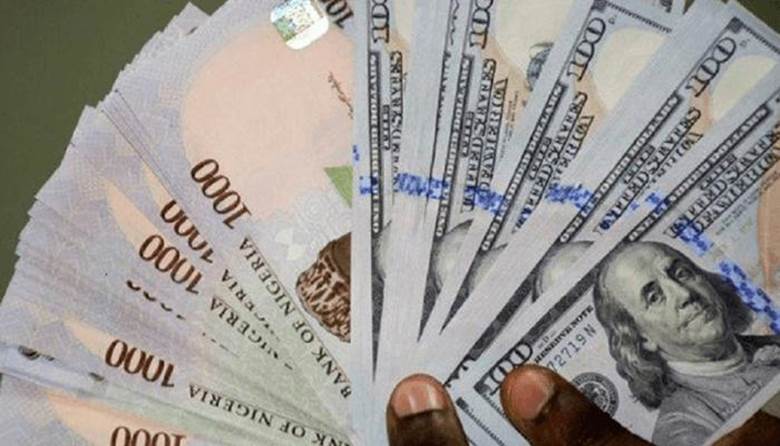
Nigeria attracted more foreign money in the first three months of 2026, but most of that money went into short-term investments rather than businesses, factories, or major projects that can create jobs.
New figures released by the National Bureau of Statistics (NBS) show that Foreign Direct Investment (FDI) — the type of investment that usually supports long-term economic growth — dropped sharply during the period.
According to the report, Nigeria received only $135.08 million in FDI in the first quarter of 2026, down from $357.80 million recorded in the last quarter of 2025.
This happened even though the country attracted a total of $10.37 billion in foreign capital during the same period, a major increase from $6.44 billion in the previous quarter and $5.64 billion in the first quarter of 2025.
The figures show that while foreign investors are bringing money into Nigeria, many are choosing quick-profit financial investments instead of putting money into long-term projects such as manufacturing, infrastructure, agriculture, technology, and other productive sectors.
Investors Prefer Stocks, Bonds and Treasury Bills
The NBS report shows that most of the foreign money that entered Nigeria came through portfolio investments.
These are investments in financial assets such as stocks, government bonds, treasury bills, and other securities that can easily be bought and sold.
Experts say Nigeria’s high interest rates and efforts to stabilise the foreign exchange market have made these financial instruments attractive to foreign investors looking for better returns on their money.
However, unlike Foreign Direct Investment, portfolio investments do not usually lead to the construction of factories, expansion of businesses, technology transfer, or large-scale job creation.
Out of the total FDI recorded in the first quarter, equity investments contributed $120.34 million, while other forms of capital investment accounted for $14.74 million.
For comparison, Nigeria attracted $923.01 million in total FDI throughout 2025, showing that the latest quarterly figure remains relatively low.
Why FDI Is Important
Economists often describe Foreign Direct Investment as one of the most valuable forms of foreign capital because it usually involves a long-term commitment.
When companies invest directly in a country, they often build factories, power projects, telecommunications infrastructure, logistics facilities, or other businesses that create jobs and boost economic activity.
Countries that have successfully grown their industries and reduced unemployment have often relied heavily on strong foreign direct investment.
For Nigeria, attracting more FDI is seen as an important step towards reducing dependence on crude oil and expanding sectors such as manufacturing, agriculture, mining, technology, and renewable energy.
The latest figures suggest that although investors are becoming more comfortable with Nigeria’s financial markets, many are still reluctant to commit large amounts of money to long-term business projects.
Long-Standing Challenges Remain
The gap between rising foreign capital inflows and weak direct investment is not new.
In recent years, Nigeria has attracted increasing amounts of portfolio investment as economic reforms, exchange-rate adjustments, and tighter monetary policies improved investor confidence.
However, several long-standing challenges continue to discourage many foreign companies from making long-term investments.
Business groups and investors have repeatedly pointed to poor infrastructure, high energy costs, regulatory uncertainty, security concerns in some areas, and the general cost of doing business as major obstacles.
These factors often influence decisions by multinational companies on where to establish factories or expand operations.
As a result, many investors continue to favour financial assets that allow them to enter and leave the market quickly.
Experts Warn About Dependence on “Hot Money”
While economists welcome the increase in overall foreign capital entering Nigeria, they also warn against relying too heavily on portfolio investments.
Such investments are often called “hot money” because they can leave a country almost as quickly as they arrive.
If interest rates fall in Nigeria or investors find better opportunities elsewhere, large amounts of money could flow out of the country.
Experts say such movements can put pressure on the naira, affect foreign exchange reserves, and create instability in financial markets.
They argue that Nigeria’s long-term economic success will depend more on attracting investments that build businesses and create jobs than on short-term financial inflows.
The Bigger Picture
The latest NBS figures present both good and bad news for Nigeria’s economy.
On the positive side, foreign investors are showing renewed confidence in Nigeria’s financial markets, leading to a strong rise in overall capital inflows.
However, the sharp decline in Foreign Direct Investment shows that more work may still be needed to convince investors to commit to long-term projects in the country.
For Nigeria to achieve sustained economic growth, create more jobs, and expand industrial production, experts say the country must attract more investments into sectors that produce goods and services rather than relying mainly on short-term financial investments.
For now, the numbers show that foreign money is coming into Nigeria, but much of it is still chasing quick returns instead of funding the long-term projects needed to drive lasting economic growth.