
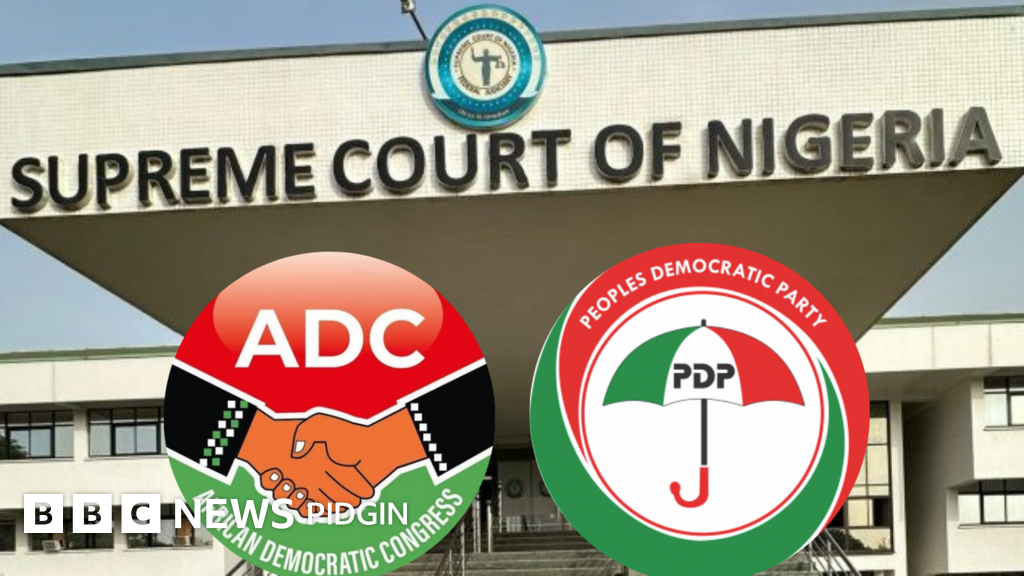
Abuja — Nigeria’s Supreme Court of Nigeria has become the focal point of opposition politics ahead of the 2027 general elections, after reserving judgment in key intra-party disputes without setting a date for ruling.
The appeals — involving a faction of the African Democratic Congress (ADC) linked to David Mark, and the National Executive Committee of the Peoples Democratic Party (PDP) aligned with Tanimu Turaki — are expected to determine which leadership structures are legally valid.
The timing is critical. Political parties are scheduled to conduct primaries between April 23 and May 30, placing significant pressure on the court’s pending decision to provide clarity on party leadership and candidate selection.
The crisis is most severe within the ADC, where three rival factions — associated with David Mark, Nafiu Bala Gombe, and Ogga Temitope — are locked in a leadership contest, with none currently recognised by the Independent National Electoral Commission (INEC). The absence of official recognition has effectively stalled the party’s preparations for the primaries.
Within the PDP, tensions are playing out differently. The faction aligned with Nyesom Wike, which is recognised by INEC, has proceeded with its political timetable, fixing nomination fees at ₦51 million for presidential aspirants and ₦21 million for governorship candidates. Rival groups have criticised the move as a pre-emptive assertion of control ahead of the court’s ruling.
At the same time, broader political realignments are emerging. Rivers State Governor Siminalayi Fubara has endorsed President Bola Ahmed Tinubu for re-election, signalling a notable shift in political alignment. Meanwhile, former Labour Party presidential candidate Peter Obi has continued consultations with political stakeholders as he positions for 2027.
With the primaries window opening and legal uncertainty unresolved, the Supreme Court’s eventual ruling is now central to shaping opposition cohesion, party legitimacy, and the broader electoral landscape.