
Abuja, Nigeria
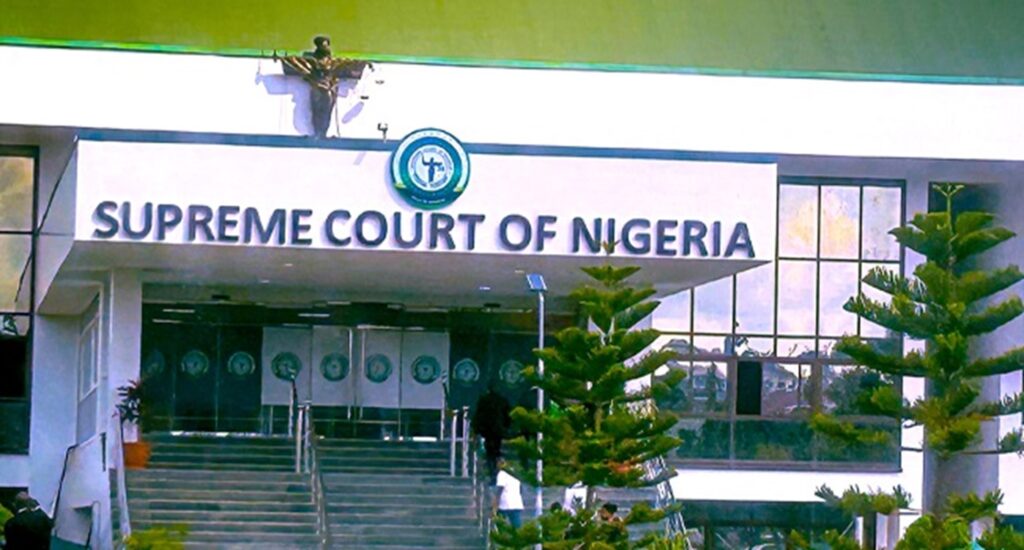
The Supreme Court has nullified the Peoples Democratic Party (PDP) national convention held in Ibadan, Oyo State, and dismissed an appeal filed by the Taminu Turaki-led National Working Committee (NWC), bringing a major legal chapter in the party’s leadership crisis to a close.
In a majority judgment delivered on Thursday, Justice Stephen Adah ruled that the convention, held on November 15 and 16, 2025, violated an existing order of the Federal High Court. The court held that the PDP proceeded with the convention despite a subsisting injunction issued by Justice James Omotosho, making the exercise unlawful.
The apex court criticised the Turaki-led group for approaching another court of equal jurisdiction to obtain a favourable order instead of filing an appeal against the earlier ruling.
According to the judgment, such action amounts to an abuse of court process.
The court stressed that any party that knowingly disregards court orders does so at its own risk, adding that it would not support actions that undermine the judicial system.
“The conduct of the national convention of November 15, 2025, is null and void,” the court declared, while dismissing the appeal for lacking merit. It also directed all parties to bear their own legal costs.
The legal battle began after former Jigawa State Governor, Sule Lamido, secured a Federal High Court injunction stopping the PDP from holding the convention until he was allowed to contest for the position of national chairman.
Despite the order, the party went ahead with the convention in Ibadan. That decision was later invalidated by both the Federal High Court and the Court of Appeal, which ruled that the matter went beyond internal party affairs and involved clear disobedience to a court directive.
The Turaki-led group had asked the Supreme Court to overturn the Court of Appeal judgment and validate the convention. Their counsel, Paul Erokoro (SAN), argued that the matter should be treated as an internal party issue.
However, the respondents rejected that position, insisting the core issue was compliance with a lawful court order.
In a dissenting opinion, Justice Haruna Samani held that issues relating to party leadership fall within internal party affairs and should not be subject to court interference.
Justice Abubakar Umar supported this position, citing previous Supreme Court rulings that matters not linked to party primaries are generally not justiciable.
However, both justices noted that they do not support disobedience to court orders.
The Supreme Court stressed that political parties must respect court decisions, noting that they serve as vehicles through which politicians gain public office.
It ruled that once a party is aware of a court order, it is legally bound to comply.
The Ibadan convention had deepened internal divisions within the PDP, leading to expulsions and counter-expulsions among party members.
Following the crisis, a separate convention backed by the Minister of the Federal Capital Territory, Nyesom Wike, was held in Abuja on March 29, 2026. That gathering produced Abdulrahman Mohammed as National Chairman and returned Samuel Anyanwu as National Secretary.
The faction later took control of the party’s national secretariat, which had earlier been shut down by security agencies after clashes between rival groups.
Reacting to the Supreme Court ruling, FCT Minister Nyesom Wike said the judgment has settled the leadership dispute.
“The Supreme Court judgment has now made it known there is only one PDP,” Wike said while addressing journalists in Abuja. “Faction does not exist any longer in the Peoples Democratic Party.”
He maintained that the Abuja convention remains valid and reaffirmed support for the Abdulrahman Mohammed-led leadership.
Wike also dismissed rival political alignments, stating that certain opposition figures would not be welcomed into the PDP.
The Supreme Court decision effectively nullifies the Ibadan convention and strengthens the position of the rival leadership that emerged from the Abuja convention, marking a significant turning point in the PDP’s prolonged internal crisis.