
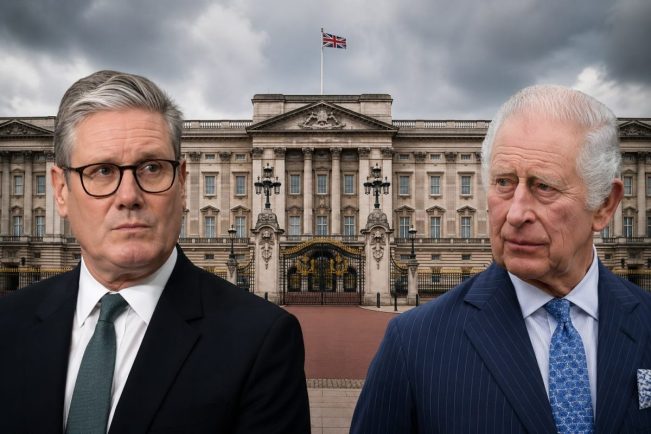
Political pressure is mounting around British Prime Minister Keir Starmer as reports emerge that Buckingham Palace has issued what sections of the British press describe as a subtle but pointed warning ahead of the highly anticipated King’s Speech.
The controversy erupted after media headlines claimed that the Palace delivered a “six-word warning” to the embattled Prime Minister on the eve of the historic parliamentary ceremony. Though the exact wording and context remain unclear, the report has intensified speculation about growing unease within Britain’s political establishment over the direction and stability of Starmer’s administration.
The King’s Speech, to be delivered by King Charles III, is one of the United Kingdom’s most important constitutional rituals. While read by the monarch, the speech is drafted by the government and outlines its legislative agenda for the coming parliamentary session. In practical terms, it serves as both a policy roadmap and a confidence statement for the sitting administration.
This year’s ceremony arrives under unusually tense political circumstances.
Starmer has faced mounting criticism following a series of disappointing electoral outcomes and increasing agitation within sections of the Labour Party. Internal disagreements over economic management, immigration policy, public spending, and welfare reforms have reportedly deepened fractures among senior party figures. British political commentators suggest the Prime Minister now faces the dual challenge of reassuring both Parliament and his own party base.
The Palace’s alleged intervention — whether symbolic, procedural, or merely exaggerated by the press — has nonetheless added another layer of intrigue to an already volatile political atmosphere. Under Britain’s constitutional monarchy, the royal household traditionally avoids direct political involvement. Consequently, even indirect suggestions of royal concern often attract significant media and public attention.
Analysts argue that the significance of the King’s Speech extends beyond ceremonial pageantry. The address is expected to contain major policy proposals relating to economic recovery, public sector reform, housing, energy transition, and post-Brexit governance. More importantly, it may determine whether Starmer can still project authority at a time when questions about leadership credibility continue to grow.
Observers also note that modern British politics increasingly operates through symbolic signaling. In such an environment, headlines involving the monarchy, especially Buckingham Palace, can rapidly shape public perception regardless of whether formal constitutional tensions truly exist.
As Westminster prepares for the parliamentary opening, attention is now focused not only on the content of the King’s Speech, but also on what it may reveal about the fragile balance between political leadership, institutional legitimacy, and public confidence in contemporary Britain.