
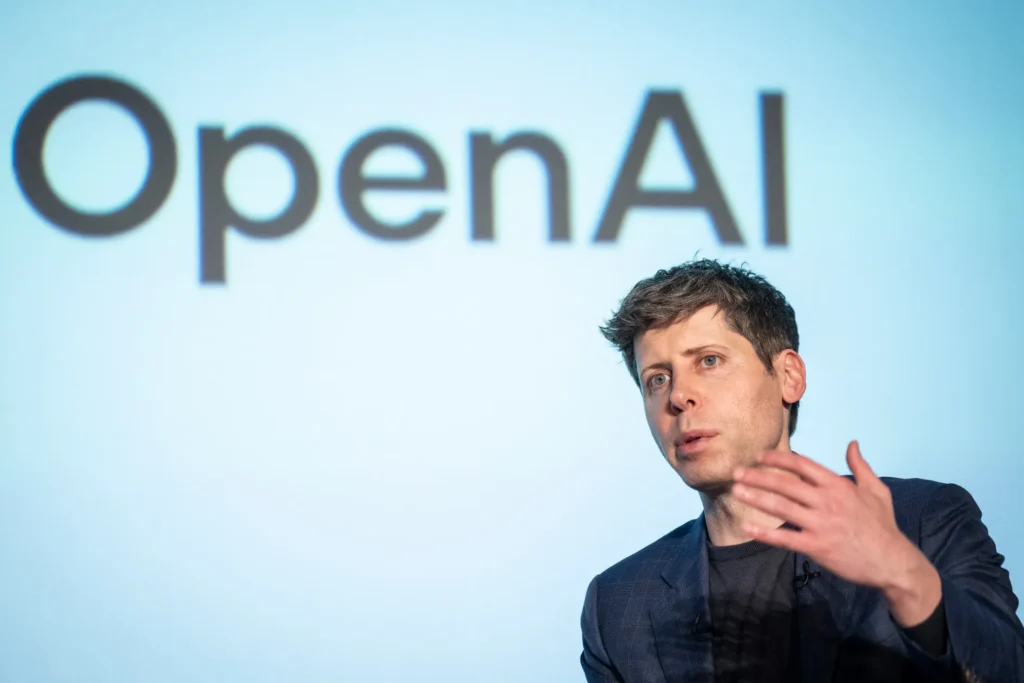
A growing debate over the economic consequences of artificial intelligence has intensified following calls linked to OpenAI for the introduction of a “robot tax”—a policy proposal aimed at addressing job displacement and widening inequality in the age of automation.
The concept of a robot tax, long discussed in policy and academic circles, proposes that companies deploying AI systems or automation technologies should pay additional taxes equivalent to the human labor they replace. Proponents argue that such a mechanism could help governments offset declining income tax revenues while funding social safety nets, workforce retention, and universal basic income schemes.
The renewed attention comes amid rapid advancements in generative AI, robotics, and large-scale automation—developments in which OpenAI has played a central role. As AI systems increasingly perform tasks once reserved for humans—ranging from customer service to complex analytical work—concerns about structural unemployment and labor market disruption have gained urgency.
Supporters of the proposal frame it as a necessary adaptation of fiscal policy to a transforming economy. They argue that without intervention, automation could concentrate wealth among technology firms and capital owners, exacerbating inequality and social instability. A robot tax, in this view, becomes a redistributive tool designed to align technological progress with social equity.
Critics, however, caution that such a tax could produce unintended consequences. They warn it may stifle innovation, discourage investment in productivity-enhancing technologies, and ultimately slow economic growth. There are also significant technical challenges: defining what constitutes a “robot,” measuring displacement effects, and determining appropriate tax thresholds in a globalized digital economy.
The discussion also echoes earlier proposals by figures such as Bill Gate, who argued that governments should tax automation similarly to human labor. However, OpenAI’s association with the idea lends new weight to the conversation, given its influence at the forefront of AI development.
From a policy perspective, the robot tax debate highlights a broader tension between innovation and regulation. Governments worldwide are grappling with how to harness the benefits of AI—efficiency, scalability, and economic growth—while mitigating its disruptive social impacts.
Whether the proposal gains traction remains uncertain, but its resurgence signals a critical shift: artificial intelligence is no longer just a technological issue—it is now firmly at the center of fiscal policy, labor economics, and the future of social contracts.