
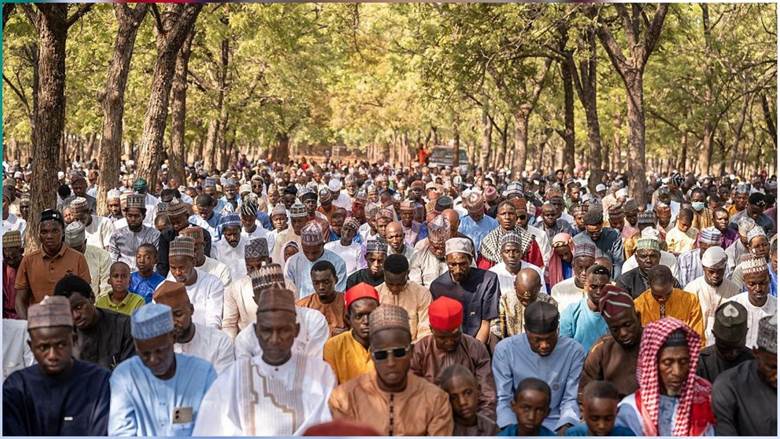
As Muslims in Nigeria and across the world prepare to celebrate Eid-el-Kabir, also known as Eid al-Adha, messages of sacrifice, unity, security and national renewal have continued to dominate public discourse, with political leaders and government institutions urging Nigerians to embrace peace and compassion during the sacred season.
The 2026 Eid celebration comes at a time when many Nigerians are grappling with economic hardship, security concerns and rising transportation costs, making this year’s observance not just a religious festival, but also a moment of reflection on the country’s social and political realities.
Leading the messages of goodwill was President of the Senate, Godswill Akpabio, who extended Eid-el-Kabir greetings to President Bola Tinubu, Vice President Kashim Shettima and Muslims around the world.
In a statement issued through his Special Adviser on Media and Publicity, Eseme Eyiboh, Akpabio described Eid-el-Kabir as a solemn reminder of faith, obedience and sacrifice, virtues deeply associated with Prophet Ibrahim in Islamic tradition.
The Senate President said Nigerians must continue to pray for national healing and unity, stressing that the spirit of compassion, generosity and selflessness symbolised by the festival remains critical to Nigeria’s progress.
Speaking on behalf of his family, constituents and the National Assembly, Akpabio urged citizens to remain hopeful and committed to peaceful coexistence despite the nation’s challenges.
The Meaning Behind Eid-el-Kabir
Eid-el-Kabir, known globally as Eid al-Adha or the “Festival of Sacrifice,” is one of the holiest celebrations in Islam. It commemorates the willingness of Prophet Ibrahim to sacrifice his son in obedience to God before divine intervention replaced the sacrifice with a ram.
For Muslims, the festival represents complete submission to God, sacrifice for humanity and devotion to faith. Across Nigeria, the celebration is traditionally marked by special Eid prayers, the slaughtering of rams and livestock, charity to the less privileged, family gatherings and communal meals.
The festival also coincides with the annual Hajj pilgrimage in Saudi Arabia, where millions of Muslim faithful gather in the holy cities of Makkah and Madinah for one of the largest religious gatherings in the world.
One of the most spiritually significant moments during Hajj is the Day of Arafah, observed on the ninth day of Dhul-Hijjah. On this day, pilgrims gather at Mount Arafat in prayer and supplication, seeking forgiveness and divine mercy.
Islamic scholars regard the Day of Arafah as a period of intense spiritual reflection, repentance and prayer, not only for pilgrims in Saudi Arabia but also for Muslims observing from different parts of the world.
Federal Government Declares Public Holidays
In recognition of the celebration, the Federal Government declared Wednesday, May 27, and Thursday, May 28, 2026, as public holidays.
The declaration was made by Minister of Interior Olubunmi Tunji-Ojo through a statement signed by the ministry’s Permanent Secretary, Magdalene Ajani.
According to the government, Eid-ul-Adha remains a festival rooted in sacrifice, obedience to God and compassion toward humanity. Nigerians were encouraged to use the holiday period for prayers, reflection and acts that promote national unity.
The government also wished Muslims in Nigeria and across the diaspora a peaceful and joyful celebration.
Rush for Sallah Travel and Highway Reopening
As millions of Nigerians travel to celebrate with families and loved ones, concerns over transportation and road safety have again come into focus.
In response, the Federal Government directed the reopening of completed portions of the Abuja-Kaduna-Kano highway to ease movement during the festive season.
Minister of Works David Umahi instructed the contractor handling the project, Infiouest Nigeria Limited, to immediately make the accessible sections available to motorists.
The directive, conveyed in a statement issued in Abuja by the minister’s media aide, Francis Nwaze, was aimed at reducing traffic congestion and improving safety along one of Nigeria’s busiest transport corridors.
The Abuja-Kaduna-Kano road remains a critical economic route linking northern and southern Nigeria. For years, motorists and commuters have complained about delays, insecurity and deteriorating road conditions along the corridor, making rehabilitation efforts particularly significant during festive periods when traffic volume surges dramatically.
Transportation costs have also risen sharply in many parts of the country ahead of Sallah, with travelers facing increased fares due to high fuel prices and growing demand for interstate movement.
Security Concerns in Borno
While many Nigerians prepare for celebration, security agencies remain on high alert, especially in the North-East.
In Borno State, the state government announced a temporary restriction on vehicular and human movement during Eid prayers.
The restriction, approved by Governor Babagana Umara Zulum, will run from 6 a.m. to 11 a.m. on Wednesday and affect vehicles, tricycles and motorcycles across the state.
The measure follows recent security advisories from the Nigerian military warning of possible terrorist attacks in crowded public spaces.
Borno State has remained at the centre of Nigeria’s insurgency battle for more than a decade, with authorities often tightening security during major religious celebrations to prevent attacks and maintain public safety.
Despite improvements recorded by security forces in recent years, concerns over terrorism and displacement continue to shape daily life in parts of the North-East.
A Celebration Beyond Festivity
Beyond the feasting and celebrations, this year’s Eid-el-Kabir arrives as a test of resilience for many Nigerians.
Religious leaders across the country have continued to preach patience, tolerance and compassion amid economic pressures and social uncertainty. Analysts say the season offers political leaders an opportunity to reconnect with citizens through policies and actions that reflect the values being preached during the celebration.
For many families, Eid remains not only a spiritual obligation but also a rare opportunity for reunion, charity and hope.
As prayers rise from mosques, prayer grounds and homes across Nigeria, the central message of the season remains clear — sacrifice, faith, unity and collective responsibility toward building a more peaceful and stable nation.