
With the two-year review window expired, Nigeria’s organised labour is demanding a major wage reset—or threatening a return to industrial action
ABUJA — Nigeria’s organised labour has reopened the minimum-wage question, demanding ₦500,000 as the new national minimum wage and warning that the worsening cost-of-living crisis has made the current ₦70,000 wage increasingly untenable.
The Nigeria Labour Congress (NLC) and the Trade Union Congress (TUC) made the demand at the Nigeria Rights of Workers Summit in Birnin Kebbi, Kebbi State, where labour leaders argued that the purchasing power of workers has been severely eroded since the current wage was agreed in 2024.
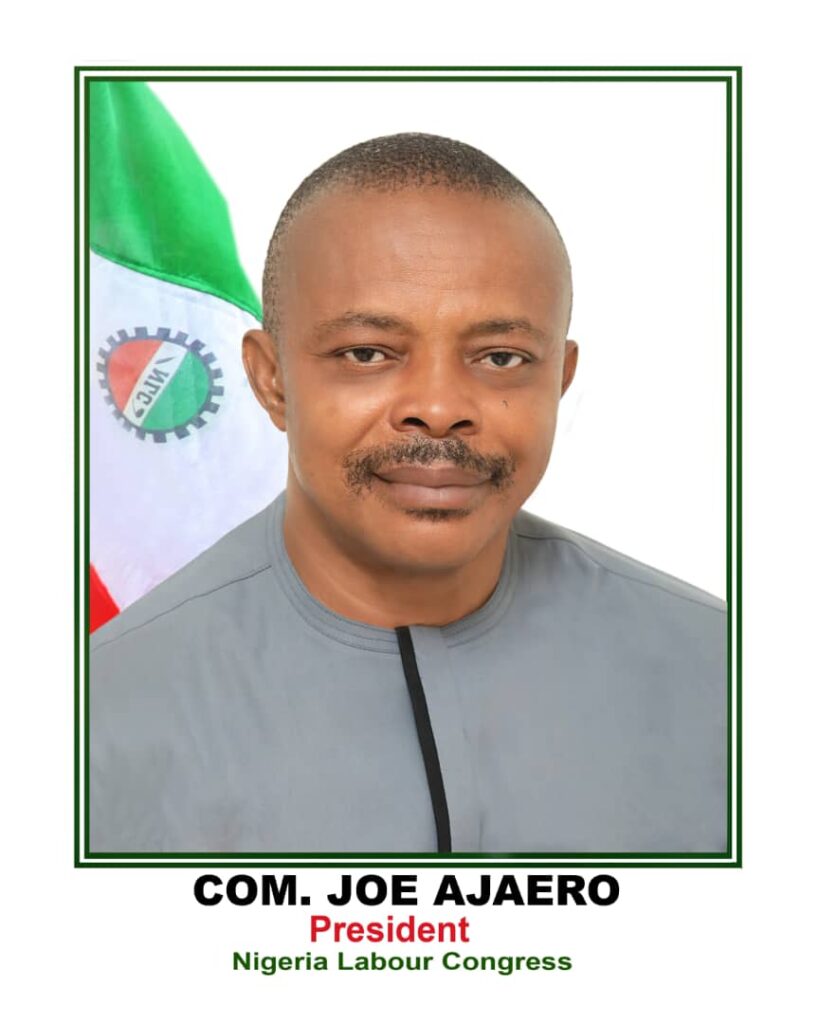
Representing NLC President Joe Ajaero, NLC Deputy President Audu Titus Amba said the ₦70,000 minimum wage had become “woefully inadequate” in the face of rising inflation and mounting household pressures.
The demand comes as the two-year review period attached to the current minimum wage arrangement expires, reopening negotiations between organised labour, governments and employers.
From ₦70,000 to ₦500,000
The scale of labour’s demand is striking.
The proposed ₦500,000 represents an increase of more than seven times the current ₦70,000 minimum wage. Government and employer groups are therefore likely to approach the demand cautiously, particularly given the potential implications for federal, state and local government wage bills.
But labour’s argument is equally straightforward: a nominal wage increase means little if inflation has already consumed its purchasing power.
The unions contend that workers cannot be expected to absorb indefinitely the effects of higher food prices, transportation costs, housing expenses, healthcare bills and other basic household expenditures while wages remain substantially behind the cost of living.
The current dispute is therefore not simply about the size of a pay cheque. It is about the real value of wages.
The memory of 2024
The present confrontation carries echoes of the bitter negotiations that preceded the 2024 minimum-wage settlement.
Organised labour embarked on industrial action after failing to reach agreement with government over workers’ pay and the broader cost-of-living crisis.
The eventual agreement produced the ₦70,000 national minimum wage, but the settlement included a two-year review mechanism.
That review has now arrived.
Labour’s new position effectively signals that it does not intend to approach the renegotiation as a routine adjustment.
More than a wage dispute
Former NLC President Ayuba Wabba has sought to place the debate within a broader framework of workers’ welfare.
As he put it, decent work encompasses not only wages but also workers’ rights, social protection and meaningful social dialogue between labour, employers and government.
That distinction is important.
Even a substantial increase in the minimum wage will have limited impact if workers continue to face high transportation costs, inadequate public services, expensive housing and rapidly rising food prices.
For government, the challenge is therefore twofold: raise workers’ purchasing power without triggering fiscal pressures or further inflation, while simultaneously addressing the structural factors driving the cost of living.
The political clock is ticking
The timing also matters.
Nigeria is moving towards the 2027 general elections, and a prolonged confrontation between government and organised labour could carry significant political consequences.
No administration wants to enter an election season amid nationwide strikes, disrupted public services and a worsening perception of economic hardship.
But government cannot simply concede to a figure it considers fiscally unsustainable either.
The likely battle will therefore be over the method of determining a new wage, rather than simply whether workers deserve one.
Government may push for a figure tied to productivity, inflation, revenue capacity and the ability of states and businesses to pay. Labour, meanwhile, is likely to insist that wages must be assessed against the actual cost of maintaining a decent standard of living.
The real test
The danger for both sides is returning to the familiar cycle: labour demands a higher wage, government resists, negotiations stall, strikes follow, and a compromise is eventually reached without resolving the underlying cost-of-living problem.
Nigeria needs something more durable.
The country requires a wage-setting framework that protects workers from inflation, recognises differences in economic conditions, encourages productivity and remains fiscally sustainable for governments and employers.
The ₦500,000 demand has therefore opened a much larger national conversation.
For organised labour, it is a declaration that ₦70,000 can no longer sustain the Nigerian worker.
For government, it is an early warning that the economic reforms of the past three years will increasingly be judged not by fiscal balances or macroeconomic indicators, but by whether ordinary workers can actually afford to live.
And if negotiations fail, the question will no longer be whether labour is asking for more.
It will be how much disruption Nigeria can afford to absorb.