
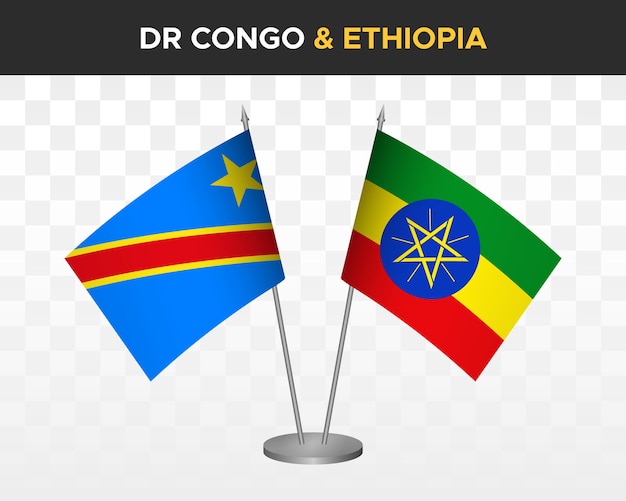
Kinshasa/Addis Ababa — The Democratic Republic of the Congo is projected to overtake Ethiopia as Africa’s fourth-largest economy in 2026, according to International Monetary Fund estimates driven by rising demand for critical minerals used in global clean energy industries.
The IMF projects the DRC’s economy to reach approximately $123 billion in 2026, marginally ahead of Ethiopia’s projected $122 billion, with growth forecast at about 5.9 percent.
The expansion is being powered largely by the DRC’s dominant position in global cobalt production and its growing role in copper supply — two minerals considered essential for electric vehicle batteries, renewable energy systems, and broader energy transition technologies.
Analysts say the country’s mineral wealth has become increasingly strategic as major economies compete to secure access to critical resources needed for clean technology manufacturing.
However, the economic gains are unfolding alongside a continuing security crisis in eastern Congo, where the March 23 Movement (M23) remains active across parts of the mineral-rich region.
The conflict has continued to disrupt communities, threaten supply routes, and complicate efforts to stabilise areas central to the country’s mining economy.
Diplomatic initiatives, including talks linked to the Doha framework, have so far failed to deliver a durable ceasefire, with several key components of the proposed agreement reportedly unresolved.
International observers warn that insecurity remains the most significant obstacle to fully realising the DRC’s economic potential, despite favourable commodity markets and rising investor interest in critical minerals.
The projected economic shift would mark a significant milestone in Africa’s economic landscape, reflecting the growing geopolitical importance of resource-rich economies in the global transition toward cleaner energy systems.
Analysts caution, however, that sustaining long-term growth will depend not only on mineral exports, but also on improvements in security, governance, infrastructure, and institutional stability.