
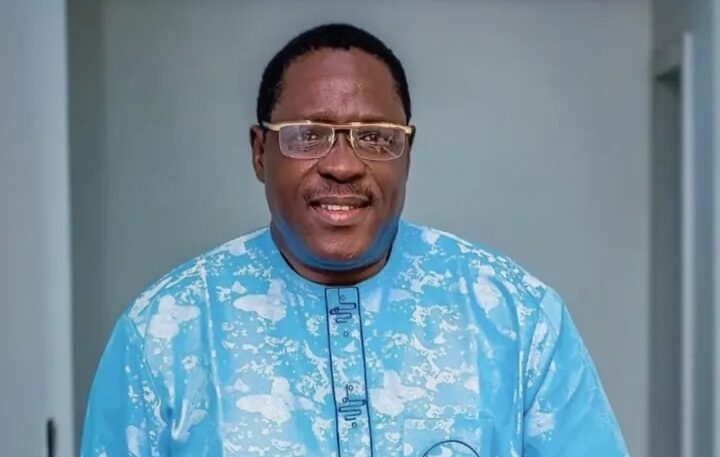
Veteran Yoruba actor and filmmaker Taiwo Hassan, popularly known as Ogogo, has died at the age of 66, bringing to a close a career that spanned almost four decades and left an enduring imprint on Nigeria’s Yoruba-language film industry.
Hassan died on Sunday, August 23, 2026, after a battle with stage-four cancer. His daughter, Kira Taiwo, confirmed the death in an emotional social-media broadcast, saying words that captured the disbelief and pain of a family that had spent the preceding days hoping against hope.
The confirmation came after a difficult week for the Hassan family.
Days earlier, members of the family had appealed to medical specialists and advanced cancer treatment facilities for assistance, particularly access to experts capable of managing his deteriorating condition. They stressed that their appeal was primarily for medical connections and expertise, rather than financial assistance.
There had also been false reports of his death, which the family had publicly dismissed. The eventual confirmation therefore brought a painful finality to a period marked by uncertainty, anxiety and desperate hope.
For Yoruba Nollywood, however, the death of Ogogo represents more than the passing of another popular actor.
It is the departure of one of the familiar faces of a generation of Nigerian cinema.
Born in Ilaro, Ogun State, on October 31, 1959, Hassan entered the creative industry in the 1980s and eventually devoted himself fully to acting and filmmaking. Over the years, he established himself not only as an actor but also as a producer, director and storyteller.
His commanding presence, distinctive delivery and ability to inhabit a wide range of characters made him particularly popular among Yoruba-speaking audiences. His career connected different generations of Nigerian viewers, from the early era of Yoruba home videos to the more sophisticated streaming-driven Nollywood of today.
He appeared in numerous productions, including Owo Blow, Omin, Elewon, Omo Ghetto, Tenant of the House and Aníkúlápó, among others.
But Ogogo’s contribution cannot be measured simply by the number of films in which he appeared.
For many viewers, he was part of the cultural furniture of growing up.
His generation of actors did more than entertain. They carried Yoruba language, humour, social commentary, family relationships, traditional values and the contradictions of everyday Nigerian life onto the screen.
That cultural significance was evident in the response to news of his illness.
In his final days, colleagues and friends rallied around him. Prominent Yoruba actors and filmmakers gathered to pray for his recovery, hoping that medical intervention would give their colleague another opportunity to return to the screen.
That hope was not fulfilled.
Among those who supported his treatment was Ogun West Senator Olamilekan Adeola, who described Ogogo’s death as a loss to his family, Ogun State and Nigeria.
“I am greatly saddened by the death of a brother who believed in and worked assiduously for my cause and the cause of our people.”
Ogogo is expected to be buried in his hometown of Ilaro, Ogun State, on Monday, August 24.
His death leaves behind grieving family members, colleagues and an enormous audience whose memories of him are tied to some of the defining moments of Yoruba popular culture.
For an industry that has lost many of its pioneers in recent years, his passing is another reminder that an important generation of Nigerian storytellers is gradually leaving the stage.
Taiwo Hassan was Ogogo to millions of viewers. But behind the famous name was an actor, filmmaker, father, colleague and cultural storyteller whose work became part of the collective memory of Nigerian cinema.
The curtain has fallen.
The legacy remains.
AT A GLANCE
Name Taiwo Hassan
Popularly known as Ogogo
Age 66
Born October 31, 1959, Ilaro, Ogun State
Died August 23, 2026
Cause of death Stage-four cancer
Profession Actor, filmmaker, producer, director and screenwriter
Burial Ilaro, Ogun State — Monday, August 24, 2026