
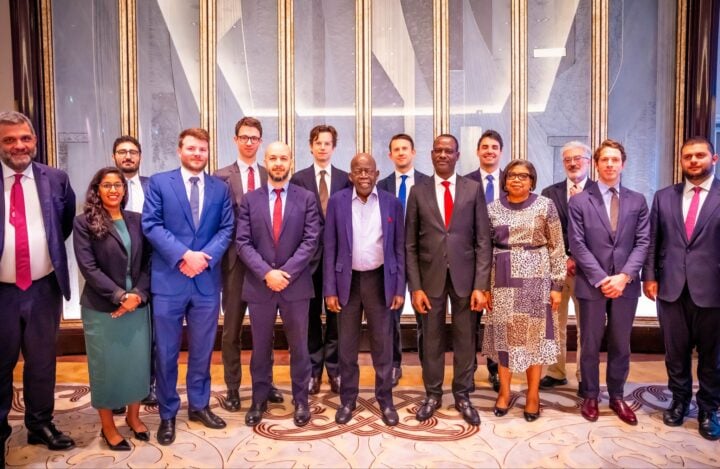
Paris/Abuja — President Bola Ahmed Tinubu has presented Nigeria’s economic reform programme to international investors in Paris, urging sustained confidence in the country’s economy as the administration seeks to attract global capital and strengthen macroeconomic stability.
During engagements with investors and financial stakeholders, Tinubu defended ongoing reforms as necessary measures aimed at repositioning Africa’s largest economy for long-term growth and resilience.
Nigeria’s Minister of Finance and Coordinating Minister of the Economy, Taiwo Oyedele, told participants that the country recorded strong GDP growth in dollar terms in 2025, supported by greater exchange rate stability and moderating inflation.
According to government figures, Nigeria’s foreign reserves stood at approximately $45.4 billion at the end of 2025, while GDP growth exceeded 4 percent on an annualised basis. Officials also highlighted an increase in foreign direct investment inflows, which reportedly rose to about $720 million in the third quarter of 2025, compared with roughly $90 million in the preceding quarter.
The government said inflation fell below its 15 percent target by year-end, attributing the improvement to fiscal and monetary reforms introduced over the past year.
Vice President Kashim Shettima echoed the administration’s position, stating that the restructuring programme is gradually reducing state governments’ dependence on federal allocations tied to oil revenues.
According to him, the shift is intended to make Nigeria’s economy more resilient to fluctuations in global crude oil prices and strengthen fiscal sustainability.
The Tinubu administration has repeatedly argued that policies such as fuel subsidy removal, exchange rate liberalisation, and broader fiscal reforms are critical to correcting structural imbalances in the economy.
However, the reforms have also intensified cost-of-living pressures, with rising prices and weakened household purchasing power fuelling public debate over the social impact of the adjustment programme.
Analysts say the Paris engagements form part of a broader effort by the administration to reassure investors that Nigeria remains committed to market-oriented reforms despite domestic economic pressures.