
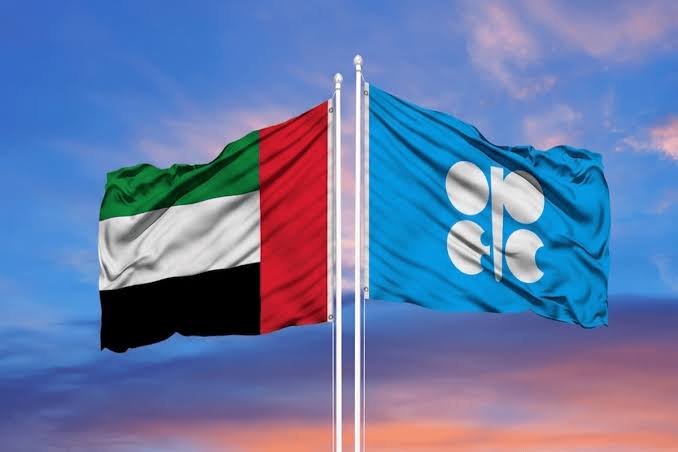
Abu Dhabi/Vienna — The United Arab Emirates has announced it will withdraw from the Organization of the Petroleum Exporting Countries and the wider OPEC+ framework, marking the end of nearly six decades of membership and signalling a significant shift in global oil market dynamics.
The decision, confirmed by Energy Minister Suhail Al Mazrouei, takes effect from May 1, 2026. Officials said the move is driven by the country’s strategy to align production with its expanding capacity and broader national economic interests.
The exit comes amid heightened volatility in global oil markets, following recent geopolitical tensions that pushed Brent crude prices above $120 per barrel before moderating. At the same time, OPEC’s collective output has come under pressure, with recent data indicating a sharp contraction in production levels.
The UAE’s departure also reflects long-standing friction over OPEC’s quota system, which allocates production limits among member states. Abu Dhabi has argued that the framework does not adequately reflect its current production potential, particularly as it continues to invest in expanding output through its national oil company, ADNOC.
The move follows earlier exits by Qatar in 2019 and Angola in 2024, suggesting a broader pattern of divergence within the organisation over production strategy and market positioning.
Analysts say the UAE’s withdrawal could weaken OPEC+ cohesion and introduce greater uncertainty into oil markets, as one of the group’s key producers shifts toward a more independent production policy. With significant spare capacity, the UAE’s output decisions are expected to carry considerable weight in determining future supply levels.
The development raises questions about the long-term effectiveness of coordinated production agreements, as energy producers increasingly prioritise national flexibility over collective discipline in a rapidly evolving global market.