
Abuja, Nigeria
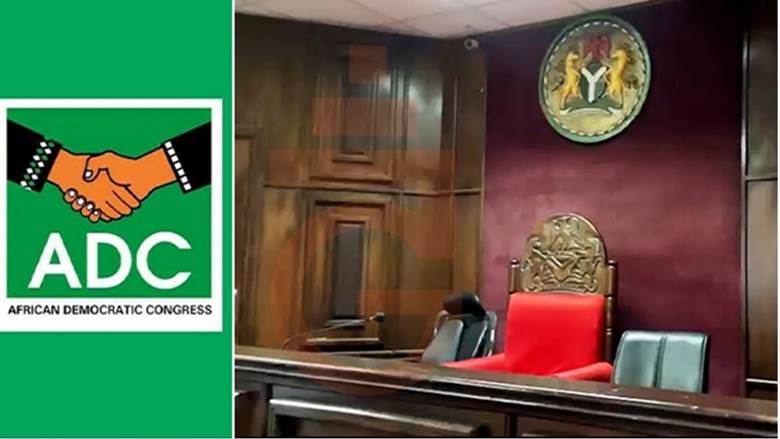
Legal practitioner and political analyst, Liborous Oshoma, has warned that the African Democratic Congress (ADC) could remain tied up in multiple legal battles at the Supreme Court until just days before the 2027 general elections. Speaking on Wednesday during Channels Television’s Politics Today, Oshoma said the ongoing leadership crisis and court cases may seriously affect the party’s readiness for the polls.
Oshoma expressed concern that delays in resolving internal disputes could leave the party struggling to organise itself in time for the elections.
“They need to make haste. If they do not make haste, then certainly it might become difficult for them, despite the Ibadan Declaration, to even put their house in order,” he said.
He warned that the growing number of court cases could drag on for months, keeping the party distracted at the highest level of the judiciary.
“If care is not taken… with all the multiplicity of suits, I think these people might just keep ADC busy in Abuja at the Supreme Court until a few days before the election, and it might be too late for them to hit the ground running,” Oshoma added.
According to him, prolonged legal battles could also discourage voter participation, which he said would not be healthy for Nigeria’s democracy.
Despite the concerns, Oshoma noted that the presence of experienced political figures within the party should ordinarily help it manage the crisis. He mentioned names such as Peter Obi, Nasir El-Rufai, Rauf Aregbesola, and Atiku Abubakar as individuals with the political experience to navigate such challenges.
On the role of the judiciary, Oshoma dismissed claims that courts should not interfere in party matters. He explained that judicial intervention becomes necessary when there are allegations of constitutional violations within a party.
Oshoma’s comments follow a recent ruling by the Federal High Court in Abuja, delivered by Justice Joyce Abdulmalik.
The court restrained the Independent National Electoral Commission (INEC) from recognising or participating in any congress organised by the party’s disputed leadership.
The ruling also barred former Senate President David Mark and other key figures from interfering with the duties of elected state executives.
The case was brought by ADC state chairpersons who challenged the legitimacy of the party’s interim national leadership. They argued that the interim leadership lacked the constitutional authority to organise congresses or set up committees.
In her judgment, Justice Abdulmalik emphasised that political parties must strictly follow their constitutions. She ruled that only properly elected party structures have the power to organise official activities such as congresses.
She also affirmed that the tenure of the current state executives remains valid and prohibited the conduct of parallel congresses.
The ADC is currently facing a leadership tussle involving rival factions, creating confusion over who legitimately controls the party’s structure.
The crisis has left the party without a clearly recognised leadership, especially after INEC’s involvement in the dispute.
With the Supreme Court expected to deliver a final ruling on April 30, 2026, the outcome is likely to determine the control and direction of the party. Until then, uncertainty remains over whether the ADC can resolve its internal crisis in time to effectively prepare for the 2027 elections.