
Washington DC, United States
The head of the International Monetary Fund (IMF), Kristalina Georgieva, has warned that the global economy is facing a major shock triggered by the ongoing Middle East conflict, with rising energy prices expected to affect countries worldwide.
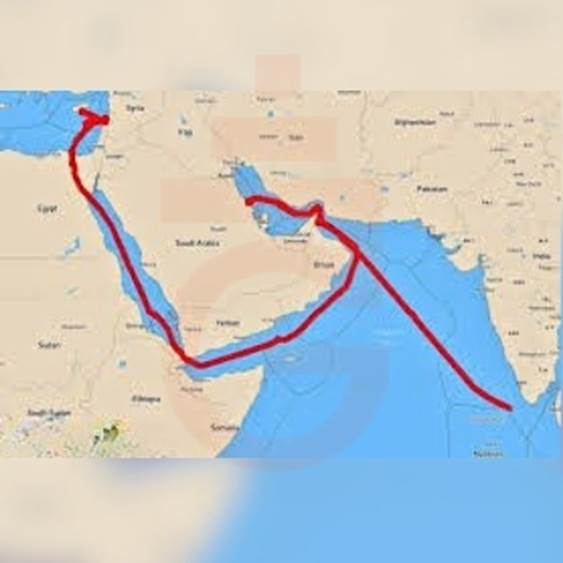
Speaking in Washington DC during the IMF’s spring meetings, Georgieva said the disruption in oil and gas supplies—particularly through the Strait of Hormuz—is already creating global consequences. About 20% of the world’s oil and gas supply passes through that route, and the conflict has significantly slowed distribution.
According to her, while the global economy has shown resilience in recent years, this latest crisis is testing that strength again. She stressed that the impact will not be limited to one region, noting that “everybody feels the impact,” with low-income countries likely to suffer the most.
The crisis has already begun to show real-world effects, especially in energy-dependent sectors. Fatih Birol, head of the International Energy Agency (IEA), warned that Europe could face jet fuel shortages within six weeks if supply disruptions continue.
He added that flight cancellations could begin “soon” if oil flows from the Middle East are not restored quickly.
This growing uncertainty is also affecting businesses. Budget airline easyJet has already reported a £25 million increase in fuel costs over the past month due to rising oil prices, warning that its profits will take a hit.
At the same IMF event, Mohammed Aljadaan, Saudi Arabia’s finance minister, said official oil prices do not reflect the true cost of getting oil to market.
He explained that while trading screens may show prices around $90–$100 per barrel, the real cost—including insurance and shipping—can rise as high as $120 to $160 per barrel due to the risks tied to the conflict.
Aljadaan also cautioned against expecting a quick recovery, even if the war ends immediately. According to him, it could take weeks or even months for supply chains to stabilise and for oil production and transportation to return to normal.
Georgieva also advised governments to be cautious in how they respond to rising energy costs. She warned that overly generous support measures—such as broad energy subsidies—could worsen the situation by increasing demand at a time when supply is already limited.
Instead, she encouraged countries to focus on reducing energy consumption. Drawing from lessons during the COVID-19 pandemic, she suggested measures like remote work and reduced energy use in homes and offices.
“Brace for the pain,” she said, urging policymakers not to take actions that could deepen the crisis despite good intentions to protect citizens.
Meanwhile, François Villeroy de Galhau, governor of the Bank of France, described the current situation as highly unpredictable.
However, he noted that inflation levels are currently more stable compared to the early stages of previous crises. He assured that central banks are prepared to act if rising energy costs begin to trigger broader inflation across wages, services, and goods.
According to him, while central banks cannot control initial energy price spikes, they will intervene if those increases begin to spread across the wider economy.
The ongoing Middle East conflict, particularly involving Iran, has disrupted key global oil routes, especially the Strait of Hormuz—a critical passage for energy exports.
Although a ceasefire has been announced, global leaders remain cautious, as it is unclear whether it will hold or lead to lasting peace. Until stability returns, energy markets are expected to remain volatile.
With supply chains still under pressure and uncertainty surrounding the conflict’s outcome, global leaders and institutions are urging caution. For now, the message is clear: the energy shock is global, the effects are already being felt, and recovery may take time.