
Washington / Caracas
Senior United States officials have confirmed that Washington is pursuing a strategy centered on controlling Venezuela’s oil exports as part of a broader pressure campaign against the country’s interim authorities. The disclosures were made through interviews, congressional briefings, and official statements reports between January 5 and January 7, 2026. US officials insist the plan does not involve the deployment of American ground troops.
In a monitored interview with ABC News, Senate Armed Services Committee Chairman Roger Wicker said the strategy focuses on controlling Venezuela’s oil logistics, including tankers and shipping routes, to prevent crude exports from being diverted to allies such as Cuba. According to him, the objective is to redirect Venezuelan oil to the open market under US oversight.
“The government does intend to control the oil, taking charge of the ships, the tankers, and none of them are going to go to Havana,” Wicker said, adding that Venezuela’s storage capacity is reportedly near its limit, restricting its ability to generate revenue without external approval.
It was also cited from three sources familiar with internal administration discussions who said the US has informed Venezuela’s interim president, Delcy Rodríguez, that expanded oil production would depend on meeting specific conditions. These reportedly include severing economic ties with China, Russia, Iran, and Cuba, and entering an exclusive partnership with the United States for oil production and heavy crude sales.
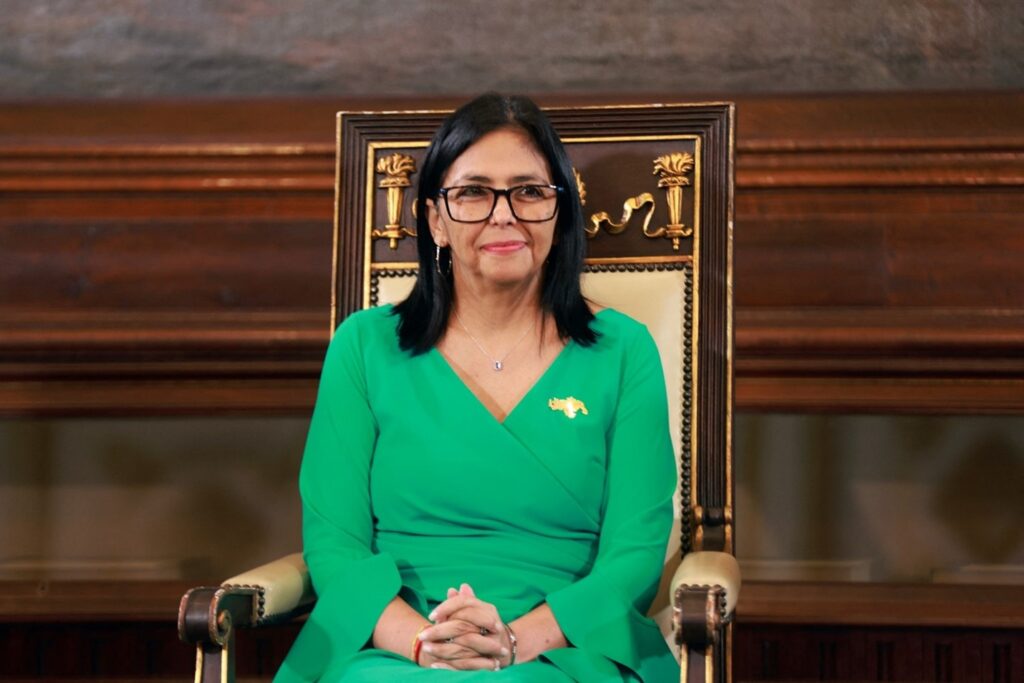
According to one of the sources, US Secretary of State Marco Rubio told lawmakers during a private briefing that Washington believes Caracas could face financial insolvency within weeks if oil exports remain blocked. Rubio reportedly argued that US leverage stems from Venezuela’s limited storage capacity and constrained export options.
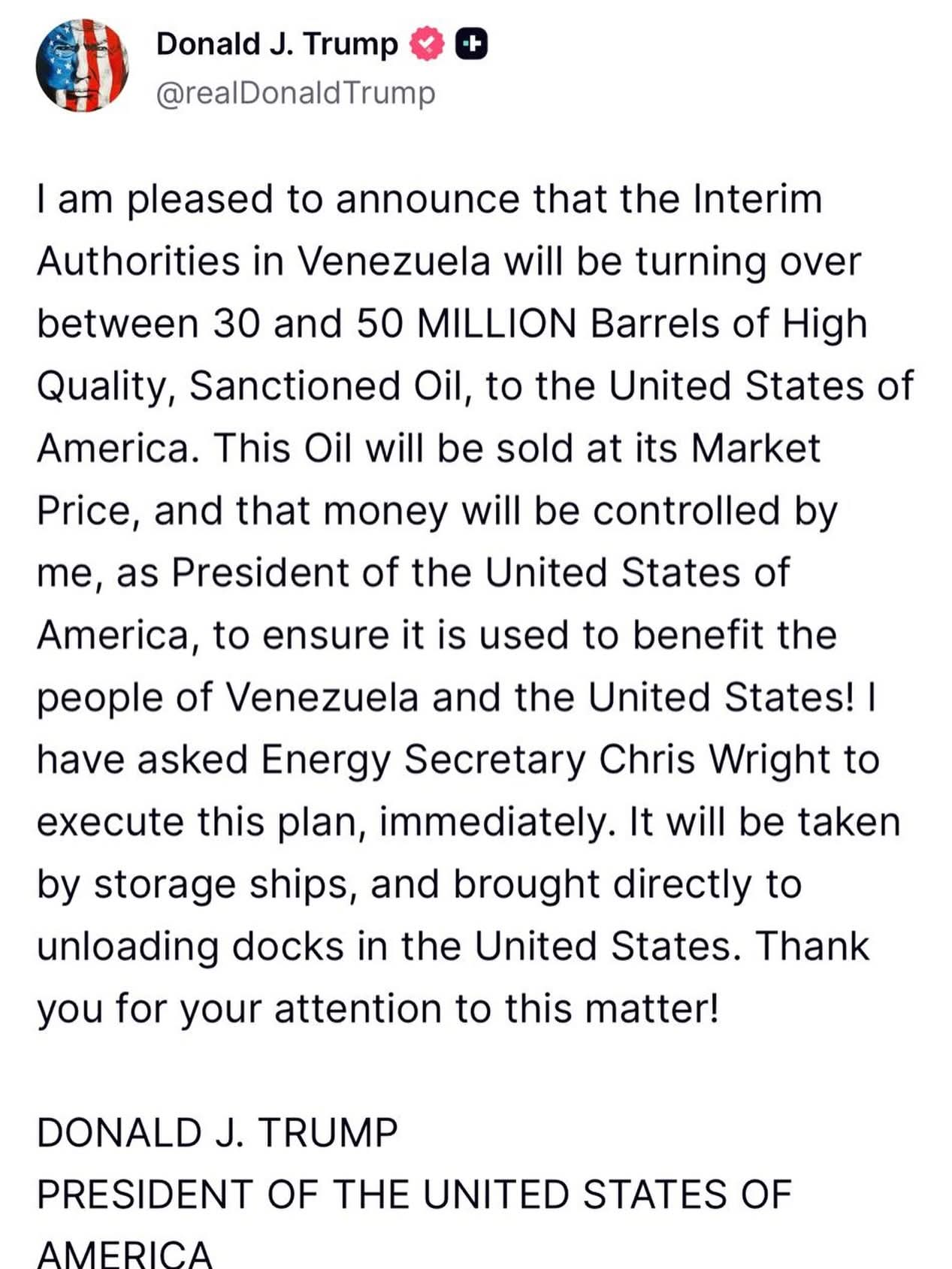
President Donald Trump later reinforced the administration’s position in a public post on his Truth Socia App, stating that Venezuela’s interim authorities would turn over between 30 million and 50 million barrels of oil to the United States. He said the oil would be sold at market prices, with proceeds controlled by the US government to ensure they are used “to benefit the people of Venezuela and the United States.” Trump added that he had directed Energy Secretary Chris Wright to implement the plan immediately.
According to the US Energy Information Administration, Venezuela holds an estimated 303 billion barrels of crude oil, the largest proven reserves globally. The United States consumes about 20 million barrels of oil per day and produces approximately 13.4 million barrels daily.
Despite official assurances that the oil strategy does not involve troop deployment, reports of a recent US military operation in Caracas have intensified scrutiny in Congress. ABC News reported that Democratic lawmakers are demanding classified and public briefings to clarify the intent, scope, and legal basis of US actions.
“We were not provided adequate information about the intent and scope of this operation,” one Democratic lawmaker was quoted as saying outside the Capitol. Lawmakers from both parties have called for greater clarity on how the actions align with US foreign policy objectives and international law.
Last month, President Trump announced what he described as a “total and complete blockade” of sanctioned oil tankers entering or leaving Venezuela. When pressed for clarification, he described the action simply as “a blockade.”
Following a US military operation over the weekend, former Venezuelan president Nicolás Maduro and his wife, Cilia Flores, were captured by US forces and later appeared in federal court in New York, according to ABC News. Maduro pleaded not guilty to multiple charges and told the court he remains Venezuela’s legitimate president.
Venezuela’s Supreme Court described Maduro’s removal as a “kidnapping” and subsequently swore in Vice President Delcy Rodríguez as interim leader on January 5, 2026. In a national address, Rodríguez condemned the US action as an assault on Venezuelan sovereignty and declared a seven-day national mourning period.
Officials in Caracas and Havana said at least 50 Venezuelan and Cuban security personnel were killed during the operation. Cuba announced two days of mourning for 32 military personnel, while its official newspaper Granma published tributes to those killed. Cuban President Miguel Díaz-Canel described the US action as aggression and a violation of sovereignty.
Russia and Iran warned against unilateral control of Venezuelan resources and called for respect for international law, while China urged restraint and dialogue, reiterating its opposition to external interference in sovereign states.
The United Nations said it is closely monitoring developments. A UN spokesperson confirmed that consultations are ongoing among Security Council members, though no resolution has been adopted. The UN called on all parties to avoid escalation, protect civilians, and respect international legal frameworks governing the use of force and natural resources.
A senior US administration official described the strategy as one of “maximum leverage,” aimed at curbing illegal migration, combating narcotics trafficking, and revitalizing Venezuela’s oil infrastructure. Wicker reiterated that the plan “does not appear to involve US troops,” saying, “This is not a matter of boots on the ground.”
Key details, including precise casualty figures from the operation and the full legal basis for US control of Venezuelan oil assets, have not been independently confirmed, and the White House has not released operational specifics.
In the coming days, US authorities are expected to move to operationalize oil transfer and sales mechanisms, while Congress presses for further briefings. International attention is also likely to focus on UN deliberations, oil shipment movements, and the impact on global energy markets.
Inside Venezuela, analysts say the interim government faces mounting economic pressure as storage limits constrain revenue, making the coming weeks critical for negotiations, sanctions enforcement, and regional stability.