
WASHINGTON / NORTH ATLANTIC — January 8, 2026
The Marinera, formerly the Bella‑1, was intercepted after weeks of evasion from Venezuelan waters. The operation highlights compliance risks for international shipping, energy trade, and companies handling sanctioned cargo.
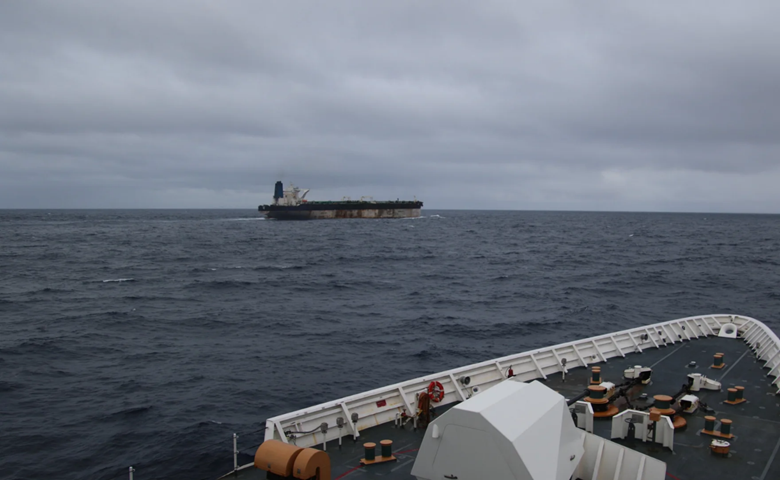
United States authorities have seized a Russian‑flagged oil tanker with links to Venezuela in the North Atlantic Ocean after a weeks‑long pursuit, in a high‑stakes operation aimed at enforcing sanctions on illicit oil shipments, officials said.
The vessel, renamed Marinera and previously known as Bella 1, was intercepted and boarded on Wednesday under a U.S. federal court warrant for alleged violations of American sanctions, according to the U.S. European Command. The ship had resisted an initial boarding attempt near Venezuelan waters in late December and was tracked across the Atlantic before being taken under U.S. control.
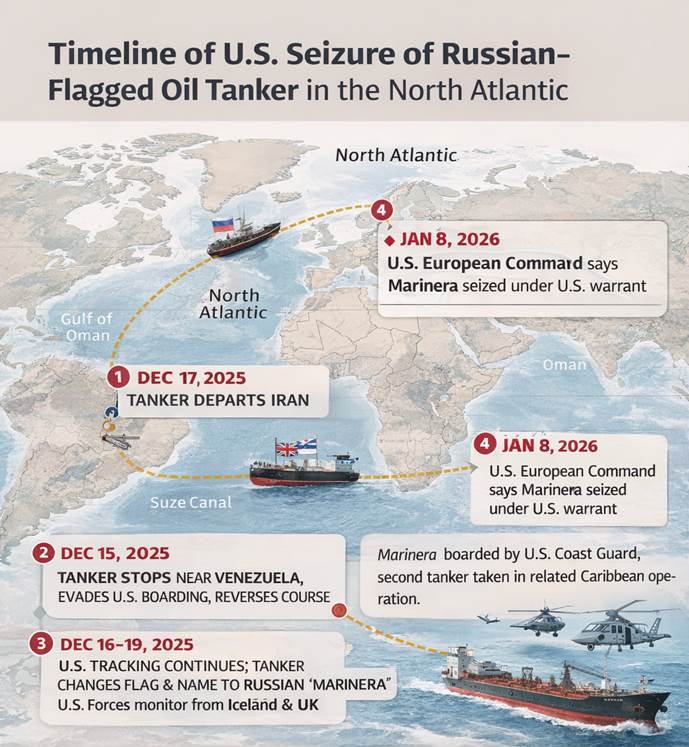
Officials said the tanker was sanctioned in 2024 for its role in transporting oil linked to Venezuela and other sanctioned networks. After evading U.S. forces in the Caribbean, the vessel changed its name, turned off its automatic identification system (AIS), and was later registered under the Russian flag — a move that Moscow described as a legitimate reflagging. Despite this, U.S. forces pursued and seized the tanker in international waters between Iceland and Scotland.
The operation formed part of a broader U.S. effort to enforce maritime sanctions on oil shipments associated with Venezuela and other sanctioned entities, including networks accused of using “shadow fleet” tankers to move cargoes covertly. U.S. authorities also reported the seizure of a second sanctioned tanker, the M/T Sophia, near the Caribbean.
U.S. Response and International Reaction
The Pentagon said the blockade of sanctioned oil exports remains in effect globally, with Defense Secretary Pete Hegseth describing the action as part of efforts to uphold sanctions enforcement. U.S. military and Coast Guard assets, including maritime patrol aircraft, supported the operation.
Russia sharply condemned the seizure, calling it a violation of international law and demanding the return of its crew. The Russian Transport Ministry asserted the vessel was navigating under the Russian flag in compliance with maritime norms, and criticized the U.S. action under provisions of the 1982 United Nations Convention on the Law of the Sea. Russian officials have described the interception as “outright piracy.”
No independent confirmation has emerged about direct clashes between U.S. and Russian naval forces during the operation, though reports indicate that Russian naval assets, including a submarine, monitored the situation as the ship was pursued across the Atlantic.
U.S. authorities may transfer the tanker’s crew to the United States for legal proceedings, and further action in U.S. courts is expected. The case highlights growing geopolitical tensions over sanctions enforcement, maritime law, and efforts to disrupt illicit oil trade networks. Governments, international maritime organizations, and global trade actors are closely watching developments, with potential implications for sanctions policy and compliance risk management.
Experts advising commercial shipping firms and traders say the incident underscores the importance of adhering to international sanctions and tracking legal rulings that could affect maritime operations and contractual obligations.