
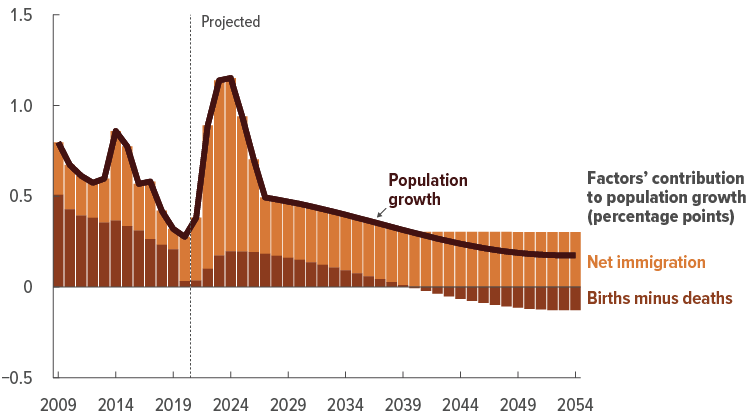
The United States is on track for a sustained slowdown in population growth, with projections indicating that the nation’s population could begin to shrink after 2056, according to a new report by the Congressional Budget Office (CBO).
The analysis cites declining birth rates, an aging population, and moderating immigration as key factors behind the projected deceleration. Slower population growth carries significant implications for the U.S. economy, labor markets, and federal fiscal planning, particularly concerning Social Security, healthcare, and workforce dynamics.
The CBO’s forecast underscores a pivotal demographic shift for the United States. While population growth has historically fueled economic expansion and supported the labor force, the projected slowdown signals potential challenges in sustaining long-term economic growth and funding entitlement programs.
Experts note that policy decisions around immigration, family support, and healthcare could influence these trends, but absent major interventions, the country is likely to face decades of slower demographic expansion, culminating in a gradual population decline in the latter half of the 21st century.
This development positions the United States alongside other advanced economies facing aging populations and shrinking workforces, highlighting the need for strategic planning in areas ranging from urban infrastructure to social services and economic competitiveness.