
By Victor Odion
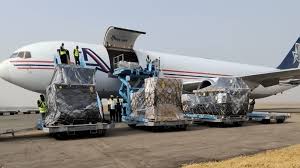
The recent delivery of military supplies by the United States to Nigeria has once again drawn attention to a security partnership that has shaped Nigeria’s counterinsurgency efforts for more than a decade. Confirmed by the United States Africa Command (AFRICOM), the delivery took place in Abuja and was described as the transfer of “critical military supplies” intended to strengthen Nigeria’s capacity to address terrorism, violent extremism, and other forms of insecurity.
While the announcement itself was brief and largely diplomatic in tone, its implications are far-reaching. For Nigeria, a country grappling with overlapping security crises across multiple regions, foreign military assistance is not merely symbolic. It intersects with questions of national sovereignty, regional stability, governance, accountability, and the lived realities of millions of citizens who experience insecurity not as an abstract policy problem, but as a daily threat to life, livelihood, and dignity.
This article examines the broader meaning of the U.S. delivery—what it represents, why it matters, and what it does not resolve.
Nigeria’s Security Landscape: A Multi-Front Challenge
Nigeria’s insecurity is neither new nor singular. Over the past decade, the country has battled the Boko Haram insurgency and its offshoot, the Islamic State West Africa Province (ISWAP), primarily in the North-East. These groups have carried out attacks on civilians, military targets, schools, and humanitarian facilities, displacing millions and destabilizing entire communities.
Beyond the North-East, insecurity has taken different forms. In the North-West, armed banditry and mass kidnappings have become a defining feature of daily life, affecting rural communities and disrupting agriculture, trade, and education. In parts of the Middle Belt, communal conflicts—often driven by competition over land and resources—have escalated into cycles of reprisal violence. Elsewhere, criminal networks exploit weak enforcement and economic hardship to expand illicit activities.
This layered security environment means that Nigeria’s armed forces are stretched across multiple theaters, each with distinct operational demands. It is within this context that international military support, including from the United States, is framed as a force multiplier rather than a silver bullet.
The U.S.–Nigeria Security Partnership in Context
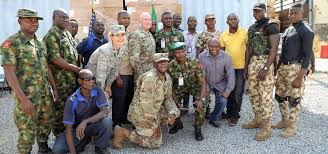
Nigeria and the United States have maintained a long-standing security cooperation, rooted in shared interests in counterterrorism, regional stability, and maritime security in the Gulf of Guinea. This partnership has taken various forms, including military training, intelligence sharing, advisory support, and the provision of equipment.
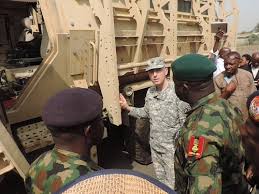
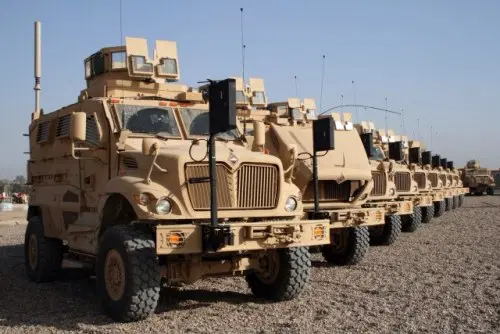
AFRICOM’s confirmation of the latest delivery situates it within this broader framework. Although specific details of the equipment were not disclosed, U.S. officials emphasized that the supplies are intended to enhance Nigeria’s operational effectiveness. Nigerian military authorities similarly acknowledged the support as part of ongoing efforts to modernize the armed forces.
From Washington’s perspective, Nigeria occupies a strategic position in West Africa. As the region’s most populous country and one of its largest economies, Nigeria’s stability—or lack thereof—has implications for neighboring states already contending with extremist spillover from the Sahel. Analysts consistently argue that Nigeria’s internal security challenges cannot be isolated from regional dynamics.
Regional Implications: Why Nigeria Matters Beyond Its Borders
West Africa is experiencing a period of profound instability. Extremist groups operating across porous borders have exploited governance gaps, political upheavals, and economic distress. In this environment, Nigeria is often viewed as a linchpin: its capacity to secure its territory influences migration flows, arms trafficking, and the spread of militant networks.
The U.S. delivery, therefore, is not only about Nigeria’s internal security. It reflects a broader concern about preventing further destabilization in a region where fragile states face increasing pressure. For international partners, supporting Nigeria is partly about containment—limiting the geographic and operational expansion of violent groups.
However, this strategic calculus also raises questions about dependency and sustainability. External assistance can bolster short-term capacity, but it cannot substitute for domestic reforms that address the root causes of insecurity.
Beyond Hardware: The Limits of Military Assistance
While improved equipment and logistics can influence battlefield outcomes, observers widely caution against viewing military aid as a standalone solution. Nigeria’s security challenges are deeply intertwined with structural issues, including poverty, unemployment, corruption, weak local governance, and unresolved grievances.
Civil society organizations and security analysts often emphasize that without parallel investments in governance, justice, and development, military gains risk being temporary. Communities that feel marginalized or unprotected may remain vulnerable to recruitment by armed groups, regardless of the level of foreign support received by security forces.
This tension underscores a central reality: security is as much political and social as it is military.
Public Perception and Diaspora Reactions
The U.S. delivery has elicited mixed reactions among Nigerians, both at home and in the diaspora. For some, it represents reassurance that Nigeria retains international relevance and support amid mounting challenges.
“This kind of support shows Nigeria still matters on the global stage,” a U.S.-based Nigerian security analyst observed, while also stressing that effectiveness depends on how the assistance is used and whether it translates into tangible improvements in civilian safety.
On social media, expressions of optimism coexist with skepticism. One X user, @thekanoblog, welcomed the support, writing:
“We welcome any form of support to address the security and terrorism challenges in our country, Nigeria, regardless of where it comes from.”
Others voiced concern about accountability and end-use. Another user, @AlexEZIREALI43, questioned whether the supplies might be misused, reflecting broader distrust in institutions and ongoing debates about the reintegration of so-called repentant militants.
These reactions highlight a deeper issue: public confidence in security interventions is shaped not only by outcomes, but by transparency and trust.
Accountability, Human Rights, and Civilian Protection
Concerns about accountability are not new in discussions of foreign military assistance to Nigeria. Advocacy groups have repeatedly called for clearer oversight mechanisms to ensure that aid does not contribute to civilian harm or human rights violations.
Both Nigerian and U.S. authorities have, at various points, emphasized the importance of compliance with international humanitarian standards. Yet critics argue that communication around the scope, monitoring, and impact of military aid remains insufficient.
For affected communities, accountability is not an abstract principle. It determines whether security operations are perceived as protective or predatory. Without credible safeguards, military assistance risks reinforcing skepticism rather than confidence.
Measuring Success: What Should Nigerians Expect?
Ultimately, the significance of the U.S. delivery will be judged not by diplomatic language, but by outcomes on the ground. Safer roads, reduced attacks, restored livelihoods, and the ability of displaced persons to return home are the metrics that matter most to ordinary Nigerians.
Security cooperation, no matter how robust, is only one part of a broader equation. Its success depends on coordination with governance reforms, economic inclusion, and sustained political will.
A Partnership Under Scrutiny
The renewed focus on U.S.–Nigeria security cooperation comes at a moment of heightened public scrutiny. Nigerians are increasingly demanding results, transparency, and accountability—not only from international partners, but from their own institutions.
The delivery of military supplies may strengthen operational capacity, but it also sharpens fundamental questions: How is security defined? Who benefits from assistance? And how can trust be rebuilt in a system where many feel unprotected?
Between Support and Responsibility
The latest U.S. military support to Nigeria stands as both an affirmation of strategic partnership and a reminder of the complexity of Nigeria’s security crisis. It reflects shared concerns about terrorism and regional instability, while also exposing the limits of external solutions to deeply rooted domestic challenges.
For Nigeria, the path forward lies not in rejecting international cooperation, but in integrating it into a broader, accountable, and people-centered security strategy. For the United States, credibility will hinge on ensuring that assistance aligns with civilian protection and long-term stability.
In the end, the true measure of this partnership will not be found in official communiqués or equipment deliveries, but in whether Nigerians experience a meaningful reduction in fear—and a renewed confidence that security efforts, domestic and international alike, serve the public good.