
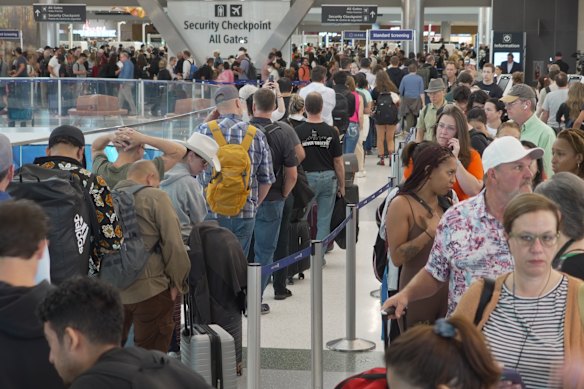
Air travel across the United States has been thrown into disarray following a mass staffing shortfall within the , with 3,120 officers reportedly absent from duty on Wednesday, triggering unprecedented delays at major airports nationwide.
Passengers encountered security lines stretching up to four and a half hours, as checkpoint capacity struggled to cope with surging passenger volumes. The disruption is unfolding against the backdrop of what officials warn could become the most challenging travel day in the agency’s 24-year history.
The staffing crisis has drawn attention to worsening welfare conditions among TSA personnel. Reports indicate that some officers have resorted to selling plasma to supplement income, while others are sleeping in their vehicles due to financial strain—raising broader concerns about workforce sustainability within the aviation security system.
The situation has been compounded by political inaction in Washington, where departed for a two-week recess without reaching a resolution on funding and labor-related issues affecting the agency.
Analysts warn that the convergence of staffing shortages, peak travel demand, and policy deadlock poses significant risks not only to passenger convenience but also to national aviation security efficiency. Airports are expected to experience continued congestion, missed flights, and operational bottlenecks if immediate remedial measures are not implemented.
With no short-term resolution in sight, today’s travel conditions are projected to set a new benchmark for delays, intensifying pressure on federal authorities to address both the structural and immediate challenges facing the TSA workforce.