
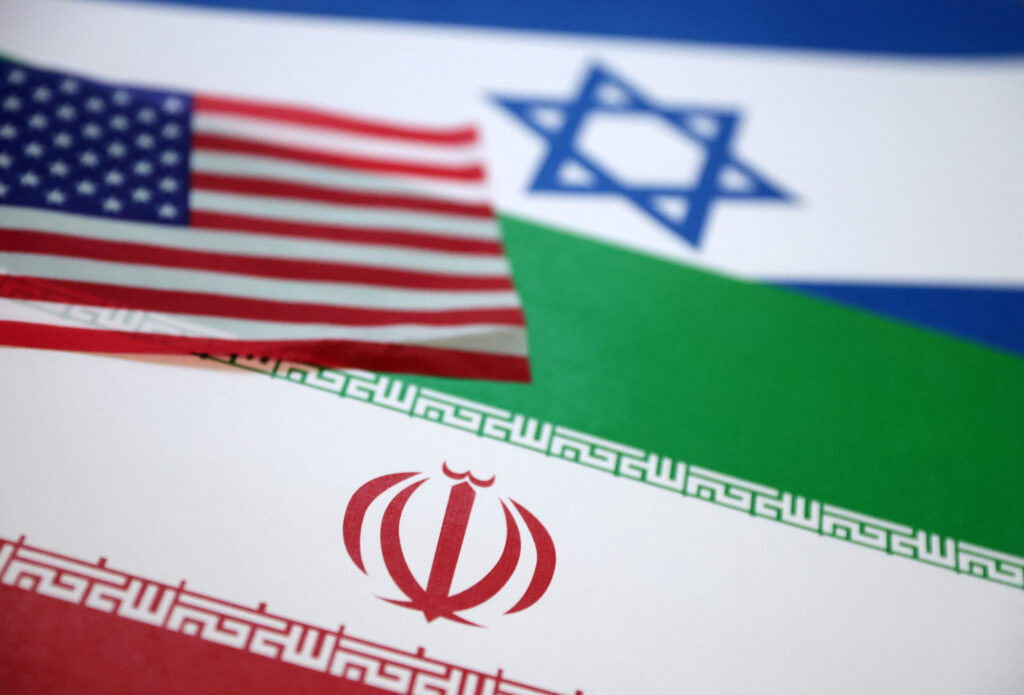
The flags may not have changed, but the battlefield has. What began decades ago as a Cold War-era proxy contest has metastasized into a three-way standoff with nuclear undertones, regional proxies, and an increasingly fragile international order unable—or unwilling—to contain it. The hostility between the United States, Israel, and Iran is no longer a regional irritant. It is a structural feature of global instability, and pretending otherwise is a luxury the world can no longer afford.
Forty Years of Enmity, Zero Years of Resolution
The 1979 Islamic Revolution did not merely topple a government. It rewrote the strategic map of the Middle East. Iran’s theocratic leadership declared the United States “the Great Satan” and Israel a Zionist entity with no legitimate claim to existence—and has maintained both positions, with varying degrees of fervor, for nearly half a century. Washington, for its part, has never forgiven the 444-day hostage crisis. Israel has viewed Iranian ambition as an existential threat since the moment Ayatollah Khomeini rose to power.What makes this conflict so intractable is that it is not merely political—it is ideological, theological, and deeply personal to all three actors. No peace agreement has ever been attempted. No back-channel diplomacy has produced lasting thaw. And no administration in Washington, Democratic or Republican, has found a formula that simultaneously reassures Israel, constrains Iran, and avoids military escalation.
The Nuclear Question: A Clock That Never Stops
Iran’s nuclear program has been the central flashpoint for three decades. The 2015 Joint Comprehensive Plan of Action (JCPOA) represented the most serious diplomatic effort to constrain Tehran’s enrichment capacity—and it worked, temporarily. Iran reduced its stockpile, accepted inspections, and received sanctions relief. Then came the United States’ unilateral withdrawal in 2018, and with it, the collapse of the deal’s logic. Iran resumed enrichment, surpassing 60% purity—just short of weapons-grade—while negotiations for a JCPOA revival stalled indefinitely.Israel has always opposed any deal that did not permanently dismantle Iran’s nuclear infrastructure. Its intelligence services have conducted a years-long campaign of sabotage against Iranian nuclear facilities and scientists—operations acknowledged with nods and winks but rarely with official credit. Tehran, meanwhile, has calculated that nuclear ambiguity—the deliberate uncertainty about whether it possesses or is capable of producing a weapon—provides its best deterrent against regime change.The result is an ongoing slow-motion crisis. The International Atomic Energy Agency has repeatedly flagged concerns about undisclosed sites. Uranium enrichment continues at facilities hardened against aerial bombardment. And Israel has made clear, repeatedly and at the highest levels, that it will not allow Iran to cross the nuclear threshold—whatever the cost.
The Proxy Web: From Lebanon to Yemen to Gaza
Iran’s strategy has never relied solely on its own military. The Islamic Revolutionary Guard Corps has spent decades cultivating a “Axis of Resistance”—a network of armed proxies stretching from Hezbollah in Lebanon and Syria, to Hamas and Palestinian Islamic Jihad in Gaza, to the Houthis in Yemen, to Shia militias in Iraq. This network serves a dual purpose: it projects Iranian power far beyond its borders, and it ensures that any Israeli or American strike on Iran carries the risk of igniting simultaneous multi-front conflicts.The October 7, 2023 Hamas attacks on Israel and the subsequent war in Gaza sharpened all of these tensions. Hezbollah traded fire with Israel along the Lebanese border for months. The Houthis launched drone and missile attacks on Red Sea shipping and Israeli territory. Iran itself, in an unprecedented escalation, fired over 300 drones and missiles directly at Israel in April 2024—the first direct Iranian military strike on Israeli soil in the history of the conflict. Israel’s retaliatory strike inside Iranian territory, however limited, crossed another threshold.These are no longer proxy skirmishes. They are the scaffolding of a direct conflict that the international community has managed to keep from becoming a full-scale war—barely, and not without considerable luck.
America’s Impossible Position
Washington occupies an increasingly uncomfortable position in this triangle. The United States has a treaty-level commitment to Israel’s security and has positioned carrier strike groups in the region during multiple crises. It has also, at various moments, pursued direct diplomacy with Iran—the Obama-era nuclear deal being the most ambitious example. These two imperatives are not always compatible.Every administration discovers, usually quickly, that the US cannot simultaneously restrain Israeli military action and maintain credible pressure on Iran. When Washington signals openness to diplomacy with Tehran, Israel sees abandonment. When Washington backs Israeli strikes, it forecloses the diplomatic space it needs to negotiate. The result has been decades of reactive policy: managing crises rather than resolving them, and kicking the most dangerous decisions to the next administration.This is not a failure unique to any one president or party. It reflects a genuine structural dilemma: the interests of the United States’ closest regional ally are, in important respects, incompatible with the diplomatic tools Washington would need to durably neutralize the Iranian threat. Sanctions have not produced regime change. Military pressure has not ended the nuclear program. Diplomacy has not produced a durable deal. The triangle endures.
What a Path Forward Requires—and Why It Remains Elusive
Any serious path to de-escalation would require things that none of the three parties appear willing to offer. Iran would need to accept binding, verifiable limits on its enrichment program and curtail its proxy networks—concessions that would require the Supreme Leader to accept constraints on the tools he views as existential guarantors of regime survival. Israel would need to accept a negotiated arrangement that leaves Iran with some civilian nuclear capacity rather than demanding total dismantlement—a position no Israeli government has been willing to publicly defend. And the United States would need to sustain a diplomatic engagement with Tehran across multiple administrations, without allowing domestic politics or Israeli pressure to collapse the effort at the first crisis.None of these conditions currently exist. What does exist is a regional order in which any single miscalculation—an Israeli airstrike that goes too far, an Iranian proxy operation that kills American troops, a ship seized in the Strait of Hormuz—could trigger the escalatory spiral that diplomats have spent years trying to prevent.
The hostility between the United States, Israel, and Iran is not a mystery. Its origins are well-documented, its dynamics well-understood, and its dangers well-catalogued. What is missing is the political will—in Washington, Jerusalem, and Tehran alike—to accept the compromises that a durable settlement would require. Until that will materializes, the world will continue to manage a conflict it has declined to resolve, hoping that luck holds, and that the next crisis is not the one that ends the era of managed tension for good.