
By Mohammed Abdulhammed
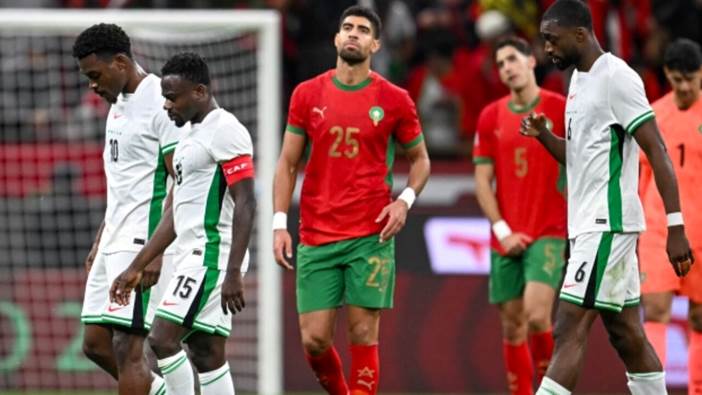
Football is the one sport that unites Nigerians, for 120 minutes on Wednesday evening, majority of the country were glued to their TV screens cheering, hoping and praying that the Super Eagles will be book their spot in the finals at yet another continental showpiece, however they saw their Africa Cup of Nations title ambitions come to an end on Wednesday night after suffering a 4–2 penalty shootout defeat to host nation Morocco in a tense semi-final encounter. The match, played under intense atmosphere and expectation, ended goalless, with Morocco advancing to the final at Nigeria’s expense.
The morning after, reality is still settling in, Nigerians with gloomy faces still trying to figure out where it all went wrong for a team that showed plenty of promise, played some of the best football the nation has seen since 1994. This was supposed to be the country’s year, their tournament. So many things have gone wrong with Nigerian football over the last 12 months, this tournament was seen as a redemption and an avenue to make a statement after missing out on back to back world cup qualification.
The high-stakes contest, officiated by Ghanaian referee Daniel Laryea, was characterized by tactical discipline, defensive solidity, and moments of individual brilliance that ultimately failed to produce a decisive goal in regulation time. After extra time also ended without a breakthrough, the semi-final was decided from the penalty spot, where Morocco held their nerve to secure victory.
For much of Wednesday evening, Nigeria stood still. Across cities, towns, and rural communities, millions of Nigerians were glued to television screens, radio commentary, and online streams, united in hope as the Super Eagles chased a return to the AFCON final. The fixture carried weight far beyond the pitch—symbolising belief, recovery, and pride following a challenging period for Nigerian football.
From the opening whistle, both Nigeria and Morocco approached the match with caution and respect. Morocco, buoyed by home support, pressed aggressively in phases, while Nigeria adopted a compact shape, relying on disciplined defending and structured midfield play to absorb pressure and launch counterattacks.
The first half produced few clear chances, with both goalkeepers largely untested. Nigeria’s defensive unit remained organized, limiting Morocco’s attacking rhythm, while the Super Eagles struggled to convert possession into clear scoring opportunities.
The second half followed a similar pattern. Morocco enjoyed spells of territorial dominance, driven by crowd energy and quick ball circulation, but Nigeria’s backline held firm, repelling waves of attacks and forcing shots from less dangerous positions. At the other end, Nigeria’s forwards found space intermittently but lacked the final pass or decisive finish needed to take the lead.
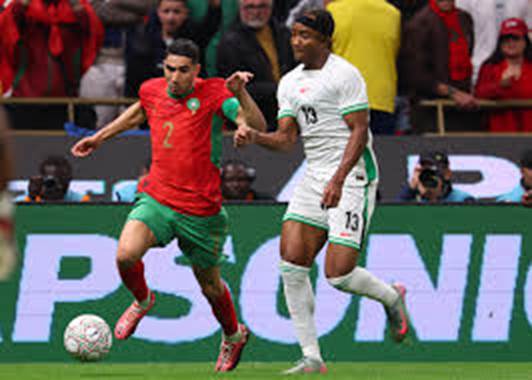
As the regulation time ended goalless, the tension inside the stadium and across Nigeria intensified. Extra time brought fatigue, cautious substitutions, and fewer risks, as both sides appeared unwilling to concede late. Despite moments of promise, neither team managed to break the deadlock, setting the stage for penalties.
In the shootout, Morocco demonstrated composure and precision, converting four of their penalties. Nigeria, by contrast, managed only two successful kicks, with missed efforts proving costly at such a decisive stage of the tournament.
When the final Moroccan penalty was converted, the result was sealed—Morocco into the AFCON final, Nigeria eliminated at the semi-final stage.
The final whistle from referee Daniel Laryea marked the end of Nigeria’s title quest and the beginning of reflection for players, coaches, and supporters alike.
Beyond the immediate disappointment, Nigeria’s AFCON campaign had been framed as a potential turning point. Coming into the tournament, the Super Eagles were seeking redemption after a turbulent 12-month period that included failure to qualify for successive FIFA World Cups—a rare and painful setback for one of Africa’s most storied football nations.
Throughout the competition, Nigeria showed resilience, tactical growth, and renewed belief. The team progressed steadily through the group stage and knockout rounds, earning praise for defensive organization, improved discipline, and a clear game plan. For many observers, the semi-final appearance alone represented a step forward from recent struggles.
However, the penalty defeat also highlighted familiar challenges—particularly the fine margins that separate success from failure at the highest level. Inability to convert chances, limited creativity in decisive moments, and the psychological demands of knockout football again proved decisive.
In the hours following the defeat, anticipation gave way to reflection. Across Nigeria, reactions ranged from disappointment and frustration to cautious optimism about the team’s direction. While the loss was painful, many supporters acknowledged the progress shown during the tournament and the resilience displayed against a strong host nation.
The absence of dramatic collapse or heavy defeat softened the blow. Nigeria exited the tournament unbeaten in regulation time in the semi-final, falling only on penalties—a reminder of how narrow the margins were.
Attention now turns to the third-place playoff against Egypt, scheduled for Saturday. While the match carries less prestige than a final, it remains an opportunity for Nigeria to finish the tournament on a positive note and secure a podium finish.
Beyond the playoffs, the conclusion of this AFCON campaign signals the start of a new planning phase. With no immediate World Cup qualification fixtures ahead, focus will increasingly shift toward long-term development, squad evolution, and preparation for the 2027 Africa Cup of Nations, to be jointly hosted by Kenya, Tanzania, and Uganda.
While Wednesday’s semi-final defeat will linger in memory, it also serves as a reference point for rebuilding confidence and ambition. The Super Eagles demonstrated that they remain competitive at Africa’s highest level, even if the final hurdle proved elusive this time.
As preparations begin for the next cycle, Nigeria’s challenge will be to transform promise into consistency—and near-success into silverware. For now, the AFCON journey ends in disappointment, but not without renewed belief that brighter moments may lie ahead.