
Abuja
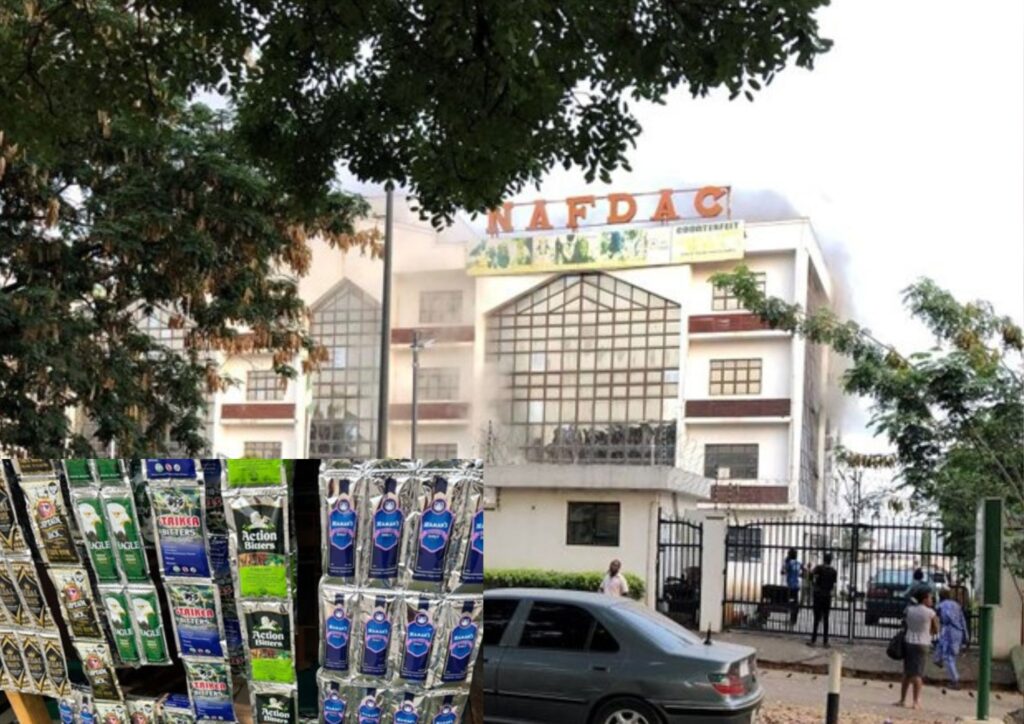
The Federal Government has taken a serious step to fight alcohol abuse among kids and teenagers, launching a nationwide campaign led by the National Agency for Food and Drug Administration and Control (NAFDAC) and the National Orientation Agency (NOA). The move comes as more young Nigerians are getting easy access to cheap alcoholic drinks, especially sachets and mini-bottles.
The campaign, which kicked off on Tuesday in Abuja, is in partnership with the Federal Competition and Consumer Protection Commission (FCCPC). Its main goal is to make sure the ban on selling alcohol in sachets and bottles smaller than 200 milliliters is fully enforced. These small drinks, NAFDAC says, are a big reason kids are getting drunk early.
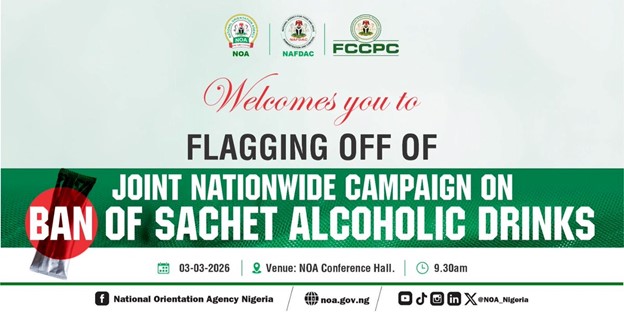
Sachet alcohol first came around in the late 1990s. It was meant to give adults a cheap, easy way to enjoy alcohol. But because sachets are cheap, portable, and easy to hide, children and teenagers quickly started buying them. By the 2010s, studies were already showing that underage drinking was on the rise, leading to school truancy, risky behaviour, accidents, and other problems.
In 2018, the Nigerian Senate gave alcohol manufacturers a five-year grace period to stop making sachet alcohol. But even after the deadline, compliance was patchy. NAFDAC has now resumed full enforcement after the moratorium ended.
A 2021 nationwide survey by NAFDAC showed that more than half of underage respondents (54.3%) said they could easily get alcohol on their own. Almost half of them admitted buying sachets or mini-bottles. That shows the problem is still real and urgent.
At the campaign launch, NAFDAC Director-General, Prof. Mojisola Christianah Adeyeye, made it clear the effort is all about protecting Nigerian kids.
“We are here for our children. Our presence today is to ensure that the ban on alcoholic beverages packaged in sachets and small bottles of less than 200 millilitres remains in force in the interest of public health and the future of our nation,” she said.
Prof. Adeyeye warned that when kids drink alcohol too early, it can affect their brain development, lead to addiction, hurt their school performance, cause accidents, violence, and even affect long-term health.
NOA Director-General, Lanre Issa-Onilu, described the campaign as a team effort to teach responsible behaviour and stop youth from falling into cycles of preventable addiction.
“No nation prospers when its youth are caught in cycles of preventable addiction. Protecting our children today is an investment in Nigeria’s stability and productivity tomorrow,” he said.
The campaign will use NOA’s network across all 774 local government areas in Nigeria to reach schools, markets, motor parks, youth groups, and religious institutions. Both traditional and social media platforms will be used to spread the message far and wide.
Citizens will also be able to report violations using the NOA CLHEEAN App, creating a community-backed system to support enforcement.
Prof. Adeyeye emphasised that the campaign is not about punishing people, but preventing harm. She called on parents, community leaders, shop owners, and the general public to play their part.
“Alcohol remains one of the most abused substances among young people in Nigeria, largely because it is cheap, widely available and often sold in small, easy-to-hide packaging,” she added.
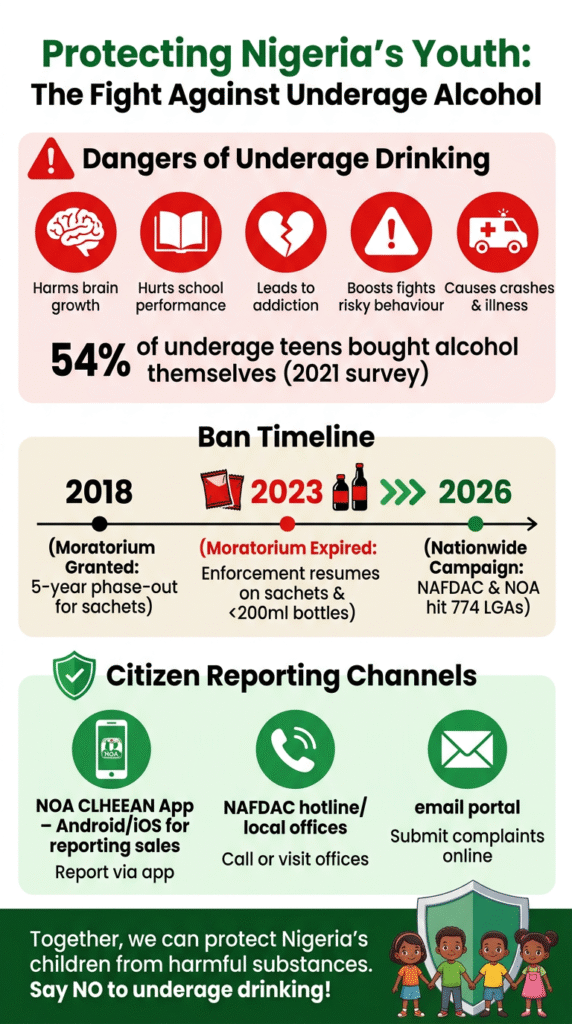
Analysts say the policy is important for public health and social reasons. Sachet alcohol doesn’t just lead to underage drinking; it is also linked to youth crime, school dropouts, and other social problems. Reducing access among kids can lower long-term social costs and make communities safer.
The government’s renewed push also brings Nigeria in line with international best practices. The World Health Organization (WHO) has repeatedly advised countries to restrict sales of alcohol in cheap, small packaging to keep kids from drinking.
With substance abuse among young Nigerians on the rise, the campaign signals that the government is serious about enforcing the law. Experts say the initiative is a critical step in promoting responsible drinking habits and protecting public health.
How well this campaign works will show whether the government, communities, and citizens can work together to protect children. Enforcement alone is not enough; public awareness and community vigilance are crucial.
“Our goal is clear: ensure children grow up free from preventable addiction, and in doing so, secure a healthier, safer, and more productive Nigeria,” Issa-Onilu said.
The success of the campaign depends on everyone doing their part — from regulators to parents, teachers, and shop owners — to make sure kids no longer have easy access to alcohol in sachets and small bottles.