
Abuja
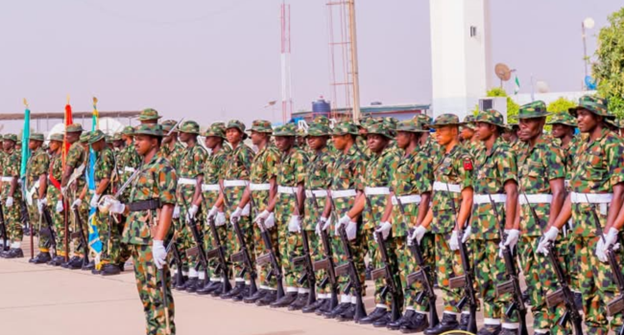
President Bola Tinubu has ordered the immediate deployment of an army battalion to Kwara State following a brutal terrorist attack on rural communities that left scores of villagers dead, homes and shops destroyed, and hundreds displaced.
The directive, confirmed late Wednesday by the President’s spokesman Bayo Onanuga, marks a significant escalation in federal security response to the worsening threat posed by armed extremist groups operating along Kwara’s border areas.
According to the Presidency, the newly deployed battalion will lead Operation Savannah Shield, a coordinated military effort aimed at neutralising terrorist elements, restoring order and preventing further attacks on vulnerable communities.
President Tinubu strongly condemned the assault, describing the attackers as “heartless” and accusing them of deliberately targeting defenceless civilians in what he called a “doomed campaign of terror.”
He expressed particular outrage over reports that the victims were killed after refusing to submit to extremist indoctrination by the assailants.
“It’s commendable that the community members, even though Muslims, refused to be conscripted into a weird belief that promoted violence over peace and dialogue,” the President said.
The President also extended condolences to families of those killed and directed federal agencies to work closely with the Kwara State Government to provide relief and humanitarian support to affected communities.
The attack occurred late Tuesday night in Woro Village, where gunmen reportedly stormed the community, killing more than 160 residents, setting buildings ablaze and forcing survivors to flee into surrounding bushes.
Eyewitness accounts indicate that shops were looted and burned, while the residence of a traditional ruler was also set on fire during the assault. Panic spread quickly as gunmen shot indiscriminately, targeting men, women and children.
Two vehicles belonging to the village head were allegedly seized by the attackers and used to transport abducted residents, while others were gunned down as they attempted to escape.
Local sources identified the attackers as members of an extremist group known as Mahmuda, which has reportedly been active in remote areas spanning the Kwara–Niger border.
Residents said the assault followed the community’s refusal to accept indoctrination by the group, a move that reportedly enraged the attackers and triggered the deadly reprisal.
Security analysts say such tactics — forcing ideological compliance under threat of violence — mirror methods previously associated with terrorist groups operating in Nigeria’s North-West and North-Central regions.
President Tinubu said the killing of civilians for rejecting violent extremism underscored the urgency of decisive military action.
Kwara State, long regarded as one of Nigeria’s more peaceful regions, has in recent months witnessed a sharp rise in security threats, particularly in its northern and border communities.
Armed groups exploiting forest corridors and porous borders have increasingly targeted isolated settlements, raising concerns among residents and security agencies alike.
The military had earlier warned of terrorist infiltration into remote parts of the state. In January, security forces announced the launch of “sustained coordinated offensive operations” aimed at flushing out armed groups and dismantling camps that were previously inaccessible.
According to military sources, several terrorist enclaves were destroyed during these operations. However, authorities acknowledged that while networks had been weakened, the threat had not been fully eliminated.
In response to the deteriorating security situation, the Kwara State Government imposed curfews in affected areas and ordered the temporary closure of schools for several weeks to protect students and teachers.
Schools were later directed to reopen on Monday, following assurances from security agencies of improved safety measures.
Governor Abdulrahman Abdulrazaq, who visited the affected communities after the attack, described the killings as genocide and vowed that those responsible would be brought to justice.
He assured residents that terrorists and criminal elements operating across the Kwara–Niger border would be flushed out within one month, promising intensified security operations and closer coordination with federal forces.
The deployment of an army battalion under Operation Savannah Shield represents a renewed federal push to stabilise the area and prevent further bloodshed.
According to the Presidency, the operation will focus on securing vulnerable communities, dismantling terrorist hideouts and restoring public confidence in state protection.
President Tinubu also directed enhanced intelligence sharing and collaboration between federal security agencies and state authorities to ensure a sustained response beyond the immediate deployment.
For residents of Woro Village and surrounding communities, the arrival of additional troops offers a measure of hope after one of the deadliest attacks in the area’s history.
Many survivors remain displaced, traumatised and fearful of returning to their homes, as questions linger over how deeply entrenched extremist networks have become in the region.
As security forces move in and relief efforts begin, residents say lasting peace will depend not only on military presence, but on sustained vigilance, community engagement and long-term security planning.
The tragedy in Kwara has once again highlighted Nigeria’s evolving security challenges — and the urgent need to protect rural communities increasingly caught on the front lines of violent extremism.