
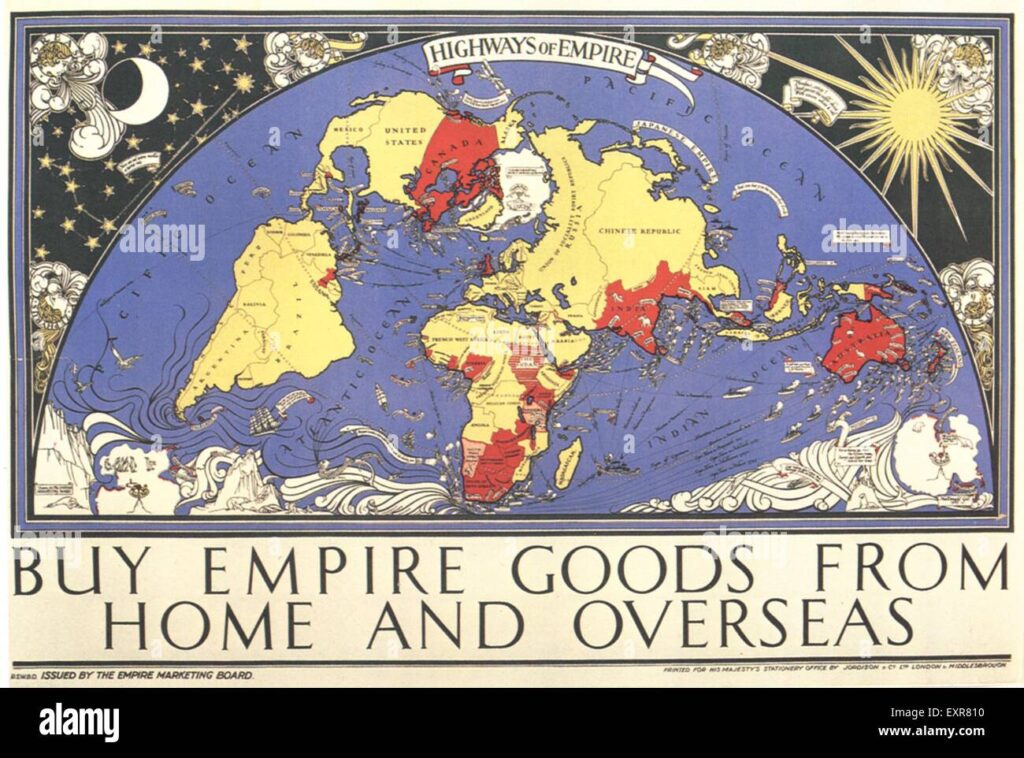
The contemporary international order is frequently described as post-colonial, rules-based, and increasingly multipolar. Yet the persistent spread of conflict, coercion, and external intervention across regions suggests a less reassuring reality. From Eastern Europe and the Middle East to Africa and Latin America, war and political disruption have become routine instruments through which global power is exercised. What confronts us is not the return of classical empire, but the reimagining of colonialism—a system of domination adapted to modern technologies, legal frameworks, and geopolitical narratives.Unlike the colonial empires of the nineteenth and early twentieth centuries, today’s dominant powers rarely seek territorial annexation or formal administrative control.
Sovereignty remains intact in principle. In practice, however, it is increasingly conditional. Power is exercised through military superiority, economic leverage, technological dominance, and normative authority, allowing external actors to shape outcomes within states without assuming responsibility for governance or social consequence.
Power Without Possession
In the classical era, colonial authority required physical occupation. In the twenty-first century, power operates remotely and selectively. Advanced airpower, naval reach, cyber capabilities, satellite surveillance, financial sanctions, and control over global institutions allow major powers to influence political trajectories far beyond their borders.
The United States, China, and Russia exemplify different but converging models of this reimagined order. The United States exercises influence through a global security architecture—alliances, military deployments, sanctions regimes, and financial dominance anchored in the dollar. China projects power primarily through infrastructure, trade, and long-term economic entanglement, embedding leverage in ports, railways, energy systems, and digital networks. Russia relies more openly on coercion, disruption, and military force, exploiting instability to expand strategic space.These approaches differ in style, but not in essence. All enable authority without possession and influence without accountability.
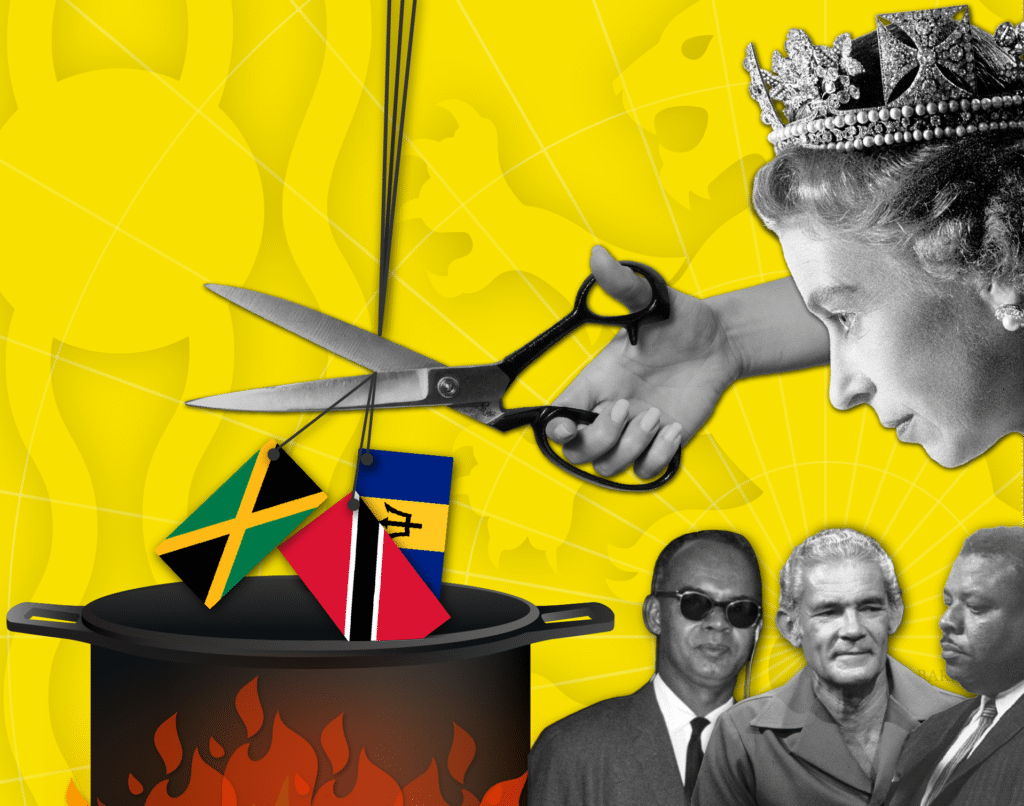
War as a Systemic Instrument
A defining feature of reimagined colonialism is the normalization of war as a management tool rather than an exceptional failure. Contemporary conflicts are frequently prolonged, internationalized, and contained within weaker states, while their strategic benefits accrue externally.
The war in Ukraine illustrates how global powers can decisively shape a conflict’s course—militarily, economically, and diplomatically—without bearing its primary human and infrastructural costs. In the Sahel, cycles of insurgency and counterterrorism have entrenched foreign military involvement while leaving local states weaker and societies more fragmented. In parts of the Middle East, prolonged conflicts have become arenas for proxy competition, arms testing, and strategic bargaining.
In such contexts, instability is not merely tolerated; it is often functional. Resolution may reduce leverage, while managed disorder sustains influence.
Economic and Technological Domination
Reimagined colonialism relies as much on economics and technology as on force. Debt dependency, sanctions, trade asymmetries, reconstruction contracts, and control over supply chains shape national choices long after active hostilities subside. Technological dominance—over data, surveillance systems, artificial intelligence, and digital infrastructure—further entrenches dependency, rendering some states unable to independently secure borders, manage information, or regulate their own economies.
These mechanisms mirror earlier colonial extraction, albeit in more abstract and contractual forms. Control has become less visible, but no less consequential.
A Defining Contemporary Case
Recent events have brought these dynamics into sharp relief. In one widely reported case, U.S. forces forcibly detained a sitting president of a sovereign state, followed by public statements from the U.S. president asserting personal authority over the future management of that country’s principal economic trust. Regardless of how such actions are legally justified—whether through security claims, emergency powers, or exceptional circumstances—the broader implications are difficult to ignore.

A foreign executive exercising unilateral coercive power over another state’s leadership, while openly claiming discretion over its core economic assets, reflects a logic long associated with colonial authority. The absence of formal annexation does not diminish the substance of domination. What matters is not symbolism, but decision-making power: who removes leaders, who controls resources, and who acts without reciprocal vulnerability.
That such actions can occur with limited global outrage or institutional restraint underscores how deeply normalized hierarchical sovereignty has become. Domination no longer announces itself as rule; it presents itself as necessity.
Legitimacy and the Language of Order
Unlike classical colonialism, which relied on explicit hierarchies, reimagined colonialism is justified through universalist language—security, democracy, development, stability, and global order. These concepts are not inherently illegitimate. Yet their selective application reveals an enduring asymmetry: some states define the rules, others are governed by them.
International institutions often reinforce this imbalance, embedding unequal power relations within legal procedures and financial mechanisms. As a result, domination is rendered procedural, resistance is delegitimized, and inequality is normalized.
Conclusion: Naming the Structure
To describe the present global condition as reimagined colonialism is not rhetorical excess; it is analytical clarity. Colonialism has not vanished—it has adapted. Its instruments are more sophisticated, its narratives more palatable, and its operations more dispersed than before. But its core logic remains intact: concentrated power, asymmetric war, and external domination.

Understanding contemporary conflicts as isolated crises obscures the structural reality that connects them. They are not anomalies in an otherwise just system; they are expressions of how power is organized and exercised in the twenty-first century. Naming this structure is therefore not merely an academic exercise—it is a prerequisite for any serious effort to rethink sovereignty, global justice, and the future of international order.