
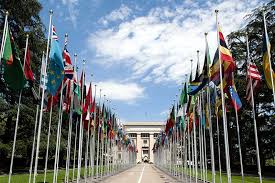
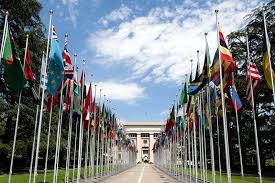
Independence is often marked by national flags, constitutions, and admission into international institutions. These milestones signal recognition, but they do not automatically confer the ability to govern effectively. Recent debates across international politics have renewed attention on a long-standing question: why do some recognized states struggle to exercise real autonomy, while others translate sovereignty into tangible authority? Understanding this gap matters because it shapes global stability, development outcomes, and the everyday security of citizens.
Two Meanings of Sovereignty
Under international law, sovereignty is primarily legal. Recognition by other states grants formal equality, territorial integrity, and the right to participate in global institutions such as the United Nations. Article 2 of the UN Charter affirms the sovereign equality of all member states, regardless of size or power.
Yet political scientists and international relations scholars have long distinguished legal sovereignty from what is often called empirical or power sovereignty—the actual capacity of a state to control territory, enforce laws, and make independent decisions. As Robert Jackson, a leading scholar of postcolonial statehood, observed in his work on “quasi-states,” recognition can exist even where governing capacity remains weak. This distinction helps explain why sovereignty can appear complete on paper but constrained in practice.
When Recognition Outpaces Capacity
Legal Sovereignty Versus Power Sovereignty
Legal sovereignty provides legitimacy and protection against formal conquest. Power sovereignty, however, determines whether that legitimacy can be exercised. It rests on several interlinked capacities:
- Effective control of territory and borders
- Enforcement of laws and maintenance of internal order
- Autonomy in foreign policy and economic decision-making
- Ability to mobilize resources for development and defense
Where these capacities are underdeveloped, independence becomes largely symbolic. States may hold seats in global forums yet struggle to implement policy, secure borders, or provide basic services.
Power Asymmetry and the Global System
The imbalance between the Global North and Global South sharpens this challenge. Advanced economies typically combine financial strength, technological capacity, and military reach, enabling them to shape outcomes beyond their borders. Many developing states, by contrast, remain constrained by:
- Dependence on external financing, aid, or commodity exports
- Fragile political institutions
- Limited or externally supported security capabilities
This asymmetry allows powerful states to exert influence—sometimes through markets and diplomacy, other times through coercive measures—while weaker states rely heavily on the protections of formal recognition.
Multilateral Institutions Under Pressure
Multilateral institutions were designed to narrow these gaps, but their structures often reflect existing power hierarchies. The UN Security Council, for example, concentrates enforcement authority among five permanent members with veto power, a system rooted in post-World War II realities. Analysts within and outside the UN system have noted that this limits the organization’s ability to consistently protect weaker states when major power interests are involved.
As a result, multilateralism can safeguard legal sovereignty without guaranteeing the material conditions needed to sustain it.
Economic, Political, and Security Foundations of Viable Statehood
Economic Capacity
Economic strength underpins all other dimensions of sovereignty. Without reliable revenue, states cannot fund institutions, infrastructure, or defense. Heavy reliance on external creditors or aid can narrow policy choices, reducing strategic autonomy even in the absence of direct coercion.
Institutional Authority
Durable sovereignty depends on institutions that command legitimacy and enforce decisions. Elections and constitutions are necessary, but insufficient, if state authority cannot reach across society. Weak institutions often create governance vacuums filled by external actors, informal networks, or non-state forces.
Coercive Capacity
Security forces remain a core component of statehood. While external peacekeeping or security assistance can provide short-term stability, long-term sovereignty requires an autonomous ability to deter threats and maintain order. Dependence on foreign security arrangements can leave states vulnerable to shifting external priorities.
Implications for People and Society
The gap between recognition and capacity is not an abstract problem. For citizens, it often translates into unreliable public services, insecurity, and limited economic opportunity. When states cannot exercise authority, individuals and communities bear the consequences through displacement, poverty, or exposure to conflict. Sovereignty, in this sense, is not only a diplomatic status but a condition that shapes daily life.
Several developments will influence how this debate evolves:
- Ongoing discussions on reforming global institutions, particularly the UN Security Council
- Regional integration efforts aimed at pooling economic and security capacity
- Shifts in global finance and development models that affect state fiscal autonomy
- The balance between external assistance and domestic institution-building
None of these trends guarantees change, but each will shape how recognition and capacity interact in practice.
Sovereignty without capacity remains fragile. Recognition can protect states from formal erasure, but it cannot substitute for the economic, institutional, and security foundations that make independence meaningful. In the 21st century, statehood is less a one-time declaration than a continuous process of building the ability to govern, decide, and protect. Where law and power converge, sovereignty becomes durable; where they diverge, it remains aspirational.
Pingback: When Power Forgets Diplomacy: A Foreign Policy Lecture Reflected in Trump’s Legacy - thoughtmedianetwork.com