
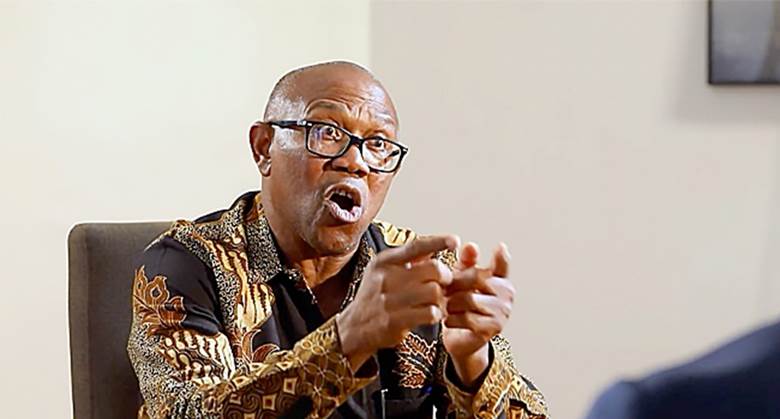
Former Anambra State Governor and Labour Party presidential candidate Peter Obi has criticized the Federal Government over reports that about $9 million was spent on foreign lobbyists in the United States, describing the alleged expenditure as a misplaced priority at a time when Nigeria faces deepening social and economic challenges.
In a statement published on his official X handle on Friday, Obi said the reported spending highlighted what he described as a pattern of leadership choices that favour image management abroad over urgent investments in human development at home.
According to him, the country’s persistent development crisis is not accidental but a consequence of long-standing policy decisions that prioritize waste, propaganda, and corruption over the well-being of citizens.
“It is both tragic and concerning that our leaders continue to prioritize waste, corruption, propaganda, lies, and negative aspects of development over positive initiatives,” Obi said.
“Recently, it was reported that $9 million of taxpayers’ money was spent on lobbyists in Washington, which I believe is just a small fraction of the global waste occurring in the same manner,” he added.
Obi argued that the reported expenditure was particularly troubling given Nigeria’s worsening living conditions, rising poverty levels, and failing social infrastructure, stressing that public funds should be directed toward addressing critical needs rather than managing international perception.
Citing data from the Human Development Index (HDI), Obi noted that Nigeria has remained in the low human development category for 35 consecutive years, from 1990 to 2025, despite being Africa’s largest economy and most populous nation.
He contrasted Nigeria’s trajectory with countries such as China and Indonesia, which he said were in the same HDI category as Nigeria in 1990 but have since advanced into medium and high development groups.
“The achievements of these nations were not the result of fate, miracles or natural endowments,” Obi said, “but rather a consequence of choices and the cumulative effects of good and bad leadership.”
Obi used Nigeria’s healthcare system as a key example of what he described as misplaced priorities, pointing to poor health indicators that continue to undermine quality of life.
He said Nigeria currently ranks among the countries with the lowest life expectancy globally and remains one of the top two countries worldwide for maternal mortality, making childbirth a high-risk experience for many women.
“Nigeria now has the lowest life expectancy in the world and ranks among the top two countries globally for maternal mortality,” Obi said.
He argued that while these indicators reflect systemic neglect, scarce resources are being channeled into public relations efforts rather than strengthening hospitals, primary healthcare centers, and emergency services.
Obi maintained that the alleged $9 million spent on lobbying could have been redirected to vital sectors such as healthcare, education, and infrastructure, with immediate and measurable impact.
According to him, the amount would be sufficient to fund the entire 2024 capital budget of at least one major teaching hospital in each of Nigeria’s six geopolitical zones, improving facilities, equipment, and staffing across the country.
“Nigerians are dying in failing hospitals while the government pays foreigners to pretend that everything is fine,” he said.
“We cannot continue to live in an illusion while our reality deteriorates.”
The former governor stressed that Nigeria’s challenges are not due to a lack of resources but rather a failure of prioritization and discipline in governance.
“Every naira of taxpayers’ money should serve the Nigerian people,” Obi said, calling for greater transparency, accountability, and a shift in policy focus toward human development outcomes.
His comments come amid ongoing public debate over government spending, rising debt levels, and the need for stronger oversight of public finances, particularly as Nigerians continue to grapple with inflation, unemployment, and declining public services.
As of the time of publication, the Federal Government has not issued a formal response to Obi’s claims regarding the alleged lobbying expenditure. The reports have, however, reignited broader discussions on governance, public trust, and the use of state resources in addressing Nigeria’s development challenges.
Political analysts say the remarks underscore growing scrutiny of government priorities ahead of future electoral cycles, with increasing pressure from opposition figures and civil society groups for reforms in public spending and service delivery.
For now, Obi’s comments have added to the national conversation on how public funds are allocated and whether Nigeria’s leadership choices align with the urgent needs of its citizens.