
Kano, Nigeria
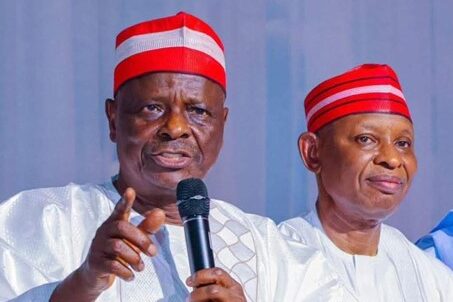
The political landscape in Kano State has been jolted following the defection of Governor Abba Kabir Yusuf from the New Nigeria People’s Party (NNPP) to the ruling All Progressives Congress (APC). The move, announced on Monday, saw several members of the Kano State House of Assembly and National Assembly also switch allegiances, with the governor citing internal party disputes and the need to align with the federal government as reasons for the defection.
The announcement has triggered a strong reaction from NNPP leader and former presidential candidate, Rabiu Musa Kwankwaso, who warned that Yusuf would “regret” the decision. In an interview with the BBC Hausa Service on Wednesday, Kwankwaso described the defection as a personal and political shock.
“Many people I spoke to felt it was some kind of arrangement — between him and me, or between him and others. I also feel like it is a dream. I wake up in the middle of the night hoping that it is not true. But reality has struck us in the face,” Kwankwaso said.
Kwankwaso, who leads the Kwankwasiyya political movement, expressed dismay at what he called the handing over of the “mandate of NNPP members and the people of Kano to the Gandujiyya political camp” without sufficient justification. The former governor of Kano State rejected Yusuf’s claims of internal crisis within the NNPP, arguing that disagreements are normal in any democratic party and could have been resolved internally.
“Sometimes I sit back and ask myself: what really happened? Who was at fault? Was it me? Was it the party? Were party members at fault? But I have not been able to find an answer,” Kwankwaso said. “I can assure you, to the best of my knowledge, there is no party more peaceful and stable than the NNPP. And if there is any, let them conduct their national conventions and candidate selection processes, then you will see disputes.”
Kwankwaso also addressed politicians who have defected from the NNPP but continue to wear the red caps associated with the Kwankwasiyya movement. He dismissed the practice as inconsistent with the movement’s principles. “Light and darkness have already been defined in Kano. If you want to practise Kwankwasiyya, who asked you to leave Kwankwasiyya? Stay where Kwankwasiyya is and practise it there,” he said.
On the political strength of former governor and APC national chairman Abdullahi Umar Ganduje, Kwankwaso expressed skepticism, questioning the former governor’s ability to deliver electoral victories. “If Ganduje truly had the power to raise someone’s hand to victory, he would have done so in 2019. If he had that power, he would have done so in 2023,” he said.
The NNPP leader insisted that Yusuf and his allies would face challenges in the APC, predicting that the defection could ultimately backfire. “Even if he does not return, he will regret it,” Kwankwaso added.
Governor Yusuf’s defection comes amid rising political realignments ahead of the 2027 general elections. Kano, Nigeria’s most populous state, has long been a stronghold of the Kwankwasiyya movement, which draws loyalty from many grassroots supporters. Analysts say Yusuf’s move represents not just a party switch, but a strategic repositioning that could reshape northern Nigeria’s political power dynamics.
Political analyst Dr. Aisha Bello told TMN, “This is not just a personal decision. It signals a strategic alignment that could redefine power equations in the region. How well Yusuf navigates this shift will have lasting implications for both the NNPP and APC in Kano.”
Historically, defections in Nigeria have been met with mixed results. While some politicians have successfully leveraged new party platforms to consolidate power, others have struggled to maintain their support base, especially when leaving a party with strong grassroots loyalty like the NNPP.
As the dust settles, the question now is whether Governor Yusuf can translate his new party affiliation into tangible political advantage, or whether Kwankwaso’s warning of regret will prove prescient. For now, Kano’s political arena is set for an intense period of maneuvering, negotiation, and contestation—one that could define the state’s political trajectory for years to come.