
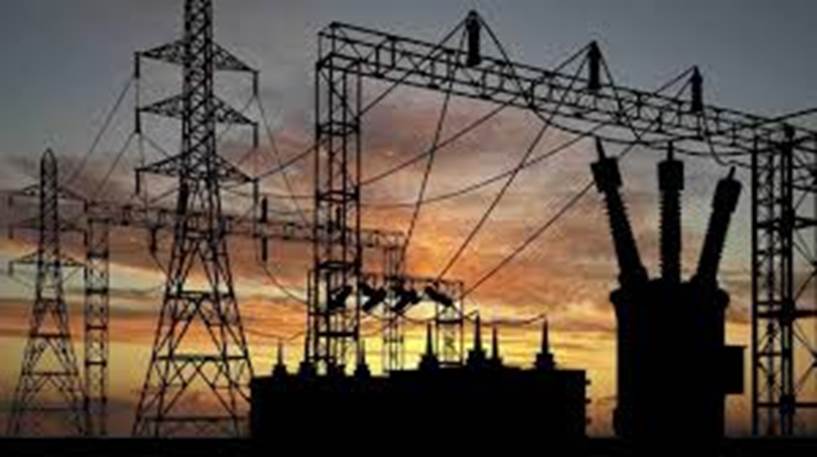
On January 23, 2026, Nigeria’s national electricity grid collapsed once again, plunging millions of homes, hospitals, factories, and offices into darkness. By midday, power generation had fallen from nearly 4,000 megawatts to almost zero, marking yet another nationwide blackout in a country where electricity failure has become routine.
Official statements described the incident as a “system disturbance” and promised restoration. But for many Nigerians, the bigger question is no longer when power will return — it is why the grid keeps failing?
This latest collapse was not a technical accident. It was the predictable result of decades of policy choices that left Nigeria’s electricity transmission system fragile, outdated, and dangerously overstretched.
Nigeria’s national grid was never designed to serve a 200-million-person economy, let alone a modern nation increasingly dependent on digital services, industrial production, and energy-intensive commerce. Much of the transmission infrastructure in use today was installed decades ago, long before the scale and complexity of Nigeria’s current electricity demand emerged.
The grid now operates far beyond its original design capacity. Aging lines, overloaded substations and limited redundancy mean that even small disturbances — a line trip, frequency fluctuation or equipment failure — can cascade into a nationwide blackout.
Compounding the problem is the absence of full automation. Without a fully functional Supervisory Control and Data Acquisition (SCADA) system, grid operators still rely heavily on manual interventions. In an era when power systems must balance supply and demand in milliseconds, this approach is not just outdated — it is dangerous.
The result is a system that fails often, fails broadly, and fails expensively.
The January 2026 blackout was not an anomaly. Nigeria’s grid has collapsed hundreds of times over the past two decades. Between 2010 and 2019 alone, more than 200 partial and total collapses were recorded. In 2024, the grid failed multiple times within a single year. Another nationwide outage followed in January 2025. Now, history has repeated itself again.
These failures occurred under different governments, different ministers, and different reform agendas. That continuity reveals an uncomfortable truth: the problem is systemic, not personal.
Each collapse resets progress, undermines public confidence, and deepens the structural weaknesses of the power sector.
Every grid failure pushes Nigeria further from industrial competitiveness. Manufacturers rely on diesel generators to keep production lines running, raising costs and reducing profit margins. Hospitals spend millions maintaining backup power systems. Telecom towers burn fuel daily to stay online. Small businesses — tailors, barbers, cybercafés, cold rooms — absorb losses that compound over time.
Electricity failure feeds inflation, drains productivity, and deters foreign investment. It is one of the most expensive inefficiencies in the Nigerian economy.
For households, the consequences are more personal. Power instability worsens energy poverty, increases living costs, and erodes quality of life. Students struggle to study. Medical equipment fails. Digital inclusion stalls. The darkness is not symbolic — it is lived, daily, in homes across the country.
To be fair, successive governments have not been idle. The Electricity Act of 2023, the Presidential Power Initiative, substation upgrades, and tariff reforms all represent sincere attempts to address long-standing weaknesses.
Yet these efforts remain fragmented and incremental, while the crisis demands structural redesign.
Key gaps persist:
- Transmission expansion has not kept pace with generation growth.
- Automation and real-time control systems remain incomplete.
- Grid infrastructure remains vulnerable to vandalism.
- The centralized grid architecture allows single-point failures to paralyze the entire nation.
Policy ambition has not matched the scale of the problem.
If Nigeria is serious about ending the cycle of grid collapse, the policy mindset must shift from emergency response to long-term system transformation.
First, the transmission network must be fully modernized. Aging assets should be replaced, and nationwide SCADA and smart-grid technologies deployed to allow real-time monitoring, control and protection.
Second, Nigeria must accelerate decentralization. A single national grid should no longer be allowed to fail the entire country. States and regions must be empowered — technically and financially — to generate, transmit and distribute power independently where feasible.
Third, electricity infrastructure must be treated as critical national security assets. Transmission vandalism should attract swift prosecution, backed by surveillance, community engagement and dedicated protection frameworks.
Fourth, the government must create a stable investment environment that encourages private participation not only in generation, but also in transmission, storage, and renewable energy.
Finally, maintenance culture must replace emergency spending. Preventive investment is cheaper than repeated collapse and restoration.
The January 23 collapse should be a national turning point. Nigeria cannot continue to treat darkness as normal or power failure as inevitable. Electricity is not a luxury — it is economic infrastructure, social infrastructure, and national infrastructure.
History will not judge this moment by how quickly supply was restored, but by whether leaders used it to break a cycle that has held Nigeria back for decades.
The choice before policymakers is clear: redesign the system now — or continue managing failure indefinitely.