
ABUJA, Nigeria — January 8, 2026
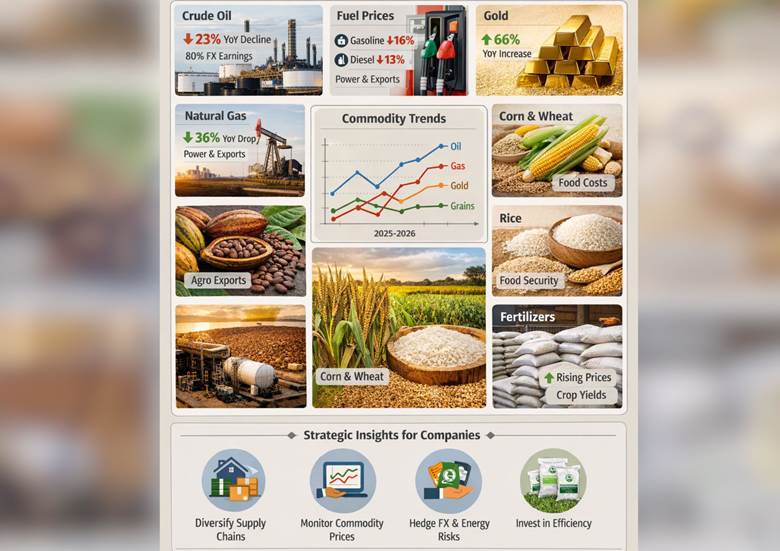
Nigeria’s economy relies heavily on a select set of strategic commodities that shape foreign exchange earnings, domestic production, and inflation. From energy resources to key agricultural staples, these commodities influence business planning and government policy. Understanding their trends is essential for investors, companies, and policymakers navigating 2026.
Top 10 Commodities in Nigeria
- Crude Oil (WTI / Brent / Urals)
Nigeria’s largest export and primary source of government revenue, crude oil generates roughly 80–90% of foreign exchange earnings. Year-on-year production and price data show a –21% to –29% decline, creating pressures on budget targets, subsidy programs, and debt servicing. Businesses must monitor oil movements closely, as they directly affect logistics costs, FX liquidity, and operational planning. - Natural Gas (TTF / UK / German Gas)
Home to some of the world’s largest gas reserves, Nigeria uses natural gas for electricity, industrial processes, and LNG exports. Despite –35% to –38% YoY declines, gas remains critical for energy policy, export revenue, and industrial stability. - Gasoline (Petrol) and 4. Diesel / Heating Oil
Fuel prices influence transport, food logistics, and manufacturing. Petrol saw a –16% YoY decline, while diesel fell –13%, though domestic costs remain high due to FX pressures. Companies relying on energy-intensive operations must track fuel prices closely. - Gold
Gold serves as a hedge against inflation and currency depreciation. Recent figures show +66% YoY growth, highlighting its strategic role in reserves diversification and wealth preservation. Financial institutions and investors may explore local refining or reserves-based hedging. - Cocoa
Cocoa remains a key agricultural export supporting rural incomes in Southwest Nigeria. Price movements affect both farmer revenue and agro-processing industries. - Corn (Maize) and 8. Wheat
These staples influence urban food prices, livestock feed, and food security. Corn trends are sensitive to weather and insecurity, while wheat imports rely on FX availability, affecting trade balances and inflation. - Rice
Rice is politically and socially sensitive. Weekly price fluctuations and local supply pressures underline its importance for food security and inflation management. - Fertilizers (Urea / Di-Ammonium)
Fertilizer availability affects crop yields, food production, and export potential. Rising prices impact inflation and rural livelihoods, making supply planning essential for agriculture and agro-industrial sectors.
Strategic Insights
Energy commodities (oil, gas, petrol, diesel) remain central to fiscal and FX stability. Food staples (rice, wheat, corn) determine urban and rural cost of living. Gold, cocoa, and fertilizers influence export earnings and wealth preservation. Monitoring these markets provides signals for both economic risk and opportunity.
Practical Guidance for Businesses and Households
- Diversify supply chains to reduce vulnerability to price shocks.
- Monitor commodity prices to adjust budgets, pricing, and investments.
- Use hedging instruments for FX or energy costs where available.
- Plan for inflation and FX risk, particularly in logistics and food-dependent sectors.
- Invest in local sourcing and efficiency to mitigate global price swings.
As Nigeria enters 2026, integrating commodity intelligence into corporate and policy strategies is critical for navigating volatility, safeguarding operations, and capitalizing on opportunities in energy, agriculture, and exports.