
Abuja — Nigeria has suspended the issuance of petrol import licences for a second consecutive month as regulators begin enforcing provisions of the Petroleum Industry Act that restrict fuel imports to situations where domestic supply is insufficient.
The move signals a shift in Nigeria’s downstream petroleum policy, as authorities increasingly prioritise local refining capacity to meet national fuel demand.
Under the framework of the Petroleum Industry Act, fuel import permits are to be granted only when local production cannot meet consumption levels. Regulators say the current suspension reflects confidence in domestic refining output.
Boost from Local Refineries
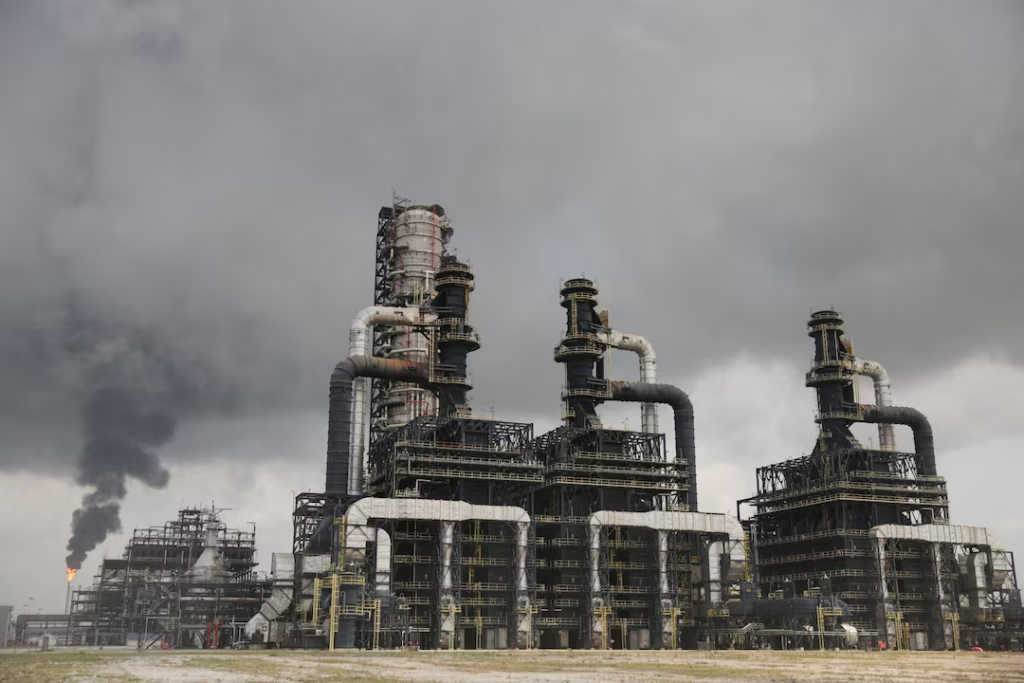
Industry observers attribute the development largely to growing domestic supply from facilities such as the Dangote Petroleum Refinery, alongside output from modular refineries operating across the country.
The policy shift is expected to reduce Nigeria’s long-standing reliance on imported refined petroleum products, a dependence that historically exposed the country to global supply disruptions and foreign exchange pressures.
Market Implications
Analysts say limiting imports could help conserve foreign exchange, strengthen local refining operations, and stabilise supply chains within the country’s downstream sector.
However, experts also caution that sustained domestic supply will depend on consistent refinery operations, stable crude feedstock availability, and efficient distribution networks.
Nigeria has been one of the world’s largest importers of refined petroleum products despite being a major crude oil producer. The enforcement of the PIA’s domestic supply provisions is therefore viewed as a significant policy shift in the country’s energy market.
Further updates from regulators are expected as authorities continue to monitor supply levels and market conditions.