
Abuja
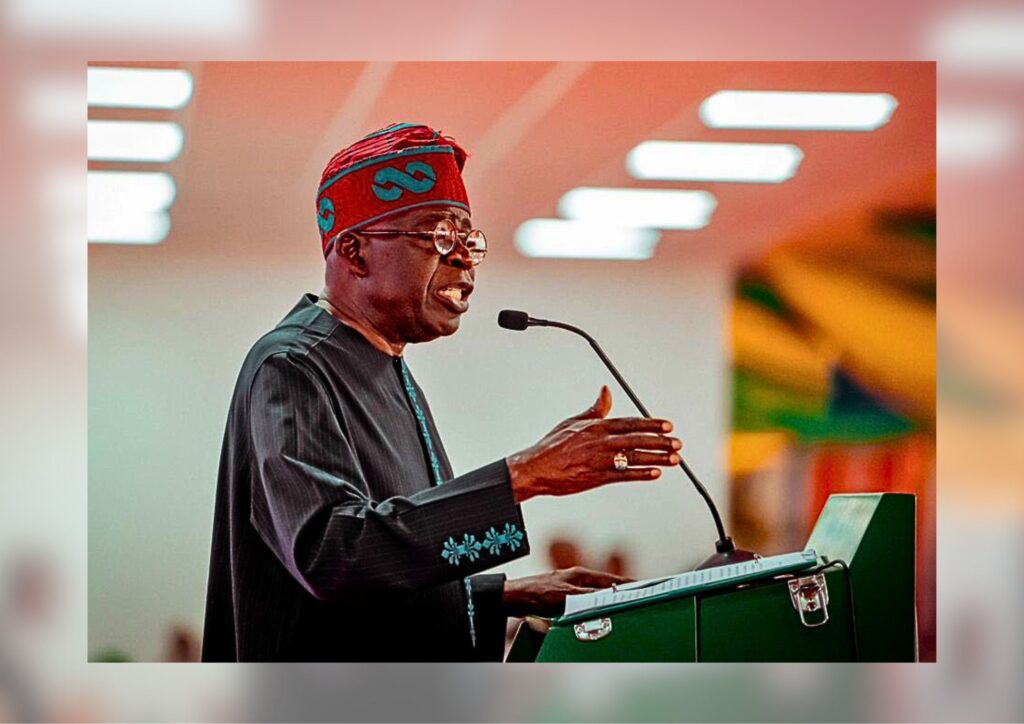
President Bola Ahmed Tinubu has assured Nigerians that his administration remains firmly committed to defeating terrorism and banditry while pursuing an economic growth strategy designed to lift the poorest households and strengthen long-term national stability.
The President gave the assurance on Monday while delivering his opening remarks at the National Economic Council (NEC) Conference on Inclusive Growth and Sustainable National Development, held at the State House, Abuja. The high-level gathering brought together governors, federal ministers, economic policymakers, and senior officials from across the federation to chart pathways for economic recovery and sustainable development.
Speaking against the backdrop of persistent security challenges and economic pressures, Tinubu described insecurity as one of the most urgent threats confronting the country, warning that no meaningful development can take place in the absence of peace and safety.
Addressing the issue of insecurity directly, the President pledged renewed efforts to strengthen Nigeria’s security architecture and support frontline personnel in the fight against terrorism and banditry.
“I am leaving here again to further find means to strengthen our security forces to defeat terrorism and banditry. That I promise you,” Tinubu said.
He acknowledged the emotional and political toll of the security crisis, describing it as a burden shared by leaders across the country.
“It is what has kept all of us sleepless at night, but I assure you that we will win with determination and resilience. We will overcome this unacceptable terrorism and banditry; it is not part of our culture, it is foreign to us,” he added.
The President stressed that insecurity is not only a humanitarian and national security concern but also a major economic obstacle, warning that persistent violence undermines investment, productivity, and development.
“It is an economic encumbrance if we do not find a solution to it,” he said.
Tinubu also commended several state governors for their efforts in protecting lives and property, singling out those leading states most affected by insecurity.
“I commend many of you, particularly the governor of Borno State, the governor of Katsina, Kaduna, and many of you who have done so much to defend our freedom, liberty and our commonwealth,” the President said.
He urged continued collaboration among federal, state and local governments, noting that security and development outcomes are inseparable and require coordinated action across all tiers of government.
Beyond security, Tinubu’s address focused heavily on the broader theme of inclusive growth — a central pillar of the NEC conference and a recurring theme of his administration’s economic messaging.
The President emphasised that Nigeria’s diversity remains one of its greatest strengths and argued that economic progress must be broad-based to guarantee national stability.
“Nigeria’s diversity is our strength. When states grow, Nigeria grows. When growth reaches the poorest households, national stability is strengthened. When development is sustainable, our children inherit growth,” he said.
He described the task before the country as both demanding and historic, framing his Renewed Hope Agenda as a national commitment that current sacrifices would ultimately lead to a fairer, more prosperous Nigeria.
Since assuming office in May 2023, Tinubu said his administration has undertaken what he described as bold but necessary reforms aimed at stabilising the economy, restoring investor confidence, and laying the foundation for long-term growth.
According to the President, efforts are ongoing to strengthen macroeconomic stability through improved revenue performance, stronger public financial management, and enhanced coordination across government institutions.
He noted that while the reforms have required difficult adjustments, they are intended to correct structural weaknesses and create a more resilient economic framework.
Tinubu highlighted infrastructure development as a key driver of inclusive growth, pointing to government priorities in transportation, power, digital connectivity, housing, and irrigation.
He said these sectors are critical not only for economic expansion but also for job creation and improved quality of life, particularly at the sub-national level where development gaps remain wide.
Agricultural modernisation featured prominently in the President’s remarks, with Tinubu describing the sector as central to his development strategy and food security objectives.
He expressed confidence that outcomes from the NEC conference would support farming, livestock investment, ranch development, and agricultural diversification across the country.
“There are seven zones, and state-of-the-art mechanisation is coming,” the President said, signalling a renewed push for modern agricultural practices across Nigeria’s geopolitical zones.
Tinubu also said his administration has expanded social investment and human capital programmes targeting vulnerable households, youths, women, and small businesses.
He highlighted the Renewed Hope Ward Development Project, describing it as a bottom-up approach designed to ensure that development initiatives directly impact communities at the grassroots level.
The President said such programmes are essential to cushioning the effects of economic reforms while empowering citizens to participate more actively in national growth.
Looking ahead, Tinubu said the Renewed Hope National Development Plan 2026–2030 would guide the next phase of Nigeria’s development journey.
He described the plan as realistic and evidence-based, with a strong focus on inclusive and environmentally sustainable growth. Key priorities, he said, include economic diversification, productivity, human capital development, sub-national competitiveness, and climate resilience.
The President stressed that the success of the plan would depend largely on effective implementation at the state and local government levels, reinforcing the importance of cooperative federalism.
Tinubu concluded his address by reaffirming his administration’s commitment to security, inclusive growth, and intergovernmental cooperation, expressing confidence that sustained collaboration across all tiers of government would deliver tangible benefits to Nigerians.
As deliberations continue at the NEC conference, expectations remain high that the discussions will translate into actionable policies capable of addressing insecurity, easing economic hardship, and building a more stable and inclusive future for the country.