
The Chronology-
Nicolás Maduro did not wake up one morning as the United States’ most wanted foreign President. The ongoing imbroglio is the outcome of a long, historical journey shaped by ideology, mistrust, economic collapse, and the slow hardening of positions on both sides. What we are witnessing today is not a crisis, but the inevitable collision of unresolved history.
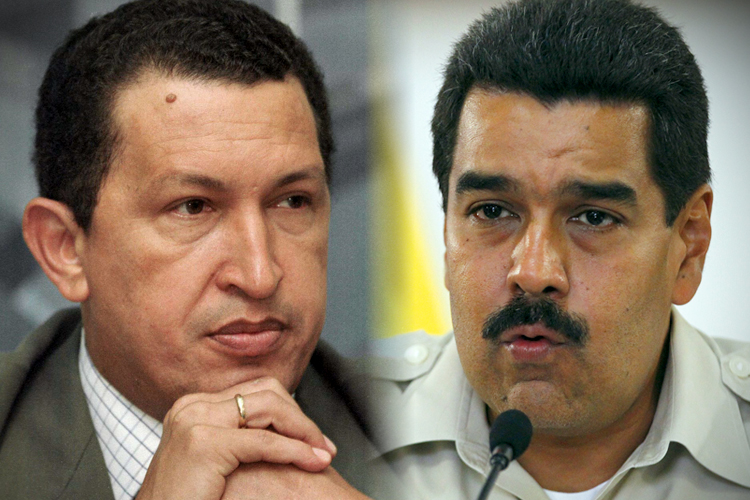
Maduro inherited a country already at odds with Washington. Under Hugo Chávez, Venezuela consciously positioned itself as a challenger to U.S. influence in Latin America. Chávez’s fiery rhetoric, embrace of socialism, and use of oil as a political tool were not merely domestic choices; they were statements of defiance in a region long accustomed to U.S. dominance. By the time Maduro assumed power in 2013, the bridge between Caracas and Washington was already fragile and threatened.
Lack and shortage of political capital –
Unlike Chávez, however, Maduro lacked the political acumen to manage confrontation with confidence. His narrow electoral victory raised doubts at home and abroad, and the United States was quick to frame him as an illegitimate successor presiding over democratic decline. As oil prices collapsed and Venezuela’s economy unraveled, governance gave way to survival. Inflation soared, institutions weakened, and millions of Venezuelans fled. Each crisis deepened Washington’s conviction that Maduro was the problem—and hardened Maduro’s belief that the United States was exploiting Venezuela’s pain to force regime change.
Sanctions became the central weapon. What began as targeted measures expanded into sweeping restrictions on Venezuela’s oil sector and financial system. For the U.S., sanctions were leverage; for Maduro, they were economic warfare. The result was predictable: instead of collapsing, the government turned inward, securitized power, and framed every hardship as proof of foreign aggression. Dialogue gave way to distrust
Narcoterrorism narratives-
The decisive rupture came when Washington crossed from pressure to personal confrontation. By indicting Maduro on drug trafficking and terrorism charges, the United States stopped treating him as a controversial head of state and began treating him as a criminal fugitive. From that moment, diplomacy lost meaning. One cannot negotiate easily with a power that has placed a bounty on one’s head.
The failed experiment of recognizing a parallel government under Juan Guaidó only deepened the impasse. It weakened Maduro internationally but failed to dislodge him domestically. When that strategy collapsed, what remained was a dangerous vacuum—no clear diplomatic path forward, no political exit, only hardened positions and rising risks.
Today’s crisis, including claims of military action and even capture, must be seen in this context. It reflects what happens when prolonged pressure yields no resolution and escalation begins to appear inevitable. It also exposes a troubling reality: when a powerful state abandons restraint, norms quickly erode. The idea that a sitting president can be forcibly removed without multilateral consent unsettles not just Venezuela, but the entire international system.
The weight of power over principle-
For Latin America, the memories are painful. Intervention, justified as moral necessity, has often brought instability rather than democracy. Even governments critical of Maduro understand this history, and many fear the precedent more than the man.
Maduro is no hero, and Venezuela’s suffering is undeniable. But the question confronting the world is larger than one leader or one country. It is whether power will once again outweigh principle, and whether international law will bend when enforcement becomes inconvenient.
The standoff between Maduro and the United States is a warning. It shows how conflicts harden when dialogue collapses, how sanctions can entrench rather than soften regimes, and how criminalization can close the last doors to peaceful resolution. History suggests that such confrontations rarely end with clean victories—only with lasting scars.
In the end, this is not just about Maduro or Washington. It is about the future of restraint in global politics, and whether the world still believes that even its enemies deserve the protection of rules.