
Lagos
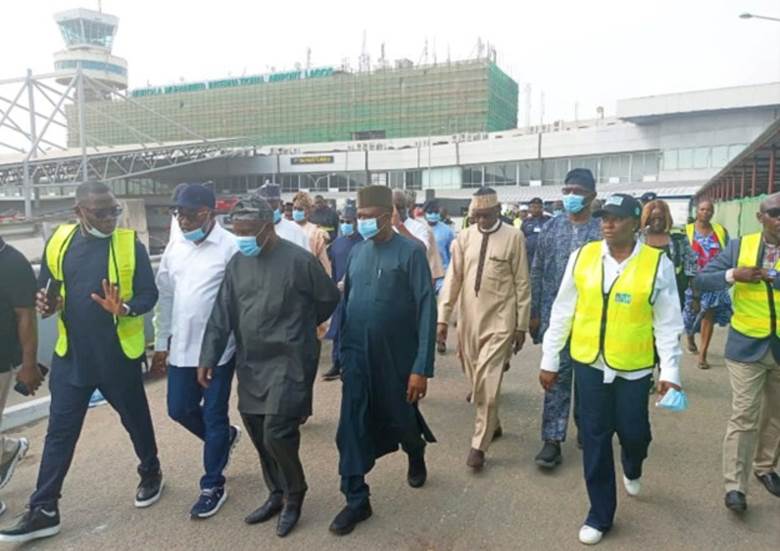
Members of the Senate and House of Representatives Committees on Aviation on Thursday held a closed-door meeting with the management of the Federal Airports Authority of Nigeria (FAAN) following Monday’s fire outbreak at Terminal 1 of the international wing of the Murtala Muhammed International Airport (MMIA), Lagos.
The lawmakers arrived at the airport at about 3:07 p.m., inspected sections of the affected terminal and later proceeded into a private session with FAAN’s management team, led by the Managing Director, Olubunmi Kuku. As of the time of filing this report, deliberations were still ongoing.
The visit comes days after a fire razed part of Terminal 1, destroying critical infrastructure and operational equipment within the facility. Although no lives were lost, the scale of destruction has sparked concern across the aviation sector, given MMIA’s status as Nigeria’s busiest international gateway.
The incident has drawn scrutiny from lawmakers, aviation stakeholders and regulatory authorities, particularly over its implications for safety standards, emergency preparedness and ongoing airport modernisation efforts.
Earlier in the week, FAAN Board Chairman Abdullahi Ganduje described the incident as deeply concerning, especially due to the loss of equipment belonging to the Nigerian Meteorological Agency (NiMet) and the Nigerian Airspace Management Agency (NAMA).
He said the fire immediately became a matter of serious concern to the board upon confirmation.
“There’s no doubt that when we heard about the fire outbreak at the International Airport here in Lagos, it was an issue of great concern,” Ganduje said while assessing the damage.
According to FAAN officials, safety remains the authority’s core operational value, and the fire incident tested emergency response systems at one of the country’s most sensitive infrastructure hubs.
Ganduje commended FAAN’s management and emergency responders, noting that more than 150 firefighters were deployed to contain the blaze.
“We have seen the damage that occurred, but at the same time, we have to congratulate the MD and her management team, especially the firefighters… who were on the ground until the fire was completely extinguished,” he said.
He acknowledged that sensitive equipment was destroyed but emphasised that preventing loss of life remained the most critical outcome.
Thursday’s closed-door meeting is expected to shape the next course of action, including legislative oversight measures, possible safety upgrades and funding requirements for repairs.
Lawmakers are likely to seek clarity on the immediate cause of the fire, the extent of the structural damage and contingency plans to maintain uninterrupted international operations while restoration work continues.
For frequent travellers and airlines operating out of Lagos, attention is now focused on how swiftly damaged sections of the terminal can be restored and what long-term safeguards will be introduced to prevent recurrence.
Authorities have confirmed that investigations into the cause of the fire are ongoing. The outcome of those investigations — alongside the findings of the National Assembly committees — may influence broader aviation safety reforms in the months ahead.
As Nigeria continues efforts to modernise its airport infrastructure, the MMIA incident serves as a reminder of the vulnerabilities facing critical national assets — and the need for sustained investment in safety, maintenance and rapid-response capacity.