
Kano
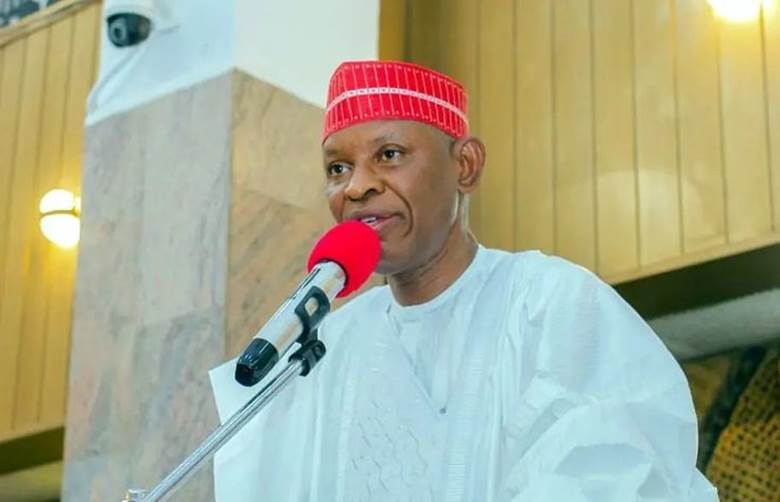
The political crisis triggered by Governor Abba Kabir Yusuf’s dramatic exit from the New Nigeria People’s Party (NNPP) deepened on Friday with the resignation of a serving commissioner and a sharp escalation of rhetoric from the party’s national leader, Senator Rabiu Musa Kwankwaso.
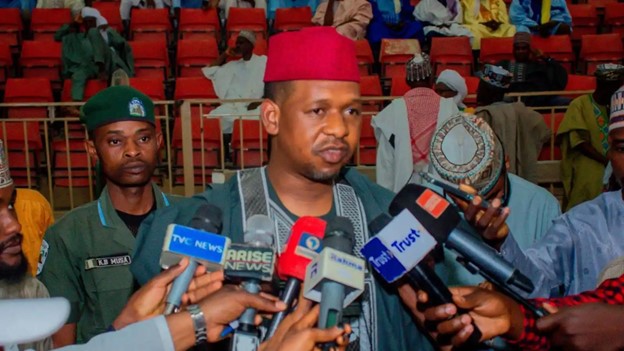
Yusuf Kofarmata, the Kano State Commissioner for Science, Technology, and Innovation, formally resigned from the governor’s cabinet, citing what he described as a loss of ideological direction following the governor’s defection from the NNPP. His exit marks the first high-level resignation from the Yusuf administration since the political realignment began last week.
In a statement posted on his official Facebook page, Kofarmata said he could no longer continue to serve in a government that had strayed from the principles on which it was elected.
“I cannot continue to work under a government that has strayed from the ideology that brought it to power,” he wrote, adding that his decision was taken in good faith and in line with his personal convictions.
Kofarmata’s resignation has intensified speculation that more officials loyal to the Kwankwasiyya political movement may soon follow suit, as tensions between Governor Yusuf and his former political benefactor, Senator Kwankwaso, widen.
Governor Yusuf formally resigned from the NNPP on January 23, taking with him a significant bloc of elected officials, including 21 members of the Kano State House of Assembly, eight members of the House of Representatives, and all 44 local government chairmen in the state. The mass defection represents one of the largest political shifts in Kano since the return of democracy in 1999.
The governor cited prolonged internal disputes, unresolved leadership crises, and structural instability within the NNPP as the reasons for his departure, insisting that the party had become too divided to function effectively.
However, the decision has fractured the political coalition that brought him to power in the 2023 election, raising questions about the future of governance and political loyalty in the state.
Yusuf’s defection came just days after a widely reported meeting with President Bola Ahmed Tinubu at the State House in Abuja on January 19, a development that immediately fueled speculation about a possible move to the All Progressives Congress (APC) or the emergence of a new political platform ahead of future elections.
While the governor has not publicly declared his next political destination, the scale of the defections suggests a carefully coordinated realignment rather than an isolated decision.
Political analysts say Kano’s strategic importance — as one of Nigeria’s most populous and politically influential states — makes the unfolding drama a national issue, with implications that extend beyond the state’s borders.
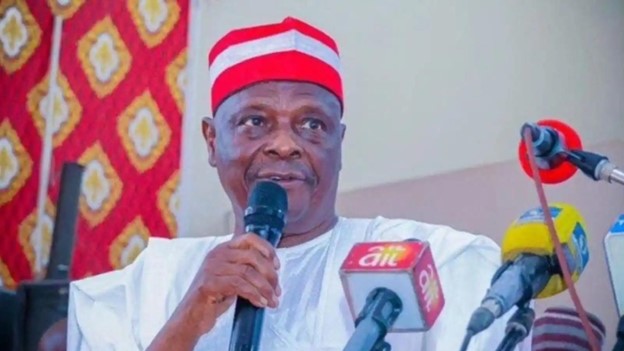
Reacting sharply to Yusuf’s exit, Senator Rabiu Musa Kwankwaso, founder of the NNPP and leader of the Kwankwasiyya movement, declared January 23 a symbolic “Betrayal Day” to mark what he described as the abandonment of the movement’s ideals.
Speaking in Hausa, Kwankwaso said the date would now be commemorated annually by members of the movement across the country.
“I saw many talks about betrayal on social media, and someone suggested declaring January 23 as World Betrayal Day,” he said. “As the leader of this movement, I now support January 23 as Betrayal Day. We will be celebrating it everywhere.”
Kwankwaso played a central role in Yusuf’s emergence as governor in 2023, deploying the Kwankwasiyya grassroots structure that had dominated Kano politics for over a decade. But relations between both men have reportedly deteriorated in recent months, with disagreements over party control, appointments, and political direction widening the rift.
The NNPP leadership has also condemned the governor’s departure, describing it as a betrayal of the mandate given to him by voters who elected him under the party’s platform.
Party officials argue that Yusuf’s electoral victory was inseparable from the Kwankwasiyya movement, warning that the defection could weaken internal cohesion and undermine trust between political leaders and their supporters.
Amid rising political tension and heated exchanges online, Governor Yusuf has moved to calm his supporters, warning against insults or personal attacks on Kwankwaso.
The message was delivered by the Director-General of Media and Publicity at Government House, Bature Tofa, during a motorcycle distribution event at the Open Space Theatre, Government House, Kano.
“We will not accept indiscipline or insults against the leader of the Kwankwasiyya movement, Rabiu Musa Kwankwaso,” Tofa said. “Anybody who engages in such behavior will face consequences.”
He urged political supporters to exercise restraint and maturity, stressing that disagreements should not be allowed to threaten peace and stability in the state.
The resignation of a serving commissioner, the public declaration of “Betrayal Day,” and the ongoing wave of defections all point to a major turning point in Kano’s political history.
With rival camps now firmly entrenched and more political actors weighing their next moves, the state appears headed for a prolonged period of uncertainty and realignment. How Governor Yusuf consolidates his political base, manages internal dissent, and defines his next political platform will shape Kano’s political landscape in the months ahead.
For now, one thing is clear: the political alliance that swept Yusuf into power in 2023 has fractured, and the aftershocks are only beginning to be felt.