
Ibadan, Oyo State
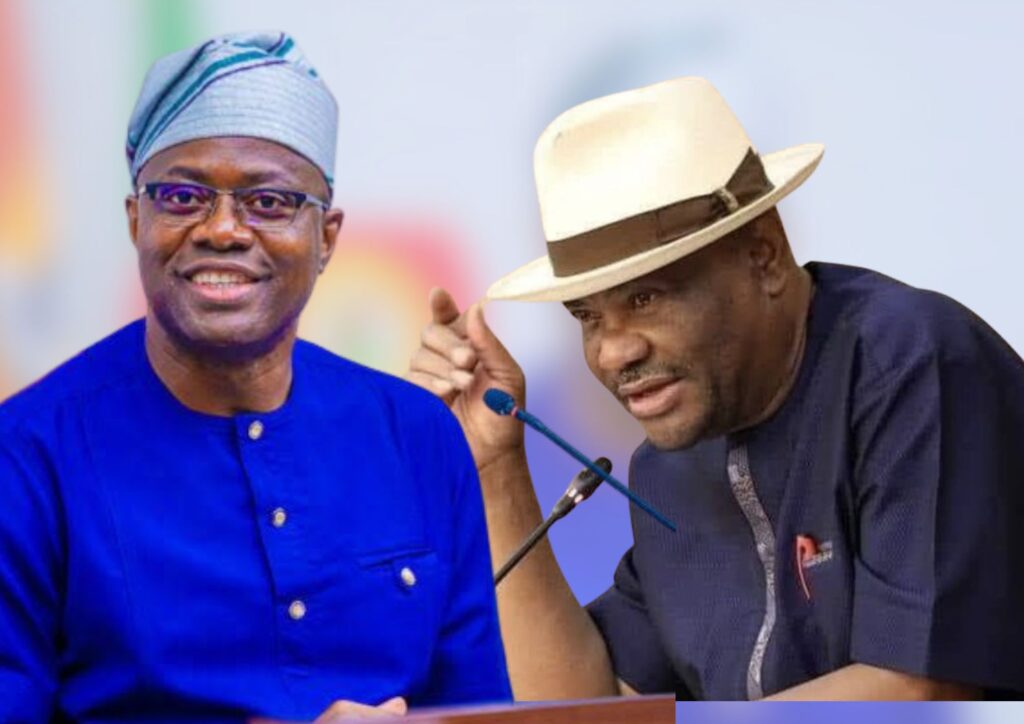
Oyo State Governor Seyi Makinde has openly questioned the role, moral authority and political influence of Federal Capital Territory Minister Nyesom Wike within the Peoples Democratic Party (PDP), adding fresh fuel to simmering internal tensions within Nigeria’s main opposition party.
Makinde’s comments come amid growing disputes over leadership, loyalty and control inside the PDP, as influential figures jostle for relevance ahead of future electoral contests. The latest exchange underscores the party’s ongoing struggle to present a united front following its loss of federal power in 2015 and subsequent internal realignments.
Speaking on the state of the party, Makinde challenged Wike’s continued involvement in PDP matters beyond his immediate political base, particularly in states such as Oyo, where Wike holds no formal leadership role.
The Oyo governor questioned what he described as Wike’s moral justification to intervene in party affairs outside Rivers State, arguing that influence within the PDP should be rooted in long-term institutional commitment and responsibility to one’s political base.
Makinde noted that Wike’s rise to prominence within the PDP only became significant around 2015, when the party lost the presidency and entered opposition. According to him, Wike was later edged out of the party’s core leadership structure by 2025, a shift that, in his view, raises questions about Wike’s continued claim to authority within the party.
Makinde also drew attention to lingering internal challenges within the PDP in Rivers State, Wike’s political stronghold, suggesting that unresolved disputes at home weaken his credibility to intervene elsewhere.
He argued that leadership influence within a national party must begin with stability and cohesion at the grassroots and state levels.
According to Makinde, persistent internal divisions in Rivers PDP undermine any claim by Wike to wield decisive authority across the wider party structure.
The exchange reflects deepening fractures within the PDP, where disagreements over loyalty, relevance and direction have increasingly spilled into the public space.
Since the 2023 general elections, the party has struggled to reconcile competing power blocs, with tensions exacerbated by Wike’s role in the current APC-led federal government as Minister of the Federal Capital Territory, despite remaining a PDP member.
For many within the party, Wike’s participation in the federal cabinet has remained a point of contention, raising broader questions about party discipline, ideological consistency and opposition politics in Nigeria.
Makinde, one of the PDP’s most visible governors and a two-term leader in Oyo State, has increasingly positioned himself as a voice for internal reform and party discipline.
His remarks signal not only personal frustration with Wike’s influence but also a broader concern among PDP leaders about the erosion of internal order and clarity of purpose.
Political observers note that Makinde’s comments reflect the anxieties of a party still grappling with identity, leadership succession and strategy as it seeks to rebuild ahead of future elections.
Nyesom Wike, a former two-term governor of Rivers State, remains one of the PDP’s most polarising figures. Known for his combative political style and strong grassroots mobilisation, Wike has maintained relevance through strategic alliances and public engagement, even as his relationship with the PDP leadership has grown increasingly strained.
His appointment as FCT Minister under President Bola Tinubu further complicated perceptions of his loyalty to the opposition party, blurring traditional political lines and deepening internal divisions.
The public disagreement between Makinde and Wike highlights the PDP’s ongoing leadership crisis, where competing centres of influence continue to undermine unity and strategic focus.
As the party looks ahead to future governorship, legislative and presidential contests, unresolved disputes over authority and direction threaten to weaken its electoral prospects.
Analysts warn that unless internal grievances are addressed through transparent dialogue and clear leadership structures, the PDP risks prolonged instability at a time when it needs cohesion to effectively challenge the ruling party.
Beyond personal rivalries, the Makinde–Wike exchange reflects broader questions about opposition politics in Nigeria: how parties manage internal dissent, define loyalty, and balance individual ambition with collective goals.
For the PDP, the challenge remains whether it can move beyond internal power struggles and refocus on rebuilding public trust, articulating clear policy alternatives, and presenting itself as a credible governing option.
As internal debates continue, the party’s ability to contain disputes like this may determine not only its internal stability but its relevance on the national political stage in the years ahead.