
Kano, Nigeria
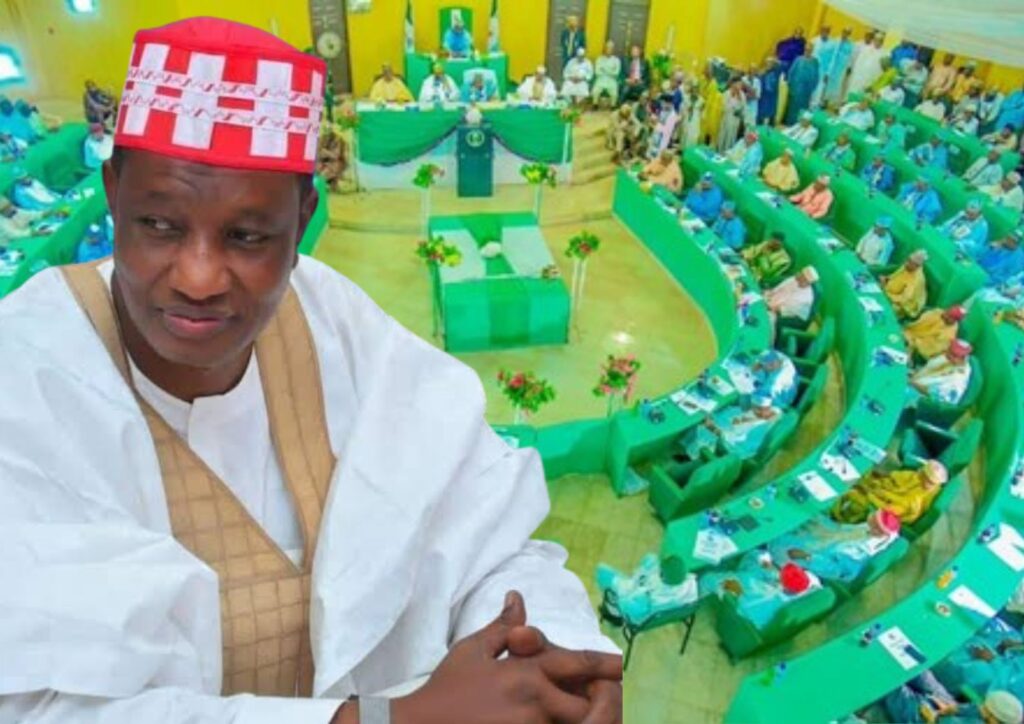
The Kano State House of Assembly has started the official process that could lead to the removal of the Deputy Governor of Kano State, Aminu Abdussalam Gwarzo, from office.
Lawmakers in the Assembly say the deputy governor has questions to answer over allegations of serious misconduct, abuse of office, and misuse of public funds said to be around ₦1.6 billion.
The issue was raised during the Assembly’s plenary session when the Majority Leader, Lawan Hussaini Dala, formally presented an impeachment notice against Gwarzo.
According to him, the move follows the provisions of Section 188 of the 1999 Constitution of Nigeria, which explains the legal steps that must be followed if a state assembly wants to remove a governor or deputy governor from office.
The move by the Assembly is only the beginning of the process, and it does not automatically mean the deputy governor has been removed. However, if the process continues and the allegations are proven, lawmakers could vote to remove him from office.
Allegations Linked to Local Government Funds
Lawmakers said many of the allegations are connected to the period when Gwarzo served as Commissioner for Local Government in Kano State between 2023 and 2024, before he became deputy governor.
According to the Majority Leader, the deputy governor allegedly received illegal payments from the state’s 44 local government councils during that time.
Dala told the Assembly that between June 2023 and January 2024, each of the 44 local governments allegedly paid ₦1.5 million every month to Gwarzo as a kind of “kickback.”
If calculated together, the payments from the 44 councils would amount to about ₦66 million every month.
Over the seven-month period, the alleged payments would total around ₦462 million.
Lawmakers said the money was not part of any official government payment and was therefore questionable.
The Assembly also claimed that another set of payments happened later.
According to Dala, between February and July 2024, local governments again allegedly sent money to Gwarzo.
This time, the payments were said to be ₦3.255 million every month from each council, reportedly under the explanation that the money was meant for special assignments.
If all 44 councils made the payments as alleged, the monthly total would be much higher.
Over six months, the alleged payments would amount to around ₦726 million.
When combined with the earlier payments mentioned by lawmakers, the total figure comes to over ₦1.1 billion.
However, lawmakers say the full financial allegations connected to the case reach about ₦1.6 billion.
According to the Assembly leadership, such actions — if proven true — would amount to a serious violation of public trust.
Apart from the alleged kickbacks, lawmakers also raised another issue involving a pharmaceutical company.
The Majority Leader told the Assembly that Gwarzo allegedly used his position as commissioner to arrange payments from local government councils to a company called NovoMed Pharmaceuticals Limited.
According to the allegations presented during the plenary, each of the 44 local government councils allegedly paid ₦10 million to the company.
If calculated together, that transaction would amount to about ₦440 million.
Lawmakers said the payments may have violated Kano State’s rules guiding public procurement and government spending.
Dala told the Assembly that using public office to influence payments like that would amount to abuse of power.
“The misuse of official capacity to confer undue advantage constitutes abuse of power,” he said while addressing the lawmakers during the debate.
Under Nigeria’s Constitution, removing a deputy governor from office involves a clear legal process.
The first step is a written notice of allegations signed by at least one-third of the members of the state assembly.
In this case, Dala informed the House that the impeachment notice was signed by 38 lawmakers, which is far more than the number required to begin the process.
After the notice was presented, the Speaker of the Assembly confirmed that the document had been received.
The next step is to officially deliver the allegations to the deputy governor, giving him the opportunity to respond to the claims.
If the Assembly decides to continue with the process, lawmakers may then ask the Chief Judge of Kano State to create an independent investigative panel.
This panel would normally be made up of respected individuals considered neutral and credible.
Their job would be to:
- Study the allegations
- Examine available evidence
- Hear from both sides
- Submit a report to the Assembly
If the panel concludes that the deputy governor committed gross misconduct, the Assembly can move to the final stage of the impeachment process.
At that stage, lawmakers would hold a vote.
For the deputy governor to be removed from office, two-thirds of the Assembly members must vote in favour of impeachment.
Without that number of votes, the impeachment cannot succeed.
As of the time this report was prepared, Aminu Abdussalam Gwarzo had not publicly reacted to the allegations.
He has also not released any official statement addressing the impeachment notice.
Political observers say his next move — whether through lawyers, public statements, or political negotiations — could shape how the situation develops in the coming weeks.
In Nigeria, it is not unusual for impeachment cases to end up in court battles, political negotiations, or internal discussions within political parties.
The development has added another layer of tension to politics in Kano State, one of the most politically influential states in northern Nigeria.
The state government is currently led by Abba Kabir Yusuf, who came into office after a highly disputed election and a series of legal battles over the governorship.
Political analysts say that since the administration began, there have occasionally been disagreements and power struggles within different political camps in the state.
It is still not clear how the governor’s office will respond to the impeachment move against his deputy.
However, observers believe the situation inside the Assembly could have wider effects on political stability in Kano.
In Nigeria’s democratic system, impeachment is one of the strongest tools state assemblies have to check the actions of top government officials.
The process is meant to ensure that governors and deputy governors are held accountable if they abuse public office.
However, history has shown that impeachment proceedings can sometimes be influenced by political disagreements and power struggles.
Several deputy governors in Nigeria have faced impeachment attempts in the past, sometimes because of conflicts within ruling parties or disagreements with their governors.
Because of this, legal experts say the investigative panel stage is very important, since it allows an independent group to examine the accusations carefully before any final decision is taken.
Now that the impeachment notice has been officially presented, the next step will be for the Assembly to serve the allegations on the deputy governor.
After that, lawmakers will decide whether to request the creation of an investigative panel.
If the process continues, the panel’s findings will determine whether the Assembly moves to the final stage — a vote on whether the deputy governor should remain in office or be removed.
For now, the process is still in its early stage.
But it has already created a major political moment for Kano’s government and leadership structure.
In the coming days and weeks, it will become clearer whether the allegations turn into a full constitutional battle — or whether the matter is resolved through legal or political means.