
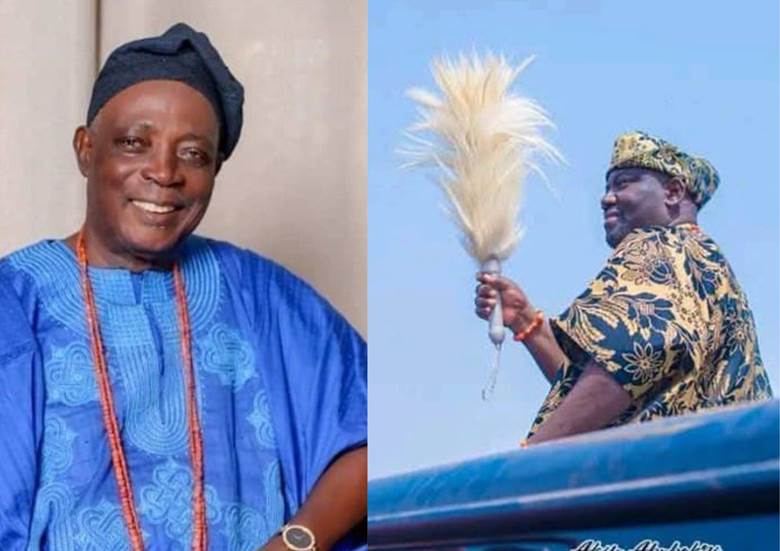
A socio-cultural group based in Oyo State, Oyo Ni Wa Tooto, has cautioned some Ibadan Mogajis against what it described as derogatory remarks and revisionist narratives capable of undermining the institution of the Alaafin of Oyo and weakening the collective heritage of the Yoruba people.
The warning comes amid heightened public debate over relations among Oyo State’s foremost traditional rulers, following controversies surrounding a recent interfaith event in Ibadan and the inauguration of the Oyo State Council of Obas and Chiefs after a 15-year hiatus.
In a statement signed by its Secretary, Asiwaju Sarafadeen, Oyo Ni Wa Tooto said it had observed with concern recent comments and write-ups attributed to some Ibadan Mogajis, which it said questioned the status, dignity, and historical primacy of the Alaafin stool.
The group stressed that while all traditional institutions across Yorubaland deserve respect, the Alaafin occupies a distinct and elevated position in Yoruba history, culture, and socio-political development.
“The stature of the Alaafin carries the full weight of Yoruba history, socio-political dynamics, and cultural heritage. History and age-long customs of Oyo and its traditions cannot be invalidated and have survived the test of time,” the statement said.
Oyo Ni Wa Tooto warned that careless narratives and historical distortions could weaken societal foundations and erode shared identity. It urged Ibadan Mogajis and other stakeholders to discard divisive rhetoric and instead uphold values of respect, hierarchy, and unity, while calling on Yoruba elders to promote peace and cohesion.
The caution followed reports and online commentary claiming that the Olubadan of Ibadanland, Oba Rashidi Ladoja, deliberately snubbed the Alaafin during an interfaith gathering organized by the state government earlier in the week.
Speaking to journalists in Ibadan, Oba Ladoja dismissed the allegation, describing it as a misunderstanding that had been exaggerated, particularly on social media.
“There was no intention whatsoever. What happened was not deliberate. It has been misinterpreted,” the Olubadan said.
He explained that he arrived slightly late at the event and attempted to take his seat quietly to avoid disrupting proceedings. According to him, seating arrangements and timing influenced his movement within the venue.
“My seat was between the Soun of Ogbomosoland and the Alaafin, and I had to pass through other dignitaries to get there. I did not make any decision to avoid or ignore anyone. Why should I?” he said.
Oba Ladoja also expressed concern over what he described as deliberate mischief by some commentators, noting that short video clips circulating online did not reflect the full sequence of events.
The controversy unfolded against the backdrop of the inauguration of the Oyo State Council of Obas and Chiefs, which Governor Seyi Makinde inaugurated on Thursday at the House of Chiefs, Parliament Building, Secretariat, Ibadan.
The statutory body had not convened since 2011, marking a 15-year absence. At the ceremony, Oba Ladoja emerged as the council’s first chairman, while the Alaafin of Oyo, Oba Akeem Owoade, was notably absent.
Governor Makinde said the chairmanship of the council would be rotational, shared among the Olubadan of Ibadanland, the Alaafin of Oyo, and the Soun of Ogbomosoland, with each monarch expected to serve a two-year term. He said the arrangement was agreed upon at a meeting involving the three first-class monarchs.
However, the Alaafin’s palace swiftly disputed the governor’s account. In a statement issued by his media aide, Bode Durojaye, the palace said no such meeting took place.
“The palace hereby wants to state clearly that there was no time that His Imperial Majesty, the Alaafin of Oyo, Oba Engineer Abimbola Akeem Owoade I, held any meeting with either the state governor or any of the two traditional rulers mentioned,” the statement said.
It added that the Alaafin neither endorsed nor made any categorical statement supporting a rotational chairmanship arrangement, noting that the position of the Alaafin and the Oyo community had earlier been communicated to the governor through a memorandum submitted by the Oyo Council of Elders.
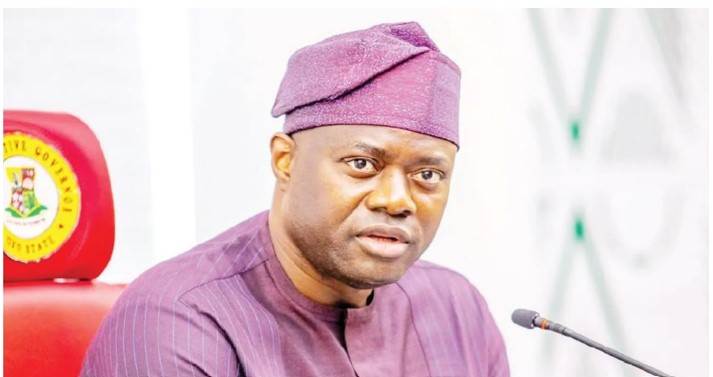
Addressing the gathering, Governor Makinde defended the process that led to the council’s inauguration, saying the move was aimed at strengthening traditional institutions and fostering unity across the state.
“No matter how hard an issue is, we will definitely resolve it,” the governor said, describing the Alaafin, Olubadan and Soun as his “three fathers.”
He said the absence of a functional council for 15 years had weakened coordination between the government and traditional rulers, resulting in ad hoc arrangements. According to him, the law backing the council was passed by the Oyo State House of Assembly and signed into law in August 2025.
Makinde said the rotational leadership was designed to encourage harmony rather than division, noting that traditional rulers play a critical role in peacebuilding, grassroots intelligence and community development.
In his remarks as chairman of the council, Oba Ladoja urged residents to have confidence in the body, describing its inauguration as the beginning of work, not an end in itself.
“This is not about any individual; it is about bringing people together and working collectively for the common good,” he said.
He said the council’s primary responsibility would be to ensure peace and safety across their domains while contributing to the continued development of Oyo State, adding that public confidence would grow after its first formal meeting.
Earlier, the Commissioner for Local Government and Chieftaincy Matters, Ademola Ojo, described traditional rulers as custodians of culture and communal harmony, expressing hope that the council would serve as a platform for constructive dialogue and partnership in promoting peace, security, and socio-economic advancement.
As public attention remains focused on relations among Oyo State’s foremost traditional institutions, stakeholders have continued to call for restraint, dialogue, and respect for established history, with assurances from key actors that unity, not rivalry, remains the overriding priority.