
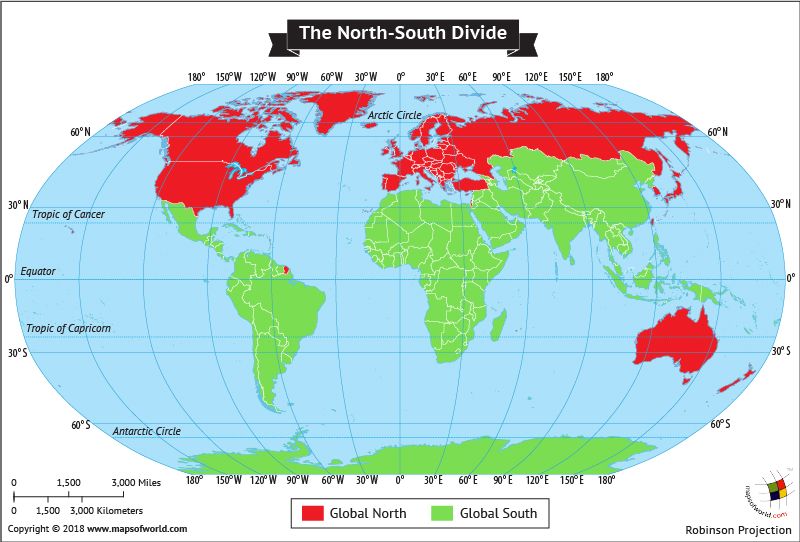
For more than half a century, the nations once labeled the Third World have been told a reassuring story: integrate into global markets, welcome foreign capital, liberalize trade, and prosperity will follow. Yet from Lagos to La Paz, from Dhaka to Lusaka, the lived reality has been stubbornly different. Growth arrives, but sovereignty recedes; exports rise, but industries wither; elections multiply, but economic choices narrow. What we are witnessing is not the failure of the Global South to globalize—it is the success of a new form of imperialism.
This contemporary order does not arrive with colonial governors or visible occupations. It travels through debt contracts, credit ratings, trade rules, and digital platforms. Flags have been replaced by spreadsheets. The outcome, however, is familiar: a steady transfer of value from the periphery to the core and a persistent limitation on the right of poorer nations to determine their own developmental paths.
Consider the anatomy of dependence. Many African and Latin American economies remain tied to a handful of commodities whose prices are set elsewhere. Nigeria’s oil, Zambia’s copper, Chile’s lithium, and Ghana’s cocoa circulate through global value chains controlled by a few multinational firms. Local communities bear the environmental cost while design, branding, and finance capture the profits abroad. This is not simple trade; it is unequal exchange dressed in modern attire.
Debt has become an even more potent instrument. The structural adjustment era of the 1980s supposedly ended decades ago, yet its logic endures. Governments across the Global South spend more on servicing loans than on health or education, while policy is quietly written in the language of conditionality. Sri Lanka’s recent crisis showed how quickly sovereignty evaporates when balance sheets deteriorate. Austerity is presented as a technocratic necessity, though it is deeply political: it protects creditors before citizens.
The digital economy has opened another frontier. Data harvested from Southern users feeds algorithms owned in the North; intellectual property regimes prevent local firms from climbing the technological ladder. The same countries encouraged to “compete” are denied the very tools that allowed earlier industrializers to succeed—imitation, reverse engineering, and patient state support. The ladder has been kicked away, and then we are blamed for not climbing.
Domestic elites are not innocent spectators. In many rent-rich states, politics revolves around distributing external rents rather than building productive capacity. Neopatrimonial networks convert public resources into private loyalty, making leaders comfortable brokers of external interests. Neo-imperialism thrives not only because of foreign power but because sections of our own ruling classes profit from the arrangement.
Yet history offers reasons for guarded optimism. East Asia demonstrated that disciplined industrial policy can rewrite destinies. Botswana used diamond wealth to fund education and infrastructure. Bangladesh, despite grave labor injustices, showed how manufacturing can absorb millions. These experiences prove that the global order, though constraining, is not destiny.
What, then, is to be done?
First, economic sovereignty must return to the center of national strategy. Countries need developmental states able to protect infant industries, direct credit, and insist on local value addition. Resource contracts should require domestic processing and technology transfer. Sovereign wealth funds must transform finite minerals into diversified assets rather than fleeting consumption.
Second, the financial architecture must be rebalanced. Debtor nations should negotiate collectively for meaningful restructuring and the right to regulate volatile capital. Regional payment systems and currency swaps can reduce the tyranny of the dollar and give governments breathing space to pursue long-term plans.
Third, integration should be regional before it is global. The African Continental Free Trade Area and similar blocs can create markets large enough to sustain pharmaceuticals, machinery, and digital services. Alone, small states bargain from weakness; together, they possess leverage.
Fourth, democracy must be economic as well as electoral. Broad-based taxation, transparent procurement, and strong labor rights can break the alliance between oligarchs and foreign capital. Citizens who fund the state are more likely to demand that it serve them.
Fifth, knowledge must be decolonized. Investment in universities, open-source technologies, and South–South research networks is as crucial as roads and ports. Without control over ideas, political independence remains fragile.
Finally, the ecological crisis requires a new imagination. Extractivism can not be the horizon of development in a warming world. Renewable energy, agro-ecology, and circular industries offer a path that protects both people and the planet.
The world has been multipolar in strategic terms since the end of the Second World War—over 80 years ago—with competing centers of power shaping trade, finance, and security (Wallerstein, 1974; Cox, 1981). Yet the promise of multipolarity has often failed to translate into genuine autonomy for the Global South because formal sovereignty has remained decoupled from economic and technological independence.
The current moment presents an opportunity to correct this historical imbalance: nations can leverage regional integration, industrial policy, and South–South cooperation to reclaim agency. Liberation from neo-imperial constraints will require collective vision, disciplined states, and inclusive governance. Only by transforming strategic dependence into deliberate interdependence can the Global South assume its role not merely as a stage for others’ power but as an author of its own development trajectory.om Neo-Imperial Structures
Pingback: AfCFTA: Africa’s Strategic Imperative for Economic Sovereignty and Inclusive Development - thoughtmedianetwork.com