
China, Taiwan & Strategic Signaling
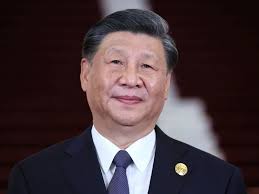
President Xi Jinping’s New Year address was not a ceremonial formality. It was a calculated political statement—measured in tone, deliberate in substance, and revealing in what it chose to emphasize. As in previous years, the speech sought to reassure domestic audiences while sending carefully calibrated signals to a wider international audience increasingly attentive to China’s strategic posture.
Domestically, the message was designed to steady confidence. Xi highlighted progress in economic recovery, technological innovation, social welfare, and national development. These themes were not incidental. China is navigating a demanding period marked by economic restructuring, external trade pressures, and demographic change. By stressing continuity, resilience, and long-term planning, the president reaffirmed the central governing promise of the Chinese Communist Party: stability, order, and national advancement under centralised leadership.
The most consequential passage of the address concerned Taiwan. Xi’s assertion that reunification is an “unstoppable trend” was neither novel nor casually delivered. It reaffirmed Taiwan’s status as a core sovereignty issue for Beijing—non-negotiable and deeply bound to China’s national narrative. Yet the statement also landed in a region where Taiwan is not merely an abstraction, but a functioning political entity whose future is closely watched by neighbouring states and global powers alike.
From Taipei’s perspective, such language reinforces long-standing concerns about pressure without dialogue, even as Taiwan continues to frame its position in terms of democratic self-governance and regional stability. For regional actors such as Japan and members of ASEAN, the emphasis was less on the wording itself and more on what it did not include: escalation. These governments remain acutely sensitive to any shift that could destabilise trade routes, security arrangements, or regional equilibrium.
Notably, the address avoided overt threats. There was no timetable, no language of urgency, and no call for immediate action. This restraint was significant. It suggests a strategic preference for sustained pressure rather than provocation—asserting red lines while avoiding steps that could invite miscalculation or external intervention. In this context, restraint can be read not as softness, but as an effort to manage risk in a crowded strategic environment.
Internationally, Xi balanced firmness with reassurance. Alongside sovereignty claims, he spoke of peace, cooperation, and shared development, projecting China as a responsible global actor rather than a disruptive force. This dual messaging reflects a broader pattern in Beijing’s diplomacy: an insistence on core interests combined with caution about appearing destabilising at a time of global uncertainty and intensifying great-power competition.
The address should therefore be read neither as a signal of imminent conflict nor as a departure from China’s established position. It was a statement of continuity. Taiwan remains central to China’s long-term national project, even as economic management and global diplomacy demand careful calibration. The presence of the United States looms in the background of this equation—not directly addressed, but implicitly shaping the limits of action and the value of restraint.
For the wider world, the message is clear but demanding. The Taiwan issue is not receding; it is being steadily embedded into China’s narrative of history, sovereignty, and destiny. This makes it not only a strategic question, but a diplomatic fault line where misinterpretation carries real risk.
In the end, Xi’s New Year message was not about dramatic change. It was about tone and direction—confidence without bravado, resolve without immediacy. The risk lies less in what was said than in how it is read. In an environment where signals travel faster than intentions, maintaining clarity without escalation will be the true test for all parties navigating an increasingly delicate regional balance.