
Abuja
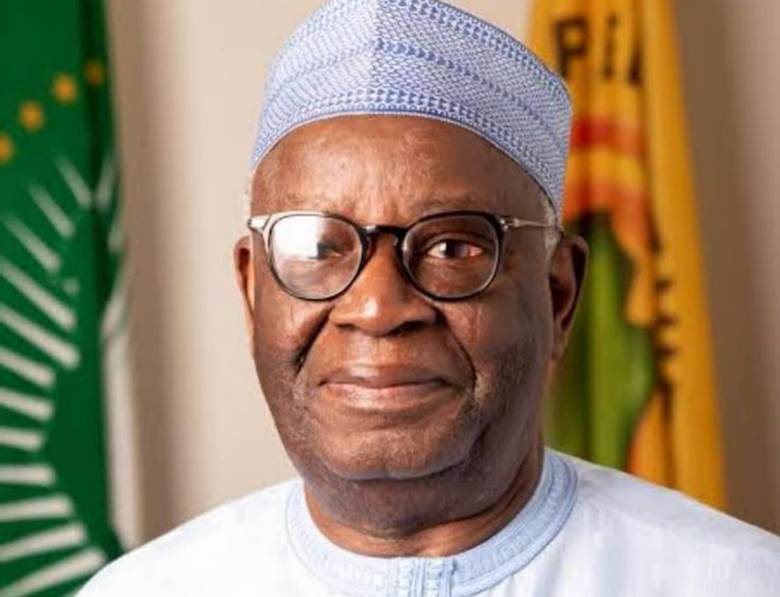
Former Chief of Staff to ex-President Muhammadu Buhari, Professor Ibrahim Gambari, has delivered a rare and sobering insider account of power at the highest level of government, warning that many of those who benefit the most from Nigeria’s vast resources are often the least committed to the country’s stability, progress, and long-term development.
Gambari made the remarks on Monday while speaking on Politics Today, a flagship political programme on Channels Television, where he reflected on his three years inside the Presidency and the realities of governance in Nigeria.
His comments come at a time of growing national debate over leadership quality, elite accountability, and why decades of reform promises have failed to translate into sustainable development for the majority of Nigerians.
Drawing from his direct experience at the centre of power, Gambari said Nigeria’s biggest challenge is not a lack of ideas or opportunities, but the mindset of those who aggressively seek political office without a genuine commitment to public service.
“What is shocking is that I have seen the possibilities of that office, of the presidency,” Gambari said. “But I have also seen how those who benefitted most from what this country has to offer are the least committed to its stability, progress, and development.”
According to him, many political actors are driven by personal gain rather than a sense of national duty, and often fail to make the personal sacrifices required to govern responsibly.
“They seek power, but they are not willing to make the sacrifices that come with the responsibility to govern,” he said. “That responsibility includes being fair and just, and thinking nationally rather than ethnically or religiously.”
Gambari warned that leadership anchored on ethnic loyalty, religious sentiment or narrow political interests weakens institutions and deepens national divisions, making effective governance almost impossible.
Gambari, a seasoned diplomat and former United Nations official, served as Chief of Staff from 2020 until the end of Buhari’s administration in 2023, following the death of Abba Kyari, who previously held the powerful position.
He said his time in office was both enlightening and sobering, offering a close view of the immense potential of presidential authority — and the limits imposed by politics, institutions and human behaviour.
“Some of these issues weigh heavily on me,” he admitted. “The opportunities for change are there. However, with experience, you also come to understand the limitations involved in bringing about rapid change.”
The former Chief of Staff suggested that while structural reforms are possible, they often collide with entrenched interests that benefit from the status quo and resist change that threatens their influence or privileges.
Gambari also shed light on why President Buhari appointed him Chief of Staff despite their last working relationship dating back to the military era of the 1980s, when Gambari served as a minister.
According to him, the decision reflected Buhari’s strong sense of personal loyalty.
“I must say this — which is not often said in giving credit to Buhari — that he is loyal to a fault to people he felt had made a contribution to his development at his earlier success,” Gambari said.
He explained that his appointment was not the result of lobbying or political pressure.
“Nobody mentioned my name,” he recalled. “But he said, ‘Go and bring me Gambari.’”
The remark offers a rare glimpse into Buhari’s decision-making style, particularly his tendency to rely on long-standing relationships and trust rather than political expediency.
Addressing long-standing claims about powerful “cabals” controlling the Buhari administration, Gambari acknowledged that every government has internal power blocs but argued that their influence is often exaggerated.
“Sometimes more powers are ascribed to these cabals than is actually the case,” he said.
From his experience, Gambari insisted that those around Buhari understood the boundaries of their influence and were careful not to overstep.
“The people referred to as the cabal during the Buhari administration, from my three years with them, knew their limitations and dared not cross the line,” he said.
He attributed this to Buhari’s personal leadership style, which he described as firm and uncompromising.
“Everybody knew Buhari had what I call creative stubbornness,” Gambari said — a phrase suggesting that while the former president could be inflexible, his firmness often served as a check on excessive influence from advisers or interest groups.
Gambari’s reflections have struck a chord because they mirror widespread public frustration with Nigeria’s political class — a group often accused of prioritising access to power over national interest.
His comments reinforce a recurring theme in Nigeria’s governance debate: that the country’s greatest obstacle may not be policy failure, but leadership failure rooted in elite self-interest.
As Nigeria continues to grapple with economic hardship, insecurity and institutional weakness, Gambari’s insider testimony raises uncomfortable questions about who truly benefits from the system — and who is genuinely invested in fixing it.
For many Nigerians, his message serves as both a warning and a challenge: that meaningful progress will remain elusive unless those who seek power are prepared to put the nation above themselves.