
Abuja
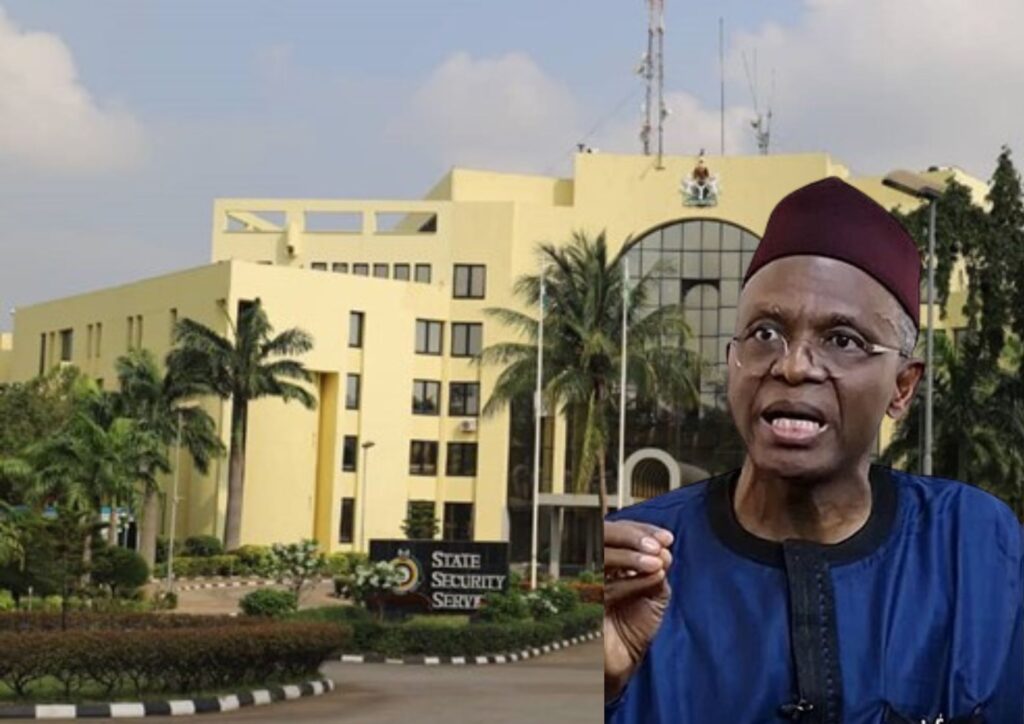
Fresh controversy has hit Nigeria’s security system after the Department of State Services (DSS) arrested five security officers over what happened when former Kaduna State governor, Nasir El-Rufai, returned to Nigeria from Egypt on February 12.
According to the DSS, the officers — drawn from different agencies — interfered with what it described as a lawful security operation at Nnamdi Azikiwe International Airport in Abuja.
From El-Rufai’s side, his camp said DSS operatives tried to arrest him immediately after he landed from Cairo. His former spokesman, Muyiwa Adekeye, claimed on social media that the officers did not show any formal arrest warrant or written invitation.
He also alleged that security agents seized El-Rufai’s international passport when he refused to follow them.
But the DSS is telling a different story.
In a statement, the agency said some officers collected bribes to allow “unauthorised access” into restricted airport areas and blocked a legitimate security action. It said those involved have confessed.
The officers reportedly come from:
- The Nigeria Police Force
- The DSS
- The Nigeria Immigration Service (NIS)
- Aviation Security (AVSEC)
They have now been handed over to the Independent Corrupt Practices and Other Related Offences Commission (ICPC) for prosecution.
Three days after the airport incident, El-Rufai honoured an invitation from the Economic and Financial Crimes Commission (EFCC). He was questioned for three days and later granted bail.
However, shortly after that, the ICPC arrested him. He has remained in their custody since then.
The DSS says it has already filed criminal charges against him, but could not present him in court on February 25, 2026, because he was already being held by the ICPC.
The agency also accused El-Rufai of bribing officials to avoid arrest at the airport — an allegation he has strongly denied.
El-Rufai, on his part, says the whole matter is a political witch-hunt.
El-Rufai served as Kaduna State governor from 2015 to 2023. Before that, he was Minister of the Federal Capital Territory between 2003 and 2007.
He is a founding member of the ruling All Progressives Congress (APC) and is known for speaking his mind on national issues.
During his time as governor, he carried out major civil service reforms and urban renewal projects. However, his tenure also faced serious security challenges, including bandit attacks and communal violence in parts of Kaduna State.
Since leaving office, he has remained active in politics and regularly comments on national matters. That is one reason this case is attracting strong public attention.
The DSS mainly handles intelligence and internal security matters. The EFCC and ICPC focus on corruption and financial crimes.
With all three agencies now involved, analysts say the case shows how serious the allegations are — but it also raises questions about coordination between security bodies.
While the DSS is focusing on alleged obstruction and bribery linked to the airport incident, the ICPC’s continued detention suggests there may be broader corruption investigations.
The DSS also said some officers from the Nigeria Immigration Service and Nigeria Customs Service may face internal disciplinary action for misconduct that is not criminal.
The incident has sparked debate across the country.
Supporters of El-Rufai argue that he is being targeted unfairly. Others insist that no former governor should be above investigation if there are serious allegations.
Civil society groups have called for transparency and due process. They say both the detained officers and El-Rufai deserve fair treatment under the law.
Security experts also note that airports are highly sensitive areas. Any breach of protocol, especially involving high-profile individuals, is usually taken seriously.
Several big questions remain:
- Will DSS and ICPC handle the case separately or combine their charges?
- What exact offences will be presented in court?
- Could this matter have political consequences as Nigeria moves closer to the 2027 elections?
For now, El-Rufai remains in ICPC custody, while the arrested officers are waiting to face prosecution.
In the coming weeks, the courts — not social media — will decide the direction of this case. And whatever the outcome, it is likely to test public trust in Nigeria’s security and anti-corruption institutions.