
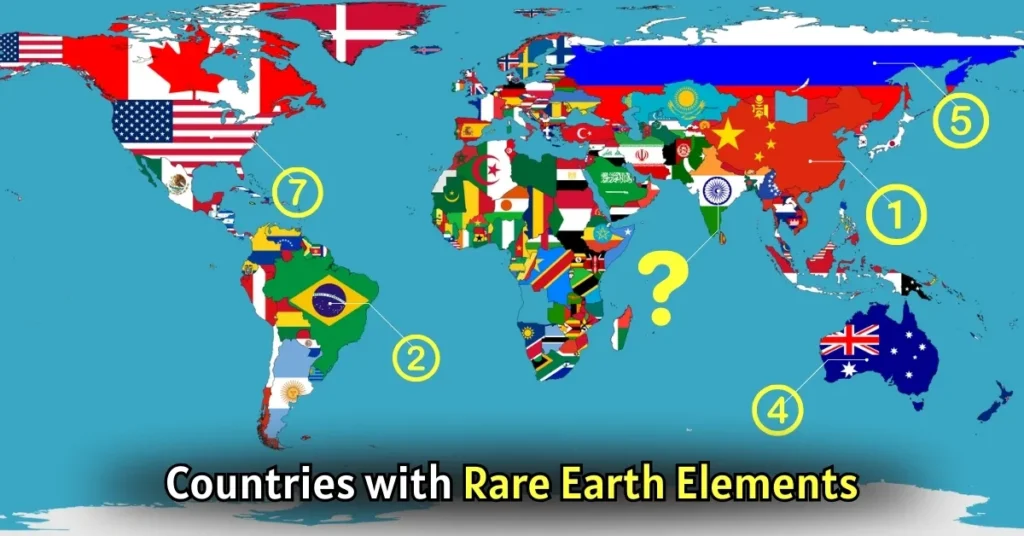
The defining geopolitical tension of the early 21st century is no longer primarily about territory or ideology. It is about who controls the material foundations of modern power. From lithium and cobalt to rare earth elements and graphite, the struggle over critical minerals has become the quiet axis around which global politics now turns.
This reality was captured succinctly when U.S. President Donald Trump declared that his administration had taken “extraordinary steps” to ensure the United States secured all the critical minerals and rare earths it needs, through accelerated domestic mining and deals with countries “from all over the world.” Behind the language of cooperation lies a deeper truth: the new global contest is over access, supply chains, and leverage, not flags or borders.
In this sense, Thucydides has returned.
More than two millennia ago, the Athenian historian explained that power struggles arise from a simple triad: fear, interest, and honour. That logic is again visible today. The United States and Europe fear strategic dependence on rivals for the materials that underpin advanced technology, defense systems, and clean energy.
China pursues its interests by embedding itself deeply into global mineral extraction and processing networks. And all major actors seek honor—what we now call legitimacy—by presenting their strategies as partnerships rather than domination.
The minerals beneath the earth have become the modern equivalent of the grain routes, silver mines, and naval chokepoints of the ancient world.
From a realist perspective, this shift is entirely predictable. In an international system without a central authority, states prioritize survival and relative advantage. Critical minerals are no longer mere commodities; they are strategic assets. Control over them translates into industrial strength, military readiness, and technological leadership. Dependence, by contrast, becomes vulnerability.
The United States has responded by pursuing what might be called alliance-based resource security. Rather than overtly controlling deposits, Washington is engaging a wide range of sovereign partners—from India and Mexico to Colombia and the Sahel—diversifying supply and reducing exposure to any single source. The emphasis is on contracts, standards, and shared interests, not territorial dominance. It is a strategy designed to minimize backlash while preserving influence.
China has chosen a different path. Its approach is structural and vertical: securing extraction rights, financing infrastructure, and—most importantly—dominating processing and refining capacity. Even where minerals are mined elsewhere, they often pass through Chinese facilities before entering global markets. This gives Beijing leverage that is difficult to counter without systemic disruption. It is power embedded not in flags, but in factories and supply chains.
Europe, lacking the coercive tools of either Washington or Beijing, has turned to regulation. Through environmental standards, ESG requirements, and sustainability rules, the European Union seeks to shape markets and behavior. Its strategy rests on the belief that legitimacy and rules can substitute for force. Yet regulation, however principled, is slow—and in a fast-moving resource race, speed matters.
Taken together, these strategies reveal a deeper political economy at work. For all the talk of partnership, much of the Global South remains positioned as a resource frontier—supplying raw materials while value is captured elsewhere through processing, manufacturing, and intellectual property. Whether the partner is Washington, Beijing, or Brussels, the structural risk is the same: extraction without transformation.
This is where critical political economy sharpens the analysis. The competition over minerals is not only about great-power rivalry; it is also about who climbs the value chain and who remains stuck at the bottom. Without domestic processing capacity, technology transfer, and industrial policy, resource-rich states risk repeating old patterns under new banners.
The tragedy Thucydides warned about was not war itself, but misalignment between power and political structures. Today, that misalignment is visible in a world racing toward green transitions and digital economies while relying on supply chains that concentrate power and vulnerability in unequal ways. If minerals become instruments of coercion rather than cooperation, the risk is not just conflict among great powers, but instability across entire regions.
What is emerging, then, is a new grammar of global order—one in which sovereignty is formally respected but materially constrained, where power flows through supply chains rather than empires, and where peace increasingly depends on who controls the inputs of modern life.
The return of Thucydides reminds us that these struggles are not moral failures; they are structural realities. The question facing the world is whether states can manage this competition without turning resource security into the next great source of global rupture.
That answer will shape not only geopolitics, but the future of development, peace, and prosperity itself.