
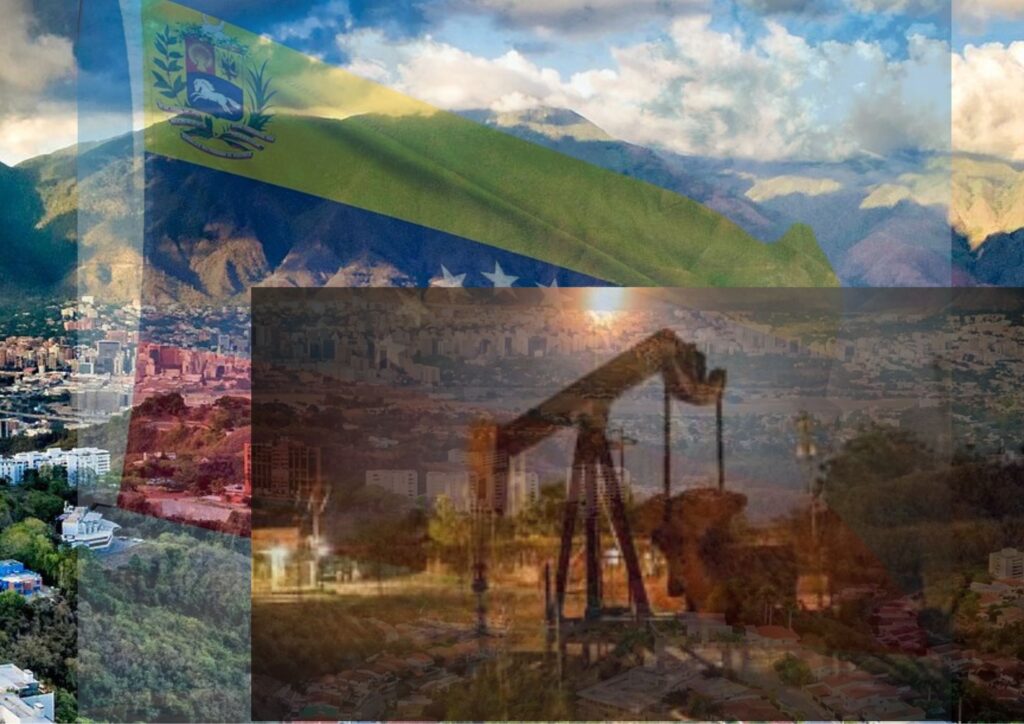
The impulse to explain Venezuela’s crisis through oil is understandable. Few countries are as closely associated with a single strategic resource, and history offers numerous examples of energy interests shaping foreign intervention. Yet reducing the current confrontation to hydrocarbons alone obscures the more consequential forces at work. Venezuela today is less an oil story than a revealing case study in how power, sovereignty, and global order are being recalibrated in an increasingly competitive international system.
At its core, the Venezuelan crisis reflects the return of hard geopolitics after a period in which multilateralism, liberal norms, and rule-based restraint were presented as the dominant framework of global affairs. What is unfolding is not simply a contest over production, exports, or pricing, but a struggle over influence, alignment, and the acceptable limits of coercion in a world marked by widening power asymmetries.
A central dimension of this dynamic is Venezuela’s position within renewed great-power rivalry. Caracas’s political, economic, and security relationships with Russia, China, and Iran have elevated its strategic significance well beyond energy markets. For the United States, Venezuela represents not only a recalcitrant government but a point of geopolitical friction in a region long treated as a sphere of influence. In this sense, the country has become a proxy arena—less about control of oil fields and more about who shapes political outcomes and strategic alignments in the Western Hemisphere.
The crisis also exposes the increasingly conditional nature of sovereignty in contemporary international politics. While sovereignty remains a cornerstone of international law, its practical protection is uneven. States that are institutionally weak, diplomatically isolated, or strategically misaligned face greater exposure to external pressure. Venezuela’s experience illustrates how sovereignty can be formally affirmed while substantively constrained, eroded through economic sanctions, diplomatic isolation, and selective enforcement of international norms.
Equally significant is the role of multilateral institutions—or their limitations. Bodies such as the United Nations were designed to manage precisely these kinds of disputes, yet their effectiveness diminishes when major powers are directly involved. Instead of collective deliberation, the Venezuelan case has seen unilateral or coalition-based actions justified through competing legal and moral narratives, ranging from counter-narcotics and human rights to democratic restoration. This pattern reflects less a collapse of international law than a reassertion of power over procedure.
Domestic political incentives within powerful states further complicate the picture. Venezuela has become a symbol within internal political debates: a cautionary example of ideological failure, a platform for projecting resolve abroad, or a tool for signaling strength to allies and adversaries. These domestic calculations often intersect with foreign policy in ways that heighten confrontation, irrespective of economic cost or long-term regional stability.
Taken together, these elements point to a broader transformation in how coercive statecraft is practiced. Modern intervention rarely seeks direct territorial control. Instead, it aims to influence political outcomes, economic flows, and strategic orientation while maintaining the formal language of sovereignty and non-imperial intent. Sanctions, targeted force, diplomatic pressure, and managed political transitions increasingly substitute for occupation. This is not empire-building in the classical sense, but system management through calibrated pressure.
Viewed through this lens, Venezuela is not an exception but an indicator. It signals a global environment in which power is more openly exercised, hierarchy is less concealed, and norms are applied instrumentally rather than universally. Oil remains relevant, but it functions as context rather than cause. The deeper issue concerns who defines the rules of the international system, how those rules are enforced, and who absorbs the consequences when they are bent.
For observers, policymakers, and societies in the Global South, the implications are sobering. Strategic relevance without protective alliances can become a liability rather than an asset. As great-power competition intensifies, the Venezuelan experience may offer a preview of a more transactional and less restrained international order—one in which interests increasingly outweigh institutions, and power, more than principle, shapes outcomes.