
By Olukunle Adewumi
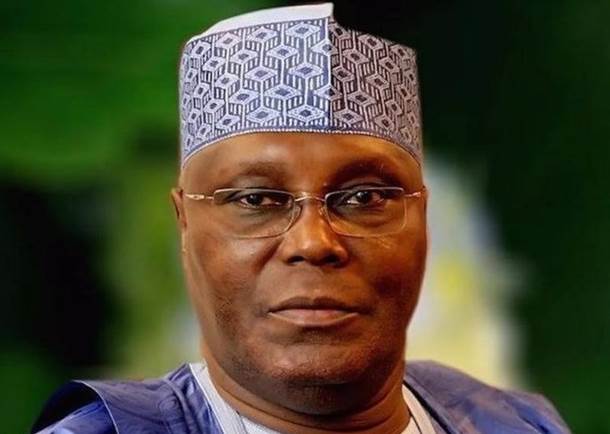
As Nigeria edges toward the 2027 general election, the political atmosphere is already shifting — quietly, but unmistakably. Defections, realignments, and early coalition talks suggest a familiar pattern, which could become one of the most consequential elections since 2015. Long before voters are engaged, elites begin positioning for advantage. At the center of this slow realignment once again stands Atiku Abubakar, former Vice President and perennial presidential contender.
Atiku’s decision to contest in 2027, at the age of 80, has revived old debates about endurance, relevance, and renewal, signaling a constant presence in Nigeria’s presidential contests, making him arguably the most enduring political aspirant in the country’s Fourth Republic despite his defeat in the 2023 election. But focusing on age alone misses the deeper issue. His candidacy exposes a persistent weakness in Nigeria’s opposition politics: the inability to institutionalize competition beyond individual ambition.
Since 1999, Atiku has sought the presidency six times across three political parties — PDP, AC, APC, and back to PDP. No other figure has tested Nigeria’s electoral system with such consistency. Yet despite this persistence, the structure of opposition politics remains fragile. In 2023, the combined votes of opposition candidates exceeded those of the winner, yet fragmentation prevented conversion into power. That outcome reflected a longer trend: since 2007, no Nigerian opposition coalition has successfully transferred momentum across election cycles without collapsing under internal rivalry.
The current landscape shows similar strain. The ruling All Progressives Congress (APC) retains control of 20 of Nigeria’s 36 states, alongside a strong majority in the National Assembly. By contrast, the People’s Democratic Party (PDP), which once governed 28 states, now controls fewer than 12. Smaller parties such as the Labour Party and NNPP have energy and regional influence, but limited institutional depth. building a formidable opposition bloc remains a major challenge. The African Democratic Congress (ADC), now discussed as a potential unifying platform, faces the same dilemma that undermined earlier coalitions: strong personalities, weak structures.
Atiku’s political journey mirrors this institutional volatility. His presidential ambition dates back to 2003, when he first attempted to challenge his then principal, President Olusegun Obasanjo, while still serving as Vice President. He eventually retained his position until 2007, when he left the PDP for the Action Congress (AC) to contest against the late President Umaru Musa Yar’Adua. He lost that election and later returned to the PDP in 2010 following Yar’Adua’s death.
In 2011, Atiku sought the PDP presidential ticket again but lost to President Goodluck Jonathan. In 2014, he defected to the newly formed APC, hoping to emerge as the party’s flagbearer in 2015. That primary election became a defining moment — a contest of money, popularity, loyalty, and political structure — which Atiku lost to Muhammadu Buhari, despite reportedly spending more than most contenders.
His 2019 campaign against Muhammadu Buhari was one of the most expensive in Nigeria’s history, yet it failed to overcome the incumbency advantage and fragmented opposition support. In 2023, his defeat — and subsequent legal challenge — reinforced a pattern visible since 2003: electoral outcomes are accepted or rejected largely through partisan interpretation rather than institutional trust. Courts, security agencies, and regulatory bodies remain vulnerable to political perception, regardless of actual intent.
After losing in court in 2019, Atiku expressed deep disappointment with the judiciary, while Buhari — and later Tinubu in 2023 — praised the same institution they once questioned. This pattern reflects a broader Nigerian political culture where judicial outcomes are often interpreted through partisan lenses rather than institutional consistency.
The age question, therefore, is symbolic. Atiku will be 80 years old in 2027, and for many Nigerians, this remains a significant concern reflecting not just personal longevity but a stalled generational transition. Nigeria’s median age is 18. In 2023, more than 70% of registered voters were under 45. Yet leadership selection within major parties remains dominated by figures who entered politics under military rule. That gap between demographic reality and political leadership continues to widen, The argument, therefore is not only about physical stamina but also about generational transition and the ability of the opposition to present a new political vision.
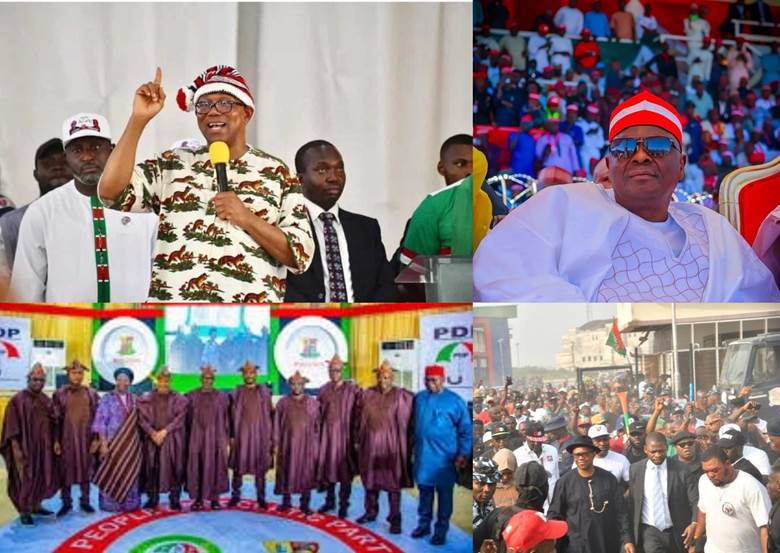
Other opposition figures remain influential, showcasing other heavyweight contenders such as, Peter Obi, whose 2023 campaign disrupted voting patterns, particularly among urban and first-time voters, while Rabiu Kwankwaso maintains a strong regional base in the North-West. But recent history suggests that alignment is easier to imagine than to sustain. The 2013 merger that produced the APC succeeded only because power was clearly defined and ambition deferred. No such clarity exists today.
Beyond opposition politics lies a more enduring constraint: incumbency. Nigeria’s political history shows that ruling parties often deploy state institutions — security agencies, anti-corruption bodies, and regulatory authorities — against perceived threats. This pattern cuts across administrations.
But since 1999, only once — in 2015 — has a sitting Nigerian president been defeated. That victory required a rare convergence of elite unity, public discontent, and international attention. Without similar alignment, incumbency remains structurally dominant.
During the Obasanjo era, the EFCC under Nuhu Ribadu was widely seen as a political weapon against dissenting voices. Today, Ribadu serves as National Security Adviser, and critics argue that agencies such as the DSS, EFCC, ICPC, and even the military are increasingly involved in political power struggles.
Atiku himself has been here before.
In 2019, the EFCC arrested his lawyer, Uyi Giwa-Osagie, over alleged election funds. Shortly after, Tanimu Turaki (SAN), head of Atiku’s legal team, and his son-in-law, Babalele Abdullahi, were also arrested. Atiku accused the EFCC of targeted harassment aimed at weakening his challenge.
That same year, the Nigerian Ports Authority terminated contracts belonging to Intels Nigeria Limited, a company linked to Atiku, while the federal government accused him — without legal consequence — of involvement in an alleged plot to destabilize the Buhari administration.
Few observers doubt that similar tactics could resurface as 2027 approaches.
The APC is acutely aware of the role Atiku played in the 2015 defeat of the PDP, his aggressive challenge in 2019, and his persistence in 2023. Whether the ruling party will attempt to reduce his influence through political strategy, legal pressure, or narrative warfare remains to be seen.
What is clear is this: Atiku Abubakar’s decision to contest again ensures that 2027 will not be a quiet or predictable election.
Atiku’s candidacy, represents continuity, defiance, and unfinished ambition — but also highlights the deeper structural problems of opposition politics in Nigeria: fragmentation, personality-driven movements, and the overwhelming power of incumbency. therefore, this is not the story of 2027. It is the symptom. The real question is whether Nigeria’s political system can produce a competitive contest rooted in organization, ideas, and institutional strength — rather than endurance and repetition.
Until opposition politics evolves beyond personality and protest, elections will remain less about choice and more about inevitability. And no candidate, however experienced, can change that alone.