
Kano
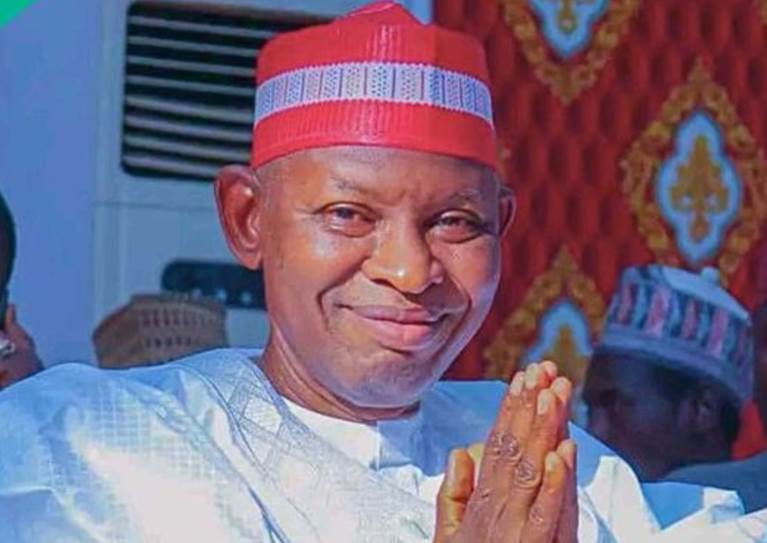
Kano State Governor Abba Kabir Yusuf will formally rejoin the All Progressives Congress (APC) on Monday, January 26, 2026, marking a dramatic return to the ruling party just days after his resignation from the New Nigeria Peoples Party (NNPP) — the platform that brought him to power in the 2023 elections.
The decision, announced in a statement issued on Sunday by the governor’s spokesperson, Sanusi Bature, signals a major political realignment in one of Nigeria’s most influential states and could have far-reaching implications for both state and national politics.
According to the statement, Yusuf’s move is driven by the need to strengthen cooperation with the Federal Government, accelerate development, improve security coordination, and enhance service delivery across Kano State.
The governor’s re-entry into the APC is not entirely new terrain. Yusuf first joined the party in 2014, when he won the APC primary election for the Kano Central Senatorial seat. He later stepped aside for the party’s then leader, Rabiu Musa Kwankwaso, a decision that cemented his long-standing political alliance with the Kwankwasiyya movement.
After years of political engagement across different platforms, including his recent stint with the NNPP, Yusuf’s return to the APC reflects what his office described as “the prevailing realities of governance, national cohesion, and development.”
In the statement, the governor said rejoining the ruling party would allow Kano to better align with federal priorities and unlock faster execution of critical projects.
“This decision is in the best interest of the people of Kano State. It will improve collaboration with the Federal Government, accelerate infrastructure development, strengthen security coordination, and enhance service delivery,” Yusuf was quoted as saying.
Yusuf will not be returning alone.
The statement confirmed that the governor will formally register as an APC member alongside 22 members of the Kano State House of Assembly, eight members of the House of Representatives, and all 44 local government chairmen in the state. The scale of the defection underscores the depth of the political shift and suggests that the move has been carefully coordinated.
The governor is also expected to launch the APC electronic registration (e-registration) exercise during the event, further signalling his full reintegration into the party’s structure.
Political analysts say the mass movement of elected officials points to a calculated effort to consolidate power ahead of future elections and stabilise governance in the state after weeks of uncertainty.
Kano is not just another state in Nigeria’s political map. It has one of the largest voting populations, a deeply entrenched political culture, and a history of influencing national political outcomes. Any major shift in Kano’s alignment often sends ripples across the country’s political landscape.
With Yusuf’s expected defection, the APC will now control 30 of Nigeria’s 36 states, leaving Oyo, Osun, Adamawa, Zamfara, Abia, and Anambra as the only states governed by opposition parties. The development further strengthens the ruling party’s grip on state-level power ahead of the 2027 general elections.
Yusuf’s departure has deepened the crisis within the NNPP, particularly in Kano, where the party’s political identity is closely tied to the Kwankwasiyya movement. Relations between Yusuf and Kwankwaso have deteriorated in recent months, culminating in public disagreements and rival claims over party loyalty and legitimacy.
The defection has already triggered resignations, internal disputes, and sharp reactions from NNPP leaders, with Kwankwaso describing the move as a betrayal of the movement’s ideals.
For Governor Yusuf, the move now shifts the political conversation from party loyalty to governance performance. His administration will be under increased scrutiny as expectations rise for tangible development gains from closer alignment with the Federal Government.
For Kano’s opposition, the challenge will be rebuilding political relevance in a rapidly shifting environment where power structures are being redrawn.
As the governor prepares for his formal registration into the APC on Monday, Kano stands at the centre of Nigeria’s evolving political chessboard — a reminder that in Nigerian politics, alliances are rarely permanent, but power and influence are always in motion.