
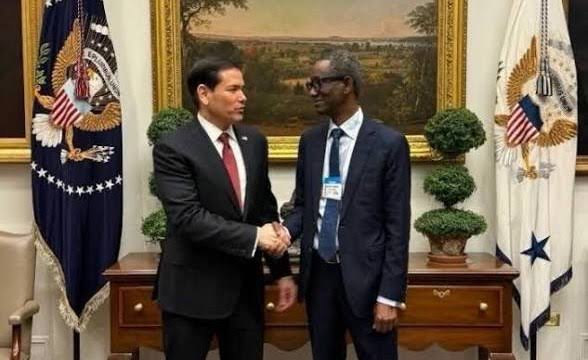
Rubio cites operation that killed senior ISIS commander as evidence of deepening security cooperation
WASHINGTON, D.C. — The United States has confirmed that it is working closely with Nigeria in ongoing counterterrorism operations, signalling a significant strengthening of security ties between both countries amid growing threats from extremist groups across West Africa.
Speaking during a congressional hearing, U.S. Secretary of State Marco Rubio said Washington is now actively cooperating with the Nigerian government and security forces in the fight against terrorism.
«”We are now actively in counterterrorism cooperation with the Nigerian government and Nigerian security forces,” Rubio said.»
The statement comes after a joint U.S.–Nigeria operation that reportedly eliminated Abu Bilal al-Minuki, described by American officials as the second-highest-ranking leader of the Islamic State (ISIS) worldwide.
The operation was later confirmed by President Donald Trump, while Nigeria’s National Security Adviser, Mallam Nuhu Ribadu, disclosed that Nigerian intelligence played a critical role in tracking and targeting the terrorist leader.
Security analysts regard the killing as one of the most significant blows against ISIS in recent years and a major milestone in Nigeria’s long-running battle against insurgency.
Growing Military Cooperation
The successful operation reflects a broader expansion of security cooperation between Abuja and Washington.
In recent months, both countries have increased intelligence sharing, military coordination, and technical support aimed at degrading the capabilities of terrorist groups operating across Nigeria and the Lake Chad Basin.
Earlier this year, U.S. Special Forces personnel reportedly provided intelligence and technical assistance to Nigerian troops engaged in operations against the Islamic State West Africa Province (ISWAP), while previous joint efforts targeted terrorist networks in northwestern Nigeria.
The collaboration has been reinforced through high-level diplomatic engagements, including Ribadu’s recent visit to Washington, where he met senior U.S. officials to discuss security cooperation, intelligence sharing, cybersecurity, border security, and defence partnerships.
Nigeria’s Strategic Importance
The deepening partnership comes as the security landscape in West Africa undergoes significant changes.
With France reducing its military footprint in parts of the Sahel following tensions with military-led governments in Mali, Burkina Faso, and Niger, the United States appears increasingly focused on Nigeria as its principal security partner in the region.
Nigeria remains Africa’s most populous nation and one of the continent’s strongest military powers, making it central to efforts to contain the spread of extremist groups across West Africa.
For Abuja, the partnership offers access to advanced intelligence, training, surveillance capabilities, and operational support as security forces continue to confront Boko Haram, ISWAP, bandit groups, kidnappers, and transnational criminal networks.
A Shift From Earlier Tensions
Rubio’s remarks also suggest a warming of relations following earlier disagreements over allegations of religious violence in Nigeria.
While concerns over attacks on Christian communities had previously strained relations, the latest comments indicate that both countries are prioritising cooperation against common security threats.
Analysts say the evolving partnership reflects Washington’s growing recognition that regional security challenges cannot be effectively addressed without Nigeria’s leadership and active participation.
As terrorism continues to threaten stability across West Africa, the latest developments suggest that U.S.–Nigeria relations are entering a new phase — one defined less by diplomatic friction and more by operational cooperation on the battlefield.