
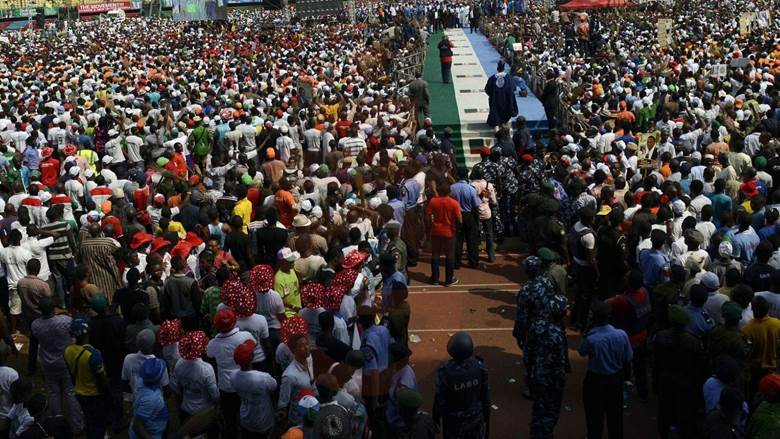
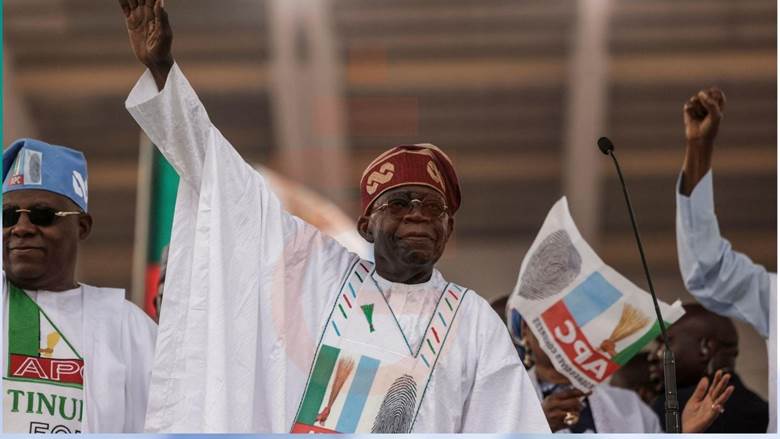
Nigeria’s political atmosphere for the 2027 general election is already getting hot as the ruling party, the All Progressives Congress (APC), has officially picked President Bola Ahmed Tinubu as its presidential candidate again, while the opposition African Democratic Congress (ADC) is preparing to begin its own presidential primary election.
This latest development shows clearly that the battle for Nigeria’s presidency in 2027 has fully started, with political parties already positioning themselves for another major election season.
According to results released by the APC, President Tinubu got about 10.9 million votes during the party’s nationwide direct primary election, comfortably emerging as the party’s flag bearer for the 2027 presidential race.
The result further strengthens Tinubu’s control and influence within the ruling party almost two years after becoming Nigeria’s president following the highly contested 2023 general election.
Tinubu Records Massive Victory in Benue
In Benue State, President Tinubu won by a very wide margin, polling 374,787 votes, while his challenger, Osifo Stanley, got only 779 votes.
APC officials said party members from all the 23 local government areas in the state participated in the exercise, describing the turnout as proof that the party still has strong grassroots support.
The result in Benue reflects what has also happened in several APC-controlled states, where party leaders and supporters have continued to rally around the president ahead of the next general election.
Political analysts say direct primaries are often promoted as a way of allowing ordinary party members to participate directly in choosing candidates, instead of leaving the decision to only a small group of delegates. However, such exercises have also faced criticism in the past over alleged irregularities and organisational challenges.
Uzodimma Praises APC Primary
Governor Hope Uzodimma has also praised the APC presidential primary held in Imo State, describing it as evidence of party unity and internal democracy.
Uzodimma, who served as the Chief Returning Officer for the exercise in the state, spoke after casting his vote and later announcing the final results.
His comments align with the position of many APC leaders who insist that the direct primary process shows the party’s strength and nationwide structure.
The APC’s use of direct primaries is also important because debates over how political parties should choose candidates have increased in recent years, especially after amendments were made to Nigeria’s electoral laws. Political parties have continued to argue over consensus arrangements, delegate systems, and direct membership voting.
ADC Prepares for Tough Presidential Contest
While the APC celebrates Tinubu’s emergence, attention is now shifting to the ADC, which is expected to begin its own presidential primary election across the 36 states and the Federal Capital Territory.
The opposition party’s exercise is attracting attention because of the big names contesting for its presidential ticket. Those interested include former Vice President Atiku Abubakar, former Minister of Transportation Rotimi Amaechi, and former banker Mohammed Hayatu-Deen.
Sources within the party said attempts to produce one consensus candidate failed after the aspirants reportedly refused to step down for one another.
Because of this, the ADC is expected to conduct a direct primary election in line with the Electoral Act 2026.
Party officials say the move is meant to show openness and fairness at a time many Nigerians are paying closer attention to how political parties conduct their internal processes.
Early Political Battle Lines Emerging
The latest developments show that Nigeria’s major political parties are already preparing seriously for what may become one of the country’s most important election cycles.
For President Tinubu and the APC, the early endorsement gives the ruling party enough time to strengthen its political structure and consolidate support before campaigns officially begin.
For opposition parties, however, the major challenge will be how to unite and build a strong front capable of seriously challenging the ruling party in an environment where incumbency power, party structure, regional alliances, and economic realities still play major roles in determining election outcomes.
Many Nigerians also expect the 2027 election campaign to focus heavily on issues affecting daily life, including the economy, inflation, unemployment, insecurity, electricity supply, fuel costs, and government performance.
With both ruling and opposition parties now preparing their presidential selection processes, political activities across the country are expected to intensify in the coming months.