
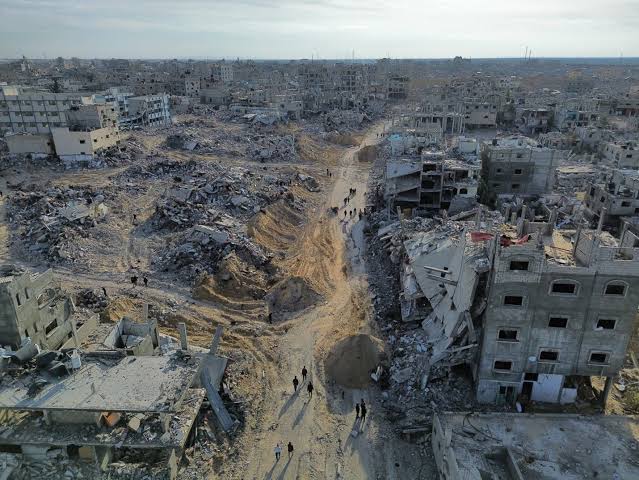
More than 800 Palestinians have died since the ceasefire began. In Gaza, families are still waiting for the missing to come home.
Maysaa al-Najjar has memorised the sound of her phone not ringing.
The 37-year-old mother of six from the Jabalia Refugee Camp has lived inside a particular kind of torment since Israeli forces detained her husband, Abdullah, in October 2023. She has waited for calls that never arrived. She has searched hospital records for his name and found nothing. Like thousands of families across Gaza Strips , she exists in the cruel space between hope and absence.
The ceasefire was supposed to end that uncertainty.
It did not.
In May 2026, former UN envoy Nickolay Mladenov, serving as high representative for Gaza to the Board of Peace, declared the phased peace framework effectively “paralysed,” stalled over disagreements surrounding Hamas disarmament and the absence of broader political guarantees.
Meanwhile, the war has continued in fragments.
Israeli strikes inside Gaza have persisted despite the ceasefire arrangement, killing more than 800 Palestinians — civilians and fighters alike — since the truce formally began.
The numbers attached to the conflict have become almost too large to emotionally process.
According to Gaza health authorities, more than 72,000 Palestinians have been killed since October 2023, with another 172,000 injured. The United Nations Relief and Works Agency for Palestine Refugees in the Near East (UNRWA) says 391 of its own staff members have died during the war — one of the deadliest conflicts for humanitarian workers in modern history.
Yet statistics alone fail to explain what prolonged war does to ordinary life.
Life After the Ceasefire
For much of Gaza’s population, the ceasefire altered the intensity of destruction without restoring normal existence.
Families remain displaced across overcrowded camps and temporary shelters assembled from concrete fragments, fabric sheets, and salvaged metal. Entire neighbourhoods remain flattened. Electricity is intermittent. Medical systems operate beyond collapse. Food insecurity remains severe.
Women living inside displacement sites continue to report dangerous conditions after dark due to poor lighting, overcrowding, and the breakdown of basic security structures — factors humanitarian agencies say significantly increase the risk of gender-based violence.
International relief agencies warn that funding shortfalls have crippled aid operations. Less than ten percent of the humanitarian resources required for Gaza in 2026 have been secured.
Even movement itself has become a privilege almost nobody possesses.
Most Gazans remain confined within shrinking sections of territory, unable to travel abroad, reach the West Bank, or secure medical evacuation permits except in rare cases.
The Politics of Stalemate
Analysts studying the current phase of the conflict increasingly describe it not as peace, but as managed instability.
The United States has prioritised preventing a return to full-scale regional war, while Hamas appears reluctant to fully engage in disarmament negotiations without guarantees tied to Palestinian political sovereignty and reconstruction.
Israel, meanwhile, has signalled that targeted strikes will continue as a pressure mechanism ahead of increasingly sensitive domestic political calculations.
The result is a ceasefire that functions operationally without functioning psychologically.
The bombs fall less frequently. The fear does not.
The Families Left Waiting
In Jabalia, Maysaa al-Najjar still has six children asking about their father.
She does not know what answer remains possible after two and a half years.
So she tells them he will come home. She tells them to be patient. She tells them what people trapped inside endless wars have always told their children — because hope, however fragile, is sometimes the final structure left standing after everything else has collapsed.
But patience has limits.
And in Gaza, even peace now arrives carrying the shape of war.